


An insight into Vietnam's new Law on Investment
The Law on Investment 2025 continues Vietnam’s broader efforts to simplify administrative procedures and further refine the legal framework governing investment activities, write senior partner Anh Dang and associate Linh Dao at Vilaf law firm.

Anh Dang, a senior partner at Vilaf law firm. Photo courtesy of the law firm.
On December 11, 2025, the National Assembly of Vietnam passed the new Law on Investment (Law on Investment 2025) in the context of Vietnam’s intensified institutional reforms aimed at improving the investment climate, addressing administrative bottlenecks, and enhancing competitiveness in attracting both domestic and foreign investment.
The Law on Investment 2025 includes seven chapters and 52 articles and will take effect from March 1, 2026, except for Article 7 (Conditional business lines) and Appendix IV (List of conditional business lines), which will take effect from July 1, 2026.
Compared with the Law on Investment 2020, which consisted of 77 articles, the Law on Investment 2025 has been substantially streamlined, signaling a clear policy direction towards reducing pre-licensing procedures and facilitating smoother market entry for investors. This article will discuss about key amendments under the Law on Investment 2025.
Reduction of regulatory barriers for foreign investors in establishing economic organizations in Vietnam
Under the Law on Investment 2020, foreign investors are generally required to have an approved investment project prior to establishing an economic organization, except for certain special projects as decided by the Prime Minister in which foreign investors are permitted to establish an economic organization to implement the investment project before applying for the issuance of the Investment Registration Certificate (IRC).
From March 1, 2026, Article 19.2 of the Law on Investment 2025 will allow foreign investors investing in any investment project to establish an economic organization before applying for the issuance of the IRC.
Importantly, it should also be noted that foreign investors are still required to satisfy the market access conditions, such as the foreign ownership limits, investment forms, etc., at the stage of establishing the economic organization to implement the investment project. Accordingly, foreign investors are still expected to carefully identify and assess their proposed business lines before applying for establishment of an economic organization in Vietnam.
From a practical standpoint, this change reduces administrative burdens, increases regulatory flexibility, and expedites the preparatory stages of market entry for foreign investors in Vietnam. This adjustment to the licensing sequence is presumably a positive regulatory development, as it permits foreign investors to establish a commercial presence in Vietnam prior to obtaining approval of an investment project.
In addition, foreign investors may now open a direct investment capital account (DICA) for the purpose of contributing capital to cover initial project expenditures prior to commencement of the project, without awaiting the issuance of the IRC, a process that has so far been time-consuming, especially for land-using projects.
Nevertheless, these new provisions also give rise to certain legal uncertainties and practical risks, indicating the need for further implementing guidance. For instance, if the application for the IRC is later rejected, it remains unclear how the legal consequences of the already-established project company could be addressed.
Investment projects subject to In-principle Approval (IPA) (“Chấp thuận chủ trương đầu tư” in Vietnamese) and competent approval authorities
Article 24 of the Law on Investment 2025 enumerates 20 specific categories of investment projects that are subject to IPA, primarily in important and sensitive sectors including (i) seaport, airport, telecommunications, publishing, and press projects; (ii) projects involving proposed use of land or maritime areas; and (iii) projects that impact the environment or are implemented in areas affecting national security and defense.
In respect of projects for which investors propose state land allocation or lease without an auction of land use rights, Article 24.8 introduces three circumstances under which such projects are exempt from IPA. This amendment represents a meaningful reduction in administrative procedures for ordinary investment projects.
Moreover, Article 25 of the Law on Investment 2025 adjusts the competence to decide on IPA in a more streamlined and centralized manner. Specifically, the authority to issue an IPA is vested only in the Prime Minister and the Chairmen of the Provincial People’s Committees, while the competence of the National Assembly in this area is now limited to investment projects that require the application of special mechanisms or policies deviating from the provisions of laws or resolutions of the National Assembly.

Associate Linh Dao at Vilaf law firm. Photo courtesy of the company.
Reduction in the number of conditional business lines
The number of conditional business activities has been reduced under the Law on Investment 2025. Under the list of conditional business activities (under Appendix IV thereto), the Government has removed 38 conditional business lines, including tax procedure services, customs procedure services, data center services and has revised the scope of 20 other business lines. The remaining conditional sectors are primarily concentrated in finance, accounting, forestry, fisheries, agriculture, construction, and transportation.
As a result, projects operating in the removed sectors will no longer be subject to conditional business requirements or additional licensing as previously imposed. This reform is expected to lower compliance costs, facilitate market entry, and foster a more competitive and business-friendly investment environment.
Narrowing the cases requiring adjustment of investment projects
Article 33 of the Law on Investment 2025 removes two circumstances that previously required procedures for adjustment of investment projects, namely: (i) an increase or decrease of 20% or more of the total investment capital of the investment project; and (ii) a change in appraised technology.
Accordingly, from March 1, 2026, only will five circumstances require investors to carry out investment project adjustment procedures. This revision reflects the State’s intention to reduce involvement in business autonomy of investors and to place greater responsibility on investors to make and take responsibility for their own decisions.
Expansion of the scope of application of special investment procedures
Pursuant to Article 28.1 of the Law on Investment 2025, investors are entitled to opt for registration of their investment projects under the special investment procedures for projects implemented in industrial parks, export processing zones, hi-tech parks, concentrated digital technology parks, free trade zones, international financial centers, and functional zones within economic zones, except for projects that are subject to investment policy approval as prescribed by the Government.
Compared with Law on Investment 2020, the Law on Investment 2025 has significant changes in special investment procedures. Accordingly, pursuant to Article 28.1 of the Law on Investment 2025, the special investment procedure would no longer be confined to certain sectors as previously prescribed under Article 36(a).1 of the old law, but extended to all investment projects in the areas subject to the special investment procedures, except for those subject to IPA as prescribed by the Government.
In addition, investors applying for special investment procedures are not required to carry out procedures for IPA, technology appraisal, preparation of an environmental impact assessment report, preparation of detailed planning, issuance of a construction permit, or other procedures for approval, acceptance, or permission in the fields of construction and fire prevention and fighting.
Instead, pursuant to Article 28.2 of the Law on Investment 2025, investors are only required to submit a written undertaking to comply with applicable legal requirements, including those relating to construction, environmental protection, and fire prevention and fighting as noted above.

At Samsung Electronics Vietnam Thai Nguyen in Thai Nguyen province, northern Vietnam. Photo courtesy of Hanoi Moi (New Hanoi) newspaper.
Investment incentive and investment support
Instead of adopting a detailed listing approach to investment-incentivized business lines as provided under Article 16.1 of the Law on Investment 2020, the Law on Investment 2025 introduces a fundamentally different regulatory approach to investment incentives.
Specifically, pursuant to Article 15.1 of the Law on Investment 2025, investment-incentivized sectors and trades are defined based on policy objectives, rather than by an exhaustive enumeration of specific industries. Under this approach, investment incentives are granted to sectors prioritized for investment attraction in order to (hopefully) achieve the following objectives:
(i) Development of science and technology, innovation, digital transformation, the digital technology industry, and the semiconductor industry;
(ii) Development of the green economy, circular economy, sharing economy, digital economy, and other emerging economic models;
(iii) Development of industrial clusters and value chains; attraction of investment featuring modern governance, high added value, spillover effects, and integration into global production and supply chains;
(iv) Development of renewable energy, new energy, and clean energy, and ensuring national energy security;
(v) Development of agriculture and forestry; protection of the environment and natural resources; and development of the marine economy;
(vi) Construction and development of infrastructure;
(vii) Development of education and training, healthcare, high-performance sports, and national culture;
(viii) Development of key chemical industries, key mechanical engineering industries, supporting industries, and the pharmaceutical industry; and
(ix) Other objectives as prescribed by the Government.
One notable development is that the list of locations eligible for investment incentives has been updated to align with the newly enacted regulations. Accordingly, in addition to industrial zones, export processing zones, hi-tech zones, concentrated digital technology zones, and economic zones which were already entitled to investment incentives under the Law on Investment 2020, the Law on Investment 2025 expands the scope of incentivized locations to include industrial clusters, hi-tech agriculture zones, free trade zones, and international financial centers.
With respect to projects entitled to special investment incentives and support, the Law on Investment 2025 further expands the scope of application. In addition to the projects specified under Articles 17.2(a) and 17.2(b) of the Law on Investment 2025, the Government is now authorized to decide on the application of special investment incentives and support to other investment projects (including both new investment projects and expansion projects) that fall within specially incentivized sectors, provided that such projects meet the minimum investment capital threshold and capital disbursement schedule as prescribed by the Government.
In addition, the Prime Minister is empowered to decide on the application of other investment incentives where it is necessary to encourage the development of a particularly important investment project or a special administrative-economic unit. This adjustment is expected to enhance flexibility and accelerate decision-making in the application of investment incentives, compared to the previous regime under which such authority was vested in the National Assembly and was contingent upon submission by the Government.
Changes to regulations on outbound investment
The Law on Investment 2025 abolishes the procedure for approval of outbound investment policy, along with related provisions governing capital flows in outbound investment activities. Matters such as opening outward investment capital accounts, transferring capital abroad, using profits overseas, and repatriating profits to Vietnam will be addressed separately under forthcoming regulations on foreign exchange management.
In parallel, Article 42 of Law on Investment 2025 narrows the scope of outbound investment projects subject to procedures for issuance, adjustment or termination of the Outbound Investment Registration Certificate (Outbound IRC). Such procedures will now apply only to projects meeting investment capital levels as prescribed by the Government or projects in conditional outward investment business lines under Article 41, such as banking, securities, and real estate.
For large scale outward investment projects, the new amended law requires the Ministry of Finance to report to the Prime Minister for consideration and approval prior to the issuance or adjustment to the Outbound IRC in accordance with Article 42.2 of the Law on Investment 2025.
Termination of the operation of investment projects
Article 36.2 of the Law on Investment 2025 introduces two significant changes concerning the circumstances under which the competent authorities may mandatorily terminate, or partially terminate, the operation of an investment project. Accordingly, the investment registration authority may decide to terminate or partially terminate an investment project, among other cases, in the following circumstances:
(i) where the investment project falls within a case of land revocation in accordance with the land law; and
(ii) where a project company has been dissolved but has not terminated the investment project or transferred or otherwise assigned ownership of the investment project in accordance with applicable law.
With respect to circumstance (ii), this provision helps to harmonize the Law on Investment 2025 with other relevant legislations and, at the same time, clearly delineates the legal consequences arising from the termination of the investor’s legal status. By contrast, certain concerns remain in relation to circumstance (i) above.
Under this provision, an investment project may be subject to mandatory termination even where the investor has not committed any violation and has not caused delays or land non-use. For instance, where land is recovered by the State for purposes of national defense, security, or national and public interests, the project may still be required to terminate its operations.
This is a significant point for investors to note, as it directly affects their legitimate rights and interests, particularly in cases where land recovery arises from objective factors beyond the investor’s control. Previously, pursuant to Article 48.2(dd) of the Law on Investment 2020, termination of an investment project on the grounds of violations of land regulations applied solely to cases where the land was not put into use or was put into use behind schedule in accordance with land legislation.
Although the implementing regulations (i.e. the procedures for project termination) have not yet been officially promulgated by the Government, the Law on Investment 2025 broadens the scope of such circumstances, thereby giving rise to concerns among investors.
To conclude, the Law on Investment 2025 continues Vietnam’s broader efforts to simplify administrative procedures and further refine the legal framework governing investment activities. Although the amendments are largely perceived as investor-friendly and progressive, their effectiveness in practice will ultimately depend on the clarity and timeliness of the implementing regulations, as well as the consistency and uniformity of application by authorities at both central and local levels.
It is expected that the implementing regulations guiding the Law on Investment 2025 will be promulgated in the near future, providing a clear legal basis for the consistent and effective implementation of the investment-related provisions in practice.
- Related News


- Read More
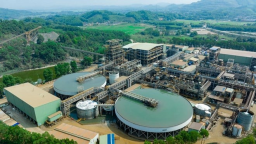
Masan High-Tech Materials partners with S Korea’s GBI on tungsten processing
Masan High-Tech Materials (UPCoM: MSR), the mining unit of Vietnamese conglomerate Masan Group (HoSE: MSN), has entered into a strategic partnership with South Korea’s GB Innovation (GBI) to process Korean tungsten concentrate into higher-value products in Vietnam, strengthening a non-Chinese tungsten supply chain.
Companies - Thu, July 9, 2026 | 3:51 pm GMT+7

Idemitsu Kosan expands energy ecosystem in Vietnam
After more than three decades of operations in Vietnam, Japan’s Idemitsu Kosan is further expanding its energy ecosystem with a biomass pellet plant project in the central province of Gia Lai.
Industries - Thu, July 9, 2026 | 1:43 pm GMT+7

Two banks to list on Ho Chi Minh City bourse, expand charter capital
Vietnam's private banks Vietbank and BVBank are finalizing the last steps to transfer their trading from the unlisted public company market UPCoM to the Ho Chi Minh Stock Exchange (HoSE), while simultaneously implementing plans to increase their charter capital.
Banking - Thu, July 9, 2026 | 11:51 am GMT+7

Strong Q2 earnings, lower interest rates to bolster Vietnam stocks
Strong second-quarter corporate earnings and declining interest rates are expected to support Vietnam's stock market in the coming months, brokerage firms said, as the market moves beyond a period of limited news flow and enters a more favorable phase driven by improving fundamentals.
Finance - Thu, July 9, 2026 | 8:00 am GMT+7

Wistron raises construction, equipment investment in northern Vietnam province to $178 mln
Taiwanese technology firm Wistron has increased its investment in factory construction and equipment in Ninh Binh province to $178.27 million, adding $24.5 million to expand its facilities at Kim Bang Industrial Park.
Industries - Wed, July 8, 2026 | 7:56 pm GMT+7
Sun Group targets groundbreaking for $624 mln urban projects in central Vietnam this year
Vietnam's leading developer Sun Group aims to begin construction of two urban projects worth a combined VND16.4 trillion ($623.78 million) in the central province of Quang Ngai by the end of 2026, while also advancing plans for a new expressway linking the province with the Central Highlands.
Real Estate - Wed, July 8, 2026 | 4:54 pm GMT+7

Vietnam raises airport number target to 36 by 2030 as aviation demand surges
Vietnam plans to expand its airport network to 36 airports by 2030, up from the previous target of 30, under a revised national aviation infrastructure plan aimed at catering for rising passenger demand and boosting regional connectivity.
Infrastructure - Wed, July 8, 2026 | 4:45 pm GMT+7
Germany's VFT Bio Fuels UG eyes $3.1 bln green steel complex in southern Vietnam
Vietnamese industrial park developer IMG Phuoc Dong and Germany’s VFT Bio Fuels UG have signed a memorandum of understanding to study the development of a $3.1 billion green steel complex in the southern province of Tay Ninh.
Industries - Wed, July 8, 2026 | 4:25 pm GMT+7

Vietnam police minister urges Yamato Holdings to study investment in Gia Binh airport
Vietnam’s Minister of Public Security Luong Tam Quang has called on Japan’s Yamato Holdings to assess investment opportunities in warehousing and cargo transport systems at Gia Binh International Airport, while exploring potential cooperation and operational models with Vietnamese partners once the facility becomes operational.
Infrastructure - Wed, July 8, 2026 | 3:09 pm GMT+7

Vietnam real estate M&A favors quality, clear legal status assets as FDI priorities evolve
Vietnam's real estate M&A market continued to attract foreign capital in the first half of 2026 despite persistent global economic uncertainties, but foreign investors are increasingly targeting assets with clear legal status, stable cash flow, and strong operational performance, with data centers emerging as a key growth segment.
Real Estate - Wed, July 8, 2026 | 1:38 pm GMT+7

Central Vietnam hub Danang plans to tokenize nearly $4 bln in infrastructure projects to attract global capital
The Vietnam International Financial Center, located in the central city of Danang (VIFC Danang), plans to tokenize nearly $4 billion worth of infrastructure projects as part of a strategy to attract more global capital.
Economy - Wed, July 8, 2026 | 12:17 pm GMT+7

Computers, smartphones edge higher in price as AI memory boom tests Vietnam's ICT firms
Rising memory chip prices driven by artificial intelligence are spreading from semiconductor manufacturers to consumer electronics brands such as Apple, Dell and ASUS, pushing up the prices of computers and smartphones.
Companies - Wed, July 8, 2026 | 8:00 am GMT+7

LG Innotek to build $1 bln semiconductor substrate plant in northern Vietnam
South Korea's LG Innotek will spend $1 billion to build a semiconductor package substrate manufacturing plant in Hai Phong city, with mass production scheduled to begin in the third quarter of 2028, according to local authorities.
Industries - Tue, July 7, 2026 | 11:13 pm GMT+7
Malaysia’s JLand eyes up to $6 bln high-tech hub in Hanoi
Malaysia’s JLand Group has proposed developing a high-tech, innovation and data center complex in Hanoi with an estimated investment of $4-6 billion, as Vietnam’s capital seeks to attract technology projects and strengthen its digital infrastructure.
Infrastructure - Tue, July 7, 2026 | 4:26 pm GMT+7
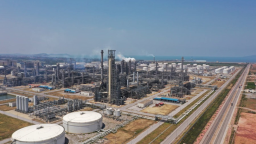
PVOIL approves $600 mln crude supply plan for Nghi Son refinery
PVOIL, a subsidiary of state-owned Petrovietnam, has approved transactions worth an estimated $600 million to supply crude oil to the Nghi Son Refinery and Petrochemical complex during the second half of 2026, as the country’s largest refinery broadens its feedstock sources beyond its traditional Kuwaiti supply.
Companies - Tue, July 7, 2026 | 1:33 pm GMT+7

F88 wins two international awards for customer-centric growth strategy
F88, a major Vietnamese financial services company, has received two international awards from the Asian Banking & Finance (ABF), a Singapore-based publication, recognizing its initiatives in customer experience and service innovation.
Companies - Tue, July 7, 2026 | 12:42 pm GMT+7
- Travel
-

Sun Group spends $3.5 bln to build 17,400-room accommodation ecosystem in Phu Quoc ahead of APEC 2027
-
CapitaLand launches 4th edition of campaign with $98,000 commitment to support vulnerable children
-
How Phu Quoc attracts travelers seeking to escape summer heat
-
Sun PhuQuoc Airways launches Singapore route, connecting two of Asia's 'paradise' islands
-
Seta - A “silken thread” weaving contemporary Cantonese cuisine into the soul of Phu Quoc
-
Danang airport starts $57 mln terminal expansion