


Private sector – 'one most important growth driver': legislator
After 40 years of Doi moi (reform), Vietnam's private sector has surged to become "one most important growth driver", helping build a more autonomous, self-reliant and resilient economy, says Phan Duc Hieu, a member of the National Assembly's Economic and Financial Committee.

Phan Duc Hieu, a member of the National Assembly's Economic and Financial Committee, speaks at the conference "40 years of reform: The leading role of economic groups" organized by The Investor in Hanoi on April 13, 2026. Photo by The Investor.
After 40 years, the Doi moi drive has lifted the country out of socio-economic crisis and laid the foundations for a new phase of development, accelerating industrialization and modernization. In your view, what has been Vietnam’s biggest and most transformative achievement over four decades of reform (1986–2026)?
The 40-year Doi moi process has been marked by numerous major milestones and achievements. In my view, the most pivotal has been the shift in perceptions of the private sector.
Since the 6th National Party Congress in 1986, the private sector has moved from being constrained to gradually gaining acceptance, and is now regarded as "one most important driver of Vietnam’s economy".
This evolution in the approach to private economic development is clearly reflected in Party documents and resolutions across successive tenures, which can be summarized in five major milestones:
The 6th National Party Congress in 1986 marked a shift in thinking on private economic development, calling for the "removal of biased prejudices.” Resolutions of the sixth-tenure Politburo and the sixth plenum of the Party Central Committee reaffirmed the reform agenda, consistently advancing a multi-sector economy and recognizing that the private sector should be allowed to develop in industries beneficial to the national economy and people’s livelihoods.
The 8th National Party Congress in 1996 set out the principle of equal treatment across all economic sectors, regardless of ownership or business model.
The 10th National Party Congress in 2006 defined that "the state sector plays a key role, acting as a crucial force for the State to steer and regulate the economy while creating conditions for other sectors to develop. The private sector plays an important role, serving as a growth driver."
The 13th National Party Congress reaffirmed the push to develop the private sector to truly become an important driver of the economy, stressing the need to "remove all barriers and prejudices, create all favorable conditions for private sector development, and encourage the formation and growth of large private economic groups with strong capacity and regional and international competitiveness."
A key political foundation and breakthrough for the current period is Resolution No. 68-NQ/TW, issued by the Politburo on May 4, 2025 on private economic development. The resolution positions the private sector as "one most important driver of the economy", setting targets for 2045 for it to contribute more than 60% of GDP and for the country to have at least 3 million enterprises in the sector.
Over four decades, the Party has made fundamental shifts in its perception of the role and necessity of developing the private sector, alongside the leading role of the state sector.
Following this shift in perception of the private sector, how has it been concretized?
It can be said that what is necessary is a shift in perception. But what is sufficient is for that shift to be institutionalized and codified in law - first and foremost in the Constitution, followed by concrete policies and regulations.
Vietnam’s 2013 Constitution marked a major change in legal thinking on the private sector, stating that "everyone has the right to conduct business in industries not prohibited by law," that "all economic sectors are important constituent parts of the national economy," and affirming that the private sector will be "encouraged and facilitated" by the State, while "lawful assets of individuals and organizations engaged in investment, production and business are protected by law and shall not be nationalized."
We have also promptly institutionalized the Party’s orientations and viewpoints and the Constitution’s provisions on private economic development, while the legal framework governing production and business has undergone continuous refinement.
Specifically, the Law on Investment adopts a “select-and-eliminate” approach to business rights, clearly defining lists of prohibited sectors and conditional business lines (applicable to both foreign and domestic investors), while allowing enterprises to freely operate in all areas not on those lists.
The State recognizes and protects ownership rights over assets, investment capital, income and other lawful rights and interests of investors, while ensuring equal treatment and adopting policies to encourage and facilitate investment and the sustainable development of economic sectors.
The Law on Enterprises, first enacted in 1990 and revised multiple times, reflects significant shifts in thinking. A breakthrough came with the 1999 revision, which marked a transition from a “permission-based” approach to one in which businesses are allowed to operate in all areas not prohibited by law, establishing a more open legal framework. This approach has been further reinforced in subsequent amendments, with a focus on cutting administrative procedures and strengthening protections for investors (shareholders).
Following sweeping reforms to business registration procedures under the 1999 Law on Enterprises, the number of registered firms surged. Between early 2000 and end-2010, around 510,000 enterprises were newly established, more than 11 times the total in the previous decade (1990-1999) when about 45,000 firms were registered.
Meanwhile, the legislature's Resolution No. 198/2025/QH15, dated May 17, 2025, sets out a range of special mechanisms and policies to advance private economic development, aiming to position it as one of the economy’s most important growth drivers.

By 2045, the private sector is expected to contribute more than 60% of Vietnam's GDP. Photo by The Investor/Thang Quang.
With these concrete institutional reforms, how has the private sector contributed to the country’s development?
With timely, effective and well-calibrated policies, after 40 years of Doi moi, the private sector has surged to play an important role in the economy, helping build a more autonomous, self-reliant and resilient economy.
There are now nearly 1.1 million enterprises and more than 5 million business households in operation, alongside millions of agricultural households, farms, and individual businesses. The private sector currently accounts for around 51% of GDP, contributes more than 30% of total state budget revenue, and employs about 42 million workers, or 82% of the workforce.
Income for workers in private enterprises has also surpassed that in the state sector. Total income generated for employees by domestic private firms reached about VND1.17 quadrillion (equivalent to $44.42 billion) in 2023, roughly 10% of the country’s GDP that year.
Beyond economic growth, the private sector has also made substantial contributions to social progress and sustainable development, including poverty reduction, helping the country withstand domestic shocks such as natural disasters and pandemics, as well as global disruptions.
After 40 years of Doi moi, what lessons can be drawn?
In my view, first is the shift in perception of the private sector’s role, with growing recognition that it has become one of the economy’s most important growth drivers.
Second, the Party’s viewpoints and perceptions must be translated into law, foremost through the Constitution and related legislation.
Third, the legal framework should be continuously refined to promote private economic development, with a focus on upholding business freedom and ensuring equal access to resources and opportunities for enterprises. Administrative procedures and licensing requirements need to be regularly reviewed and removed to facilitate business and production.
At the same time, the lawful rights and interests of enterprises, including the freedom to conduct business, must be protected, alongside appropriate incentives to attract investment and develop sectors with advantages and potential, thereby enhancing the economy’s competitiveness.
Fourth, this has gone hand in hand with reforms of state-owned enterprises (SOEs), including restructuring, equitization and divestment, with SOEs primarily focused on key and essential sectors, as well as areas critical to national defense and security, and those where other economic sectors do not invest.
At the same time, efforts are needed to improve the efficiency and competitiveness of SOEs based on modern technology, stronger innovation capacity and governance aligned with international standards, enabling them to better fulfil their leading and guiding role in the economy.
It is necessary to focus on strengthening and developing a number of large state economic groups and corporations with strong brands, efficient operations, and the capacity to compete at the regional and global levels.
Fifth, commitments to investment and trade protection must be upheld in line with domestic law as well as multilateral and bilateral trade and investment agreements, where applicable.
Sixth, mechanisms for dialogue between the State and business organizations, socio-professional bodies and industry associations representing the business community should be regularly implemented in various forms to gather feedback, address bottlenecks and roll out institutional reforms to help enterprises overcome challenges.
Seventh, recognition and commendation of enterprises and entrepreneurs should be carried out on a regular basis.
What are your expectations for the country’s development in the period ahead?
I expect Vietnam to rise to become a developed, high-income country by 2045. We must continue to promote the spirit of reform, push ahead with strong institutional changes, maintain socio-political stability, strengthen internal capacity, and effectively seize opportunities from international integration and technological transformation.
The Investor is organizing a conference titled “40 years of reform: The leading role of economic groups” in Hanoi (Monday, April 13).
The conference is aimed at providing a forum for policymakers, experts and the business community to review the 40-year reform journey, assess the leading role of economic groups, and propose policies to further develop them.
It brings together representatives from ministries, agencies, and associations, along with economic, financial and legal experts, and leaders of commercial banks, economic groups and domestic enterprises.
- Related News


- Read More
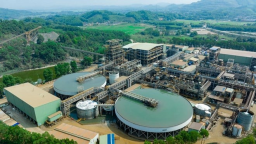
Masan High-Tech Materials partners with S Korea’s GBI on tungsten processing
Masan High-Tech Materials (UPCoM: MSR), the mining unit of Vietnamese conglomerate Masan Group (HoSE: MSN), has entered into a strategic partnership with South Korea’s GB Innovation (GBI) to process Korean tungsten concentrate into higher-value products in Vietnam, strengthening a non-Chinese tungsten supply chain.
Companies - Thu, July 9, 2026 | 3:51 pm GMT+7

Idemitsu Kosan expands energy ecosystem in Vietnam
After more than three decades of operations in Vietnam, Japan’s Idemitsu Kosan is further expanding its energy ecosystem with a biomass pellet plant project in the central province of Gia Lai.
Industries - Thu, July 9, 2026 | 1:43 pm GMT+7
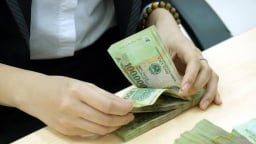
Two banks to list on Ho Chi Minh City bourse, expand charter capital
Vietnam's private banks Vietbank and BVBank are finalizing the last steps to transfer their trading from the unlisted public company market UPCoM to the Ho Chi Minh Stock Exchange (HoSE), while simultaneously implementing plans to increase their charter capital.
Banking - Thu, July 9, 2026 | 11:51 am GMT+7

Strong Q2 earnings, lower interest rates to bolster Vietnam stocks
Strong second-quarter corporate earnings and declining interest rates are expected to support Vietnam's stock market in the coming months, brokerage firms said, as the market moves beyond a period of limited news flow and enters a more favorable phase driven by improving fundamentals.
Finance - Thu, July 9, 2026 | 8:00 am GMT+7

Wistron raises construction, equipment investment in northern Vietnam province to $178 mln
Taiwanese technology firm Wistron has increased its investment in factory construction and equipment in Ninh Binh province to $178.27 million, adding $24.5 million to expand its facilities at Kim Bang Industrial Park.
Industries - Wed, July 8, 2026 | 7:56 pm GMT+7

Sun Group targets groundbreaking for $624 mln urban projects in central Vietnam this year
Vietnam's leading developer Sun Group aims to begin construction of two urban projects worth a combined VND16.4 trillion ($623.78 million) in the central province of Quang Ngai by the end of 2026, while also advancing plans for a new expressway linking the province with the Central Highlands.
Real Estate - Wed, July 8, 2026 | 4:54 pm GMT+7

Vietnam raises airport number target to 36 by 2030 as aviation demand surges
Vietnam plans to expand its airport network to 36 airports by 2030, up from the previous target of 30, under a revised national aviation infrastructure plan aimed at catering for rising passenger demand and boosting regional connectivity.
Infrastructure - Wed, July 8, 2026 | 4:45 pm GMT+7
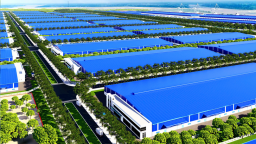
Germany's VFT Bio Fuels UG eyes $3.1 bln green steel complex in southern Vietnam
Vietnamese industrial park developer IMG Phuoc Dong and Germany’s VFT Bio Fuels UG have signed a memorandum of understanding to study the development of a $3.1 billion green steel complex in the southern province of Tay Ninh.
Industries - Wed, July 8, 2026 | 4:25 pm GMT+7
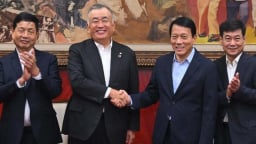
Vietnam police minister urges Yamato Holdings to study investment in Gia Binh airport
Vietnam’s Minister of Public Security Luong Tam Quang has called on Japan’s Yamato Holdings to assess investment opportunities in warehousing and cargo transport systems at Gia Binh International Airport, while exploring potential cooperation and operational models with Vietnamese partners once the facility becomes operational.
Infrastructure - Wed, July 8, 2026 | 3:09 pm GMT+7

Vietnam real estate M&A favors quality, clear legal status assets as FDI priorities evolve
Vietnam's real estate M&A market continued to attract foreign capital in the first half of 2026 despite persistent global economic uncertainties, but foreign investors are increasingly targeting assets with clear legal status, stable cash flow, and strong operational performance, with data centers emerging as a key growth segment.
Real Estate - Wed, July 8, 2026 | 1:38 pm GMT+7
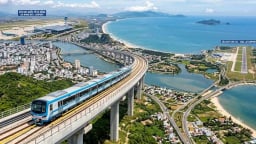
Central Vietnam hub Danang plans to tokenize nearly $4 bln in infrastructure projects to attract global capital
The Vietnam International Financial Center, located in the central city of Danang (VIFC Danang), plans to tokenize nearly $4 billion worth of infrastructure projects as part of a strategy to attract more global capital.
Economy - Wed, July 8, 2026 | 12:17 pm GMT+7

Computers, smartphones edge higher in price as AI memory boom tests Vietnam's ICT firms
Rising memory chip prices driven by artificial intelligence are spreading from semiconductor manufacturers to consumer electronics brands such as Apple, Dell and ASUS, pushing up the prices of computers and smartphones.
Companies - Wed, July 8, 2026 | 8:00 am GMT+7
LG Innotek to build $1 bln semiconductor substrate plant in northern Vietnam
South Korea's LG Innotek will spend $1 billion to build a semiconductor package substrate manufacturing plant in Hai Phong city, with mass production scheduled to begin in the third quarter of 2028, according to local authorities.
Industries - Tue, July 7, 2026 | 11:13 pm GMT+7

Malaysia’s JLand eyes up to $6 bln high-tech hub in Hanoi
Malaysia’s JLand Group has proposed developing a high-tech, innovation and data center complex in Hanoi with an estimated investment of $4-6 billion, as Vietnam’s capital seeks to attract technology projects and strengthen its digital infrastructure.
Infrastructure - Tue, July 7, 2026 | 4:26 pm GMT+7
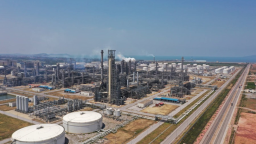
PVOIL approves $600 mln crude supply plan for Nghi Son refinery
PVOIL, a subsidiary of state-owned Petrovietnam, has approved transactions worth an estimated $600 million to supply crude oil to the Nghi Son Refinery and Petrochemical complex during the second half of 2026, as the country’s largest refinery broadens its feedstock sources beyond its traditional Kuwaiti supply.
Companies - Tue, July 7, 2026 | 1:33 pm GMT+7

F88 wins two international awards for customer-centric growth strategy
F88, a major Vietnamese financial services company, has received two international awards from the Asian Banking & Finance (ABF), a Singapore-based publication, recognizing its initiatives in customer experience and service innovation.
Companies - Tue, July 7, 2026 | 12:42 pm GMT+7