


Attracting quality FDI to tap new opportunities: association
Vietnam needs to promote its inherent strengths to attract FDI, especially from major powers, to become not only a “workshop” of the world, but also a powerhouse for chip production, said Prof. Dr. Nguyen Mai, chairman of the Vietnam's Association of Foreign Invested Enterprises (VAFIE).
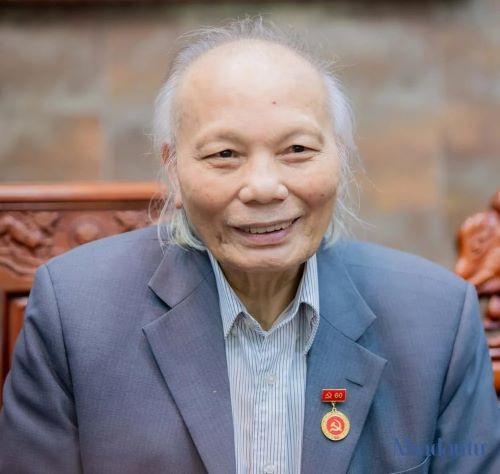
Prof. Dr. Nguyen Mai, chairman of the Vietnam's Association of Foreign Invested Enterprises (VAFIE). Photo by The Investor/Trong Hieu.
2023 was a year of unpredictable changes globally, both geopolitically and economically, forcing countries and multinational corporations to restructure their economies and global supply chains. How has this impacted Vietnam's FDI attraction orientation?
To understand Vietnam's FDI attraction orientation, it is necessary to clarify the characteristics of foreign investment since the Covid-19 pandemic.
Firstly, many countries have been forced to restructure their economies in the context of geopolitical conflicts, slow economic growth (except the U.S.), high inflation, and rising unemployment. They've had to prioritize solving urgent domestic problems, leading to policies encouraging businesses that have invested abroad (especially in China) to move their factories home or neighboring nations with the same value system.
Secondly, with changes in foreign affairs among countries (mainly developed countries), corporations that account for 70-80% of global FDI have also been forced to change. Notably, developing countries, especially in Asia, have emerged and invested a lot abroad. They have chosen countries with attractive investment environments, such as India, Malaysia, and Vietnam.
Thirdly, countries have had to restructure global supply chains because of fluctuating prices for energy, raw materials, minerals, and food. Global multinational companies have restructured to ensure satisfactory results. Therefore, they have encouraged production using local raw materials, or made investments in countries that are not affected by logistics costs, especially areas with high labor productivity and low expenses.
The above issues show certain challenges and opportunities for Vietnam. We clearly benefit from FDI due to our good diplomatic relations with the U.S., China, and many other major powers. This was evidenced by 28 visits by high-ranking leaders to Vietnam in 2023, including those of historical significance by Party General Secretary and President of China Xi Jinping and U.S. President Joe Biden, along with 22 visits by Vietnamese leaders to important partners and traditional friends last year.
However, it should be emphasized that with the inward-looking strategies of other countries, Vietnam's FDI attraction has been affected, so it has launched a restructuring strategy in its FDI attraction orientation.
In 2022, the Politburo issued Resolution 50 on foreign investment and the government issued a strategy to attract foreign investors in the new context. Basically, we adjusted the policy orientation to attract FDI more selectively, and targeting new/future industries, modern services such as banking, insurance, healthcare, education-training, and innovation. This has led to significant change.
Vietnam’s FDI attraction needs to be connected to green growth because the world is facing pressure to reduce greenhouse gas emissions. There have been many major global conferences in recent years on this issue, including the 26th session of the Conference of the Parties of the UN Framework Convention on Climate Change (COP26) in Glasgow, Scotland (U.K) in November 2021; COP27 in Sharm El-Sheikh (Egypt) in November 2022; and most recently COP28 in Dubai in December 2023.
COP28 took a step further than previous conferences, with climate finance taking center stage. The Green Climate Fund (GCF) received a boost to its second replenishment (GCF-2) with the announcement of six new pledges by Australia, Estonia, Italy, Portugal, Switzerland, and the U.S. Total pledges now stand at a record $12.8 billion from 31 countries with further contributions expected.
In addition, there are also new mechanisms such as carbon credits and a shift to electric vehicles, and a series of countries adopting solar power, wind power, renewable electricity, and tidal power.
Vietnam has issued the "National Strategy on Green Growth for the period 2021-2030, with a vision to 2050", which has been lauded around the world. The overall goal is green growth, contributing to promoting economic restructuring and prosperity, environmental sustainability, and social justice, towards a green, carbon-neutral economy, contributing to minimizing global temperature rises.
Vietnam also has a strategy to transition to a digital economy, digital government, digital society, and digital business. This strategy is closely linked with Vietnam's high-quality human resources, with the capacity and qualifications of Vietnamese people meeting the requirements of the digital economy such as AI and Big Data.
As evidenced, many Vietnamese universities are now in the top 1,000 in the world. In 2023, Vietnamese scientists Assoc. Prof. Dr. Le Hoang Son and Prof. Dr Nguyen Dinh Duc were named among the 10,000 most influential scientists in the world for the fifth consecutive year.
In addition, many large enterprises in Vietnam have focused on developing in the technology field, such as FPT, Viettel, and Vingroup.
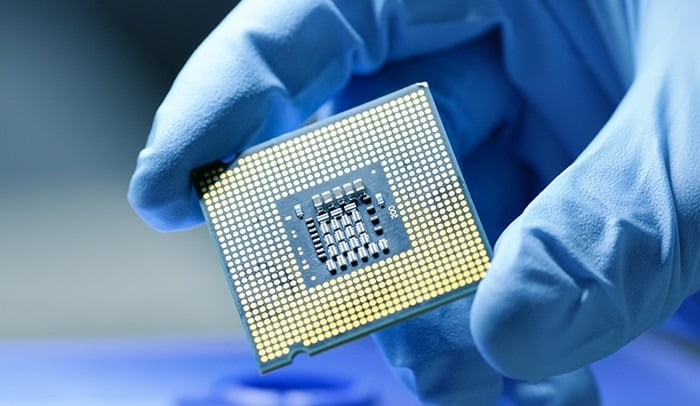
A semiconductor. Photo courtesy of Mitsubishi Electric.
Why should Vietnam to engage in the semiconductor market when it is ranked behind many semiconductor chip empires?
Each country in the development process has opportunities. Vietnam has its own opportunities in the field of semiconductor chips when looking at three positive factors.
As mentioned, a large number of diplomatic delegations have visited Vietnam. In particular, delegations from the U.S. and China arrived in September and December 2023, respectively. Never before in just a short period of time have we welcomed both U.S. President John Biden and Party General Secretary and President of China Xi Jinping. These events affirm Vietnam's new stature and position in the world.
For the U.S., what is special is that after only 10 years of comprehensive cooperation, the two countries skipped the strategic partnership to a comprehensive strategic partnership. Thus, we now have five comprehensive strategic partners who are members of the UN Security Council. The U.S. also signed a joint statement with Vietnam, which acknowledged that the two countries have different approaches to some issues, and agreed to discuss these areas to reach joint agreements.
This was also the first time a series of high-ranking U.S. officials had visited Vietnam (before President John Biden were the Secretary of State and the Secretary of Commerce).
Biden’s visit was followed by that of Party General Secretary and President of China Xi Jinping, during which Vietnam and China signed 36 cooperation agreements, a record number in the history of diplomatic relations between the two countries.
Since that visit, we have seen many changes, especially in trade and investment. Shipments through border ports from Mong Cai town in Quang Ninh province or Lao Cai province have all been processed quickly in only 3-5 minutes. Not to mention, rail transport has also helped reduce costs and required less manpower, helping Vietnam export more, thus reducing its trade deficit with China.
China itself has seen benefits from investing in Vietnam. Due to the U.S.-China trade tensions, its exports have been affected and it has shifted to Vietnam and other countries in ASEAN.
Vietnam uses textiles, footwear, and light industry materials from China. With abundant raw materials, good quality, cheap prices, and low logistics costs, many Chinese businesses have chosen to invest in Vietnam, thereby creating added product value and benefits for them. At the same time, Vietnam also offers tax incentives and benefits from increasing exports to the U.S. and the E.U. through the Comprehensive and Progressive Agreement for Trans-Pacific Partnership (CPTPP) and other free trade agreements (FTAs).
In 2023 alone, the total registered capital of Chinese enterprises in Vietnam reached $4.47 billion, a sharp increase from $2.46 billion in 2020, $2.92 billion in 2021, and $2.5 billion in 2022. This figure is forecast increase in 2024 and 2025.
In the past, when talking about Chinese FDI, people often had prejudices about outdated, polluting machinery and equipment. But now things are different, and many of China's technologies are more modern rather than inferior to others around the world. The textile industry is a typical example of environmentally friendly technology. In addition, China also has large solar cell production projects in Vietnam. It is a leading country in the field of energy and renewable energy, owing the top energy technologies in the world.
With the visits of the two leading powers in the world, we are clearly in a very different position. As Party General Secretary Nguyen Phu Trong once affirmed: "Vietnam's position in the international arena has never been better than now, especially with the two biggest powers in the world."
With such joint declarations and signed contracts, we are clearly in a very good position. Vietnam, therefore, needs to take advantage of favorable opportunities to develop its economy. Without a strong economy, there is no national strength.
In addition to stable politics and very good diplomatic relations, what other advantages does Vietnam have to develop semiconductor technology?
Vietnam has 22 million tons of rare earths (according to a 2022 report by the U.S. Geological Survey). This benefits Vietnam and the world as a whole. China boasts the largest rare earth market share, currently holding reserves of 44 million tons. Each year it exploits about 220,000 tons of rare earths, accounting for about 80% of the global rare earth market. When China "cut off" rare earths in the 2022-2023 period, the automobile and phone markets faced a shortage due to lack of chips.
Vietnam has both rare earths and tungsten. Every nation has its own resources, just like when we first discovered oil and gas on the continental shelf in the southern region in the 1980s and 1990s, a time when Vietnam was very poor. Large international oil and gas corporations then entered Vietnam and signed contracts to explore and exploit oil and gas. We received money under exploitation contracts without costs. At that time, oil and gas exploitation accounted for 20% of total state budget revenue.
More importantly, politically, the presence of multinational corporations has contributed to protecting our sea and island sovereignty. They pressured the U.S. government to lift the embargo on Vietnam and establish diplomatic relations with the Southeast Asian nation in 1994.
Vietnam has two "trump cards": first is the attractive investment destination for foreign investors due to political stability and incentives; second is rare earths - an important card. We need to have a comprehensive strategy on this resource so we can use it to "bargain" with other countries, providing rare earths for them to minimize reliance on China, and also choosing investors to build semiconductor factories.
Late last year, the U.S. Semiconductor Industry Association worked in Vietnam with dozens of large corporations and signed many agreements. Nguyen Chi Dung, Vietnamese Minister of Planning and Investment, announced that there are currently 12-13 agreements in place, and others will be inked in the future. At that time, we will produce both rare earths and chips.
According to U.S. Under Secretary of State for Economic Growth, Energy, and the Environment Jose Fernandez, Vietnam has attracted dozens of semiconductor companies and has the potential to become a powerhouse for semiconductor chips. He declared that the U.S. will spend $50 billion stabilizing and expanding global semiconductor production, ensuring the semiconductor supply chain, and developing secure and reliable information and communications technology (ICT). The technology will be provided for a number of large partners, including Vietnam, to develop semiconductor production.
To prepare for the development of rare earth mining and the semiconductor industry, Vietnam has taken preparatory steps in terms of training highly qualified human resources. When the National Innovation Center (NIC) was launched, large foreign investors signed cooperation agreements with Vietnam to train 500,000 workers for the semiconductor industry until 2030.
We will have 10,000 engineers, 1,000 masters and 100 doctors at FPT University, Vietnam National University, Hanoi; Vietnam National University, Ho Chi Minh City; Hanoi University of Science and Technology, and Ho Chi Minh City University of Technology.
From now to 2030, each year we will train hundreds of thousands of people under modern and effective training programs following U.S. curricula and methods.
According to U.S. assessments, Vietnamese enterprises are now capable of making chips, although they are not very modern. However, combining the above factors, this is an important premise for us to initially attract and access modern technology to produce chips. I think rare earths and semiconductors can account for at least 15% of Vietnam's GDP. This is a huge number.
Chip production faces competition from the world's leading powers. Vietnam has the right conditions to develop it, but in the short term, will investors simply set up factories or consider technology transfer?
Obviously, Vietnam cannot rely only on FDI enterprises to become a semiconductor power. We must do it ourselves in three important directions.
First, we need to have a contingent of high-level human resources in governance and world-leading technology. To do this, we must both train a domestic workforce and attract talents from abroad.
Vietnam is not inferior to Japan and South Korea in terms of the number of leading engineers and PhDs working in artificial intelligence (AI). But, the domestic AI workforce remains poor. Therefore, it is important to attract overseas Vietnamese to return home to develop this modern industry.
Another direction is to encourage stronger R&D. Only when we have more access to R&D, buying and selling licenses for transferring world technology, will we have the basis to gradually succeed in this field.
Finally, Vietnam must attach importance to policies that encourage talent and businesses to spend money on technology research and development. With such conditions, in the next 10 years we will start to catch up with more advanced countries.
For example, in the oil and gas industry, for each contract that state-owned giant Petrovietnam signed in the past it spent at least $2 million training Vietnamese officials at leading facilities in the U.K., U.S., and Australia. Therefore, Vietnam's oil and gas industry has developed rapidly, with the best human resources. Vietnamese engineers can drill and exploit oil themselves. Vietnam has even invested abroad and cooperated with other countries.
A big barrier to sci-tech development is investment resources. Compared to developed countries, Vietnam's sci-tech reinvestment resources are still very low. What is the solution to this problem?
For science and technology investment resources, it is not just about the state budget. The most important aspect is social resources, with private enterprises accounting for up to 60% of the total. For example, Pham Nhat Vuong, chairman of Vietnamese conglomerate Vingroup, has created a series of big data research, automobile research, and modern industry institutes.
The second direction is to transform research organizations, scientific institutes, and university institutes into independent research facilities. Proceeds from our research achievements will be used to pay salaries for researchers.
Vietnam has already implemented such a transition mechanism, but it has been a bit slow. Some achievements recorded by the Vietnam Academy of Science and Technology came from independent institutes. Each year, the state grants some funding but the rest comes from self-research activities. Many universities in Vietnam have seen great changes thanks to accumulated annual revenue and sound financial autonomy.
Another important factor is that the working environment at research facilities needs to be truly democratic, free, and competitive. For example, Microsoft does not set exams to recruit personnel. It has a council to evaluate the ideas of a candidate who wants to join the company, thereby making assessments about his/her ideas, qualifications, and integration ability.
After that, the candidate will draw up a research plan. After six months to one year, he/she will submit a report. After two years, the council will meet and make an assessment. If the candidate meets Microsoft's criteria, he/she will be accepted and receive a high salary.
I think the most important things in the working environment are freedom and comfort. Without them, there cannot be talent.
In addition, to develop science and technology, we also need an open market system, from research, application, and research cooperation between inventors and those who put the research results into practice and commercialize sci-tech products.
- Related News


- Read More

Vingroup withdraws from Vietnam North-South high-speed rail bid
Vingroup has withdrawn its registration to invest in Vietnam's North-South high-speed railway project, saying it wants to concentrate resources on other strategic infrastructure and energy projects.
Infrastructure - Thu, December 25, 2025 | 4:37 pm GMT+7

Vietnam sees about 785,000 successful real estate transactions annually since 2022
Vietnam’s real estate market has gradually recovered and resumed growth since 2022, with annual transactions reaching 537,000-785,000, according to the Ministry of Construction.
Real Estate - Thu, December 25, 2025 | 3:54 pm GMT+7

Vietnam PM orders resolution of bottlenecks at GS Energy-backed LNG projects
Prime Minister Pham Minh Chinh has directed authorities to resolve outstanding obstacles facing the Long An LNG I and II power projects, worth a total of $3.13 billion and backed by South Korea’s GS Energy, as the government seeks to accelerate large-scale energy investments nationwide.
Energy - Thu, December 25, 2025 | 3:25 pm GMT+7

Deo Ca Group withdraws from Hanoi’s gigantic project Red River Scenic Boulevard, cites focus on core expertise
Deo Ca Group, a major Vietnamese infrastructure developer, said it has decided to withdraw from participation in Hanoi’s Red River Scenic Boulevard project, despite being among the first companies to help bring the long-delayed scheme off the drawing board.
Real Estate - Thu, December 25, 2025 | 2:09 pm GMT+7

Vietnam banks hold extraordinary shareholder meetings for management shake-up
Several Vietnamese banks have convened extraordinary general meetings of shareholders (EGMs), signalling a broader phase of management restructuring and strategic realignment as the sector prepares for a new growth cycle in 2026.
Banking - Thu, December 25, 2025 | 12:28 pm GMT+7

Vietnamese agri major Loc Troi’s predicament ahead of partnership with TTC AgriS
TTC AgriS, a leading sugar maker in Vietnam, and Loc Troi Group, a major agricultural service supplier and producer, have agreed to cooperate in a bid to upgrade the country’s rice industry. But Loc Troi is entering the partnership amid the most severe crisis in its history and faces an urgent need for substantial financial support.
Companies - Thu, December 25, 2025 | 8:37 am GMT+7

Korean textile maker Panko Vina to shut Vietnam operations from Feb
Panko Vina Co Ltd, a South Korean textile manufacturer, will cease all production and business operations in Vietnam from February 1, 2026, ending more than 23 years of operations in the country.
Companies - Wed, December 24, 2025 | 9:13 pm GMT+7

Vietnam's garment giant Vinatex posts second-highest profit in 30 years despite trade headwinds
Vietnam National Textile and Garment Group (Vinatex), the country's top garment maker, expects consolidated profit to reach VND1,355 billion ($51.5 million) in 2025, the second-highest result in its 30-year history, despite mounting global trade and cost pressures on the industry.
Companies - Wed, December 24, 2025 | 5:03 pm GMT+7

Finding a new balance
The State Bank of Vietnam's proactive and flexible monetary policy in 2026 is expected to maintain market operations within a stable range. For businesses, particularly those in the external sector, it remains essential to proactively hedge against exchange rate and interest rate risks to protect their bottom line, writes Vu Binh Minh, associate director, FX Trading, MSS, HSBC Vietnam.
Consulting - Wed, December 24, 2025 | 4:47 pm GMT+7

Thai giant Central Retail sells Vietnam electronics business to Pico for $36 mln
Thailand’s Central Retail has announced the sale of its Vietnamese electronics retail business to local retailer Pico Holdings JSC for nearly THB1.14 billion ($36 million), as it sharpens its focus on core businesses in the country.
Companies - Wed, December 24, 2025 | 2:00 pm GMT+7

What should investors reasonably expect from IPO stocks?
Experience from both Vietnam and global markets shows that initial public offering (IPO) stocks rarely deliver immediate gains. However, investors who select companies with solid fundamentals and maintain a long-term holding strategy can be rewarded for their patience.
Finance - Wed, December 24, 2025 | 10:45 am GMT+7

Vingroup completes $325 mln overseas bond issuance
Vingroup, Vietnam's biggest listed company by market capitalization, has completed its international issuance of bonds totaling $325 million, with a 5-year maturity, and listed on Austria's Vienna Stock Exchange.
Finance - Wed, December 24, 2025 | 10:17 am GMT+7

Vietnam's public investment-linked stocks seen benefiting in 2026
Capital flows in 2026 are expected to favor sectors that stand to benefit from Vietnam’s public investment drive, including infrastructure, energy, and construction, market experts said.
Finance - Wed, December 24, 2025 | 9:33 am GMT+7

High gold prices to drive prices of property, goods in Vietnam: Sunhouse chairman
In a scenario where gold prices remain elevated in Vietnam, the real estate market is likely to follow suit, pushing income levels higher and driving up prices across other goods, said Nguyen Xuan Phu, chairman of Sunhouse, a leading home appliance manufacturer, while outlining his 2026-2030 forecast.
Economy - Wed, December 24, 2025 | 8:00 am GMT+7

Malaysia’s economy grows robustly in 2025: IMF
Malaysia has shown notable resilience amid global trade tensions and policy uncertainty, with its economy growing at a healthy pace this year, supported by strong domestic consumption and investment, solid employment growth, and a global upcycle in the technology sector, according to Masahiro Nozaki, Mission Chief for Malaysia at the International Monetary Fund (IMF).
Southeast Asia - Tue, December 23, 2025 | 10:07 pm GMT+7

Indonesia to stop rice imports next year
Indonesia will not import rice for either consumption or industrial use next year, citing sufficient domestic production, according to a government official.
Southeast Asia - Tue, December 23, 2025 | 10:04 pm GMT+7