


Finding a new balance
The State Bank of Vietnam's proactive and flexible monetary policy in 2026 is expected to maintain market operations within a stable range. For businesses, particularly those in the external sector, it remains essential to proactively hedge against exchange rate and interest rate risks to protect their bottom line, writes Vu Binh Minh, associate director, FX Trading, MSS, HSBC Vietnam.

2025 marks another year in which Vietnam has consistently met the majority of its macroeconomic targets established at the start of the year, ranging from robust economic growth to effective inflation control and various other key indicators.
Reflecting on the past 12 months, these achievements are particularly impressive given the significant headwinds the nation has faced, including shifting tariff landscapes, climate changes, and escalating global public debt.
Recall in April, when President Donald Trump announced global tariffs that sent shockwaves through the international community, few could have predicted such a resilient economic performance for the year.
Yet, through unwavering determination and decisive policy action across all levels of the Government, Vietnam is concluding the year with record-breaking growth. While these successes provide a strong foundation for optimism, they also pose a critical question for 2026: can Vietnam establish a new balance point amidst ongoing global uncertainty?
Macroeconomics
Vietnam’s macroeconomic landscape in 2025 can be viewed in two distinct phases, with the shift in trade policy serving as the primary inflection point. The year began on an optimistic note, with high expectations that the country would build upon its strong performance from 2024.
However, by Q1, tariffs became the dominant buzz word. Vietnam, which runs the third-largest bilateral trade surplus with the U.S., is widely regarded as the ASEAN country with the highest tariff risk. The tariff typhoon shocked the market, with Vietnam facing 46% tariffs by the US in April. But, after rounds of negotiations, Vietnam is in the same 19-20% tariff camp as other ASEAN emerging markets.
Despite the lingering uncertainty surrounding these negotiations, Vietnam’s export growth has remained remarkably resilient. This is partly due to frontloading trade when exporters rushed to ship goods, and the impact has not faded even in recent months.
The Trump administration’s announcement of exceptionally high tariffs initially sparked widespread skepticism regarding Vietnam’s ability to achieve its ambitious year-end economic targets.
However, subsequent macroeconomic data has defied these concerns, revealing robust GDP growth throughout Q2 and Q3, with each period consistently building on the momentum of the last.
Despite an uncertain trade environment, industrial production (IP) grew 10% year-on-year in Q3. This expansion was notably broad-based, extending well beyond industrial sector.
The services sector continues to see strong growth thanks to the stellar performance in commercial services and tourism-related sectors. Retail sales also saw meaningful improvements, jumping 12% year-on-year in Q3.
Meanwhile, tourism-related sectors, including transport and accommodation, are also seeing an ongoing boom as Vietnam is seeing the return of tourists equivalent to 120% of 2019’s level, leading ASEAN in tourism recovery.
Coming back to the trade landscape, trade continues to boom with exports and imports both hitting close to 20 year-on-year growth in Q3. Vietnam’s trade surplus in Q3 more than doubled to $3 billion, from H1/2025, which brought the total trade balance to $20.53 billion surplus for the first 11 months of the year.
November continued to see a strong trade performance, though at a slower pace, reflecting the fading impact of frontloading trade. Export and import growth moderated to 15.1% year-on-year and 16%, respectively, from their peaks.
It can be argued that the moderation in trade momentum has been broad-based the past two months, but electronics exports have sustained their strong growth and remained a resilient bright spot.
Since the beginning of 2025, electronics products have exceeded light manufacturing to be the top exports to the U.S. market. Since U.S.-China trade tensions, Vietnam has elevated its importance in final electronics assembly, specialising in finished consumer electronics.
This echoes Vietnam’s progress in climbing up the tech value chain. While Vietnam is concentrated in the lower-end of the tech supply chain, the elevated AI demand still has positive spillover impact, supporting computer and electronics components export growth. Besides consumer electronics, Vietnam is also becoming increasingly important in producing processor ICs – a higher value-add segment than just electronics assembly.
According to a recent Bloomberg report, as of August this year, Vietnam exported 75% of game consoles in to the United States. Monthly exports in this category, which averaged less than $30 million in 2024, surged to over $400 million following the implementation of new U.S.-China tariff policies in May.
Bloomberg also noted that a number of Chinese exporters with operations in Vietnam, such as Pegatron, Hosiden, Goertek, etc., are ramping up production, expanding their workforce, upgrading assembly lines, and increasing factory capacity.
Against this backdrop, Vietnam’s FDI performance paints a rosy picture as the country has been benefited handsomely from the FDI-driven export boom. While newly registered FDI has seen an 8% year-on-year decline, adjusted capital and registered capital for capital contributions and share purchases increased by 17% and 50.7% respectively, bringing the total FDI inflows to $33.69 billion, marking the highest level in the past five years.
Similarly, disbursed FDI in Vietnam in the first 11 months of 2025 also reached its five-year high at estimatedly $23.6 billion, an 8.9% year-on-year. Interestingly, the FDI composition paints a picture of shifting dynamics, with inflows from mainland China and the U.S. picked up notably to partially offset the drop from other investors.
Monetary market
Having said that, the overall outlook was not entirely rosy. The financial and monetary markets in 2025 endured a turbulent twelve months characterized by significant headwinds. Interbank interest rates remained stable throughout most of the first half of the year, supported by the State Bank of Vietnam’s (SBV) flexible monetary policy aimed at promoting credit growth and stimulating the economy against potential tariff risks.
However, toward the final months of the year, VND interest rates faced mounting pressure, reaching near a three-year high. Amidst a strong seasonal surge in credit demand, this pressure was clearly reflected in the gap between credit growth (16.15%) and deposit growth (12%) as of November 21.
Notably, the SBV has maintained a dual approach: it continues to support market liquidity through record-high Open Market Operations (OMO) totaling nearly VND370 trillion ($14.06 billion) and foreign exchange swaps operation, while simultaneously raising the OMO interest rate to 4.5% from the 4% level held since September 2024.
In addition, inflation is also worth flagging. Headline inflation momentum accelerated to 0.5% month-on-month in November, translating into year-on-year inflation of 3.58%. The main culprit was increasing food prices, as the recent flooding disrupted food supply. That said, inflation should remain well below the 5% inflation ceiling set by the National Assembly.
In summary, amidst these conflicting “push-pull” factors, the SBV is projected to maintain a stable policy interest rate. Given the ambitious economic growth targets for the coming years while inflation remaining below target, the average interbank VND interest rate is expected to stabilize in the near future.
Consequently, the policy rate will likely remain unchanged, provided that key economic indicators stay consistent. Meanwhile, Open Market Operations (OMO) and newer tools, such as currency swaps, will continue to play a primary role in guiding the money market, managing liquidity, and shaping interest rate expectations. This shift toward more effective and flexible open market operations is viewed as a positive development for the broader financial system.
With regard to exchange rates, the USD-VND pair also experienced significant volatility throughout 2025. Despite a decline of more than 9% in the USD Index and the US Federal Reserve’s return to an interest rate-cutting cycle, the VND depreciated by approximately 3.5% against the greenback since the start of the year.
This depreciation presented several challenges for investors, market participants, and regulators. The upward trend of the USD-VND rate was primarily driven by tariff concerns, diverging monetary policies between the U.S. and Vietnam, and sustained net selling of Vietnamese equities by foreign investors.
Additionally, increased demand for foreign currency – driven by dividend payments and imports – alongside fluctuations in global and domestic gold markets added further pressure. While the exchange rate climbed for much of the year, it has stabilized since September due to the SBV’s proactive and flexible foreign exchange management.
Specifically, the SBV lowered the central exchange rate to guide market sentiment and utilized forward contract sales to commercial banks, ensuring liquidity and meeting the legitimate foreign currency needs of businesses. Consequently, the exchange rate has remained stable for the remainder of 2025.
Looking ahead to 2026, while structural demand for foreign exchange persists, the projected increase in the USD-VND rate is expected to be more modest than in the previous two years. This shift is supported by narrowing policy differences, as the Fed has largely ruled out further rate hikes, and the peak period of tariff uncertainty has passed.
Key pillars for 2026
While it is hard to predict how 2026 will evolve, leading indicators like the PMI offer some encouraging news. Headline PMI remained expansionary at 53.8 in November. In particular, new export orders have expanded at a faster pace for the second month.
Recently, Vietnam has focused on boosting public investment. In particular, the focus on accelerating mega infrastructure projects has been a priority. Vietnam’s public investment on infrastructure accounts for approximately 6-7% of GDP, significantly higher than other countries in the region. This remains a key growth driver for the economy.
Given the rising external uncertainties coupled with ongoing global trade risks, the continuous focus on boosting public investment will be a vital pillar for growth. This is particularly important for Vietnam given its limited room for monetary easing but more fiscal flexibility due to its public-debt-to GDP ratio is at the lowest among ASEAN countries.
On the trade outlook, trade diversification has become a buzz word in the face of tariff uncertainty from the U.S. While the U.S. is a leading exporting destination, Vietnam is accelerating efforts to pursue long-term trade opportunities. In 2024, Vietnam’s trade with the EU grew 36% year-on-year against its 2019 level, making it the most important trading partner in ASEAN.
Furthermore, Vietnam has entered a number of trade agreements as well as elevating its diplomatic relationships with various countries, signalling the huge potential of trade diversification.
Regarding the financial markets, although Vietnam successfully controlled inflation and stabilized its macroeconomy in 2025, the foreign exchange market and the VND remained subject to complex and unpredictable international developments.
These included the uncertain monetary trajectory of the Fed, the trade and tariff policies of the US administration, and global fluctuations in the USD. Consequently, external variables may still trigger periodic risks, placing temporary pressure on the domestic supply-demand balance of foreign currency.
However, the SBV’s proactive and flexible monetary policy is expected to maintain market operations within a stable range. For businesses, particularly those in the external sector, it remains essential to proactively hedge against exchange rate and interest rate risks to protect their bottom line.
While 2026 will present continued challenges, it also offers significant opportunities. Achieving the right balance will be key to help the nation firmly enter a new growth era.
- Related News


- Read More
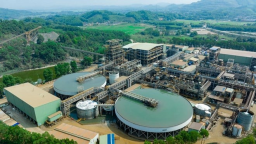
Masan High-Tech Materials partners with S Korea’s GBI on tungsten processing
Masan High-Tech Materials (UPCoM: MSR), the mining unit of Vietnamese conglomerate Masan Group (HoSE: MSN), has entered into a strategic partnership with South Korea’s GB Innovation (GBI) to process Korean tungsten concentrate into higher-value products in Vietnam, strengthening a non-Chinese tungsten supply chain.
Companies - Thu, July 9, 2026 | 3:51 pm GMT+7

Idemitsu Kosan expands energy ecosystem in Vietnam
After more than three decades of operations in Vietnam, Japan’s Idemitsu Kosan is further expanding its energy ecosystem with a biomass pellet plant project in the central province of Gia Lai.
Industries - Thu, July 9, 2026 | 1:43 pm GMT+7
Two banks to list on Ho Chi Minh City bourse, expand charter capital
Vietnam's private banks Vietbank and BVBank are finalizing the last steps to transfer their trading from the unlisted public company market UPCoM to the Ho Chi Minh Stock Exchange (HoSE), while simultaneously implementing plans to increase their charter capital.
Banking - Thu, July 9, 2026 | 11:51 am GMT+7
Strong Q2 earnings, lower interest rates to bolster Vietnam stocks
Strong second-quarter corporate earnings and declining interest rates are expected to support Vietnam's stock market in the coming months, brokerage firms said, as the market moves beyond a period of limited news flow and enters a more favorable phase driven by improving fundamentals.
Finance - Thu, July 9, 2026 | 8:00 am GMT+7

Wistron raises construction, equipment investment in northern Vietnam province to $178 mln
Taiwanese technology firm Wistron has increased its investment in factory construction and equipment in Ninh Binh province to $178.27 million, adding $24.5 million to expand its facilities at Kim Bang Industrial Park.
Industries - Wed, July 8, 2026 | 7:56 pm GMT+7

Sun Group targets groundbreaking for $624 mln urban projects in central Vietnam this year
Vietnam's leading developer Sun Group aims to begin construction of two urban projects worth a combined VND16.4 trillion ($623.78 million) in the central province of Quang Ngai by the end of 2026, while also advancing plans for a new expressway linking the province with the Central Highlands.
Real Estate - Wed, July 8, 2026 | 4:54 pm GMT+7

Vietnam raises airport number target to 36 by 2030 as aviation demand surges
Vietnam plans to expand its airport network to 36 airports by 2030, up from the previous target of 30, under a revised national aviation infrastructure plan aimed at catering for rising passenger demand and boosting regional connectivity.
Infrastructure - Wed, July 8, 2026 | 4:45 pm GMT+7
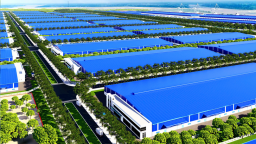
Germany's VFT Bio Fuels UG eyes $3.1 bln green steel complex in southern Vietnam
Vietnamese industrial park developer IMG Phuoc Dong and Germany’s VFT Bio Fuels UG have signed a memorandum of understanding to study the development of a $3.1 billion green steel complex in the southern province of Tay Ninh.
Industries - Wed, July 8, 2026 | 4:25 pm GMT+7

Vietnam police minister urges Yamato Holdings to study investment in Gia Binh airport
Vietnam’s Minister of Public Security Luong Tam Quang has called on Japan’s Yamato Holdings to assess investment opportunities in warehousing and cargo transport systems at Gia Binh International Airport, while exploring potential cooperation and operational models with Vietnamese partners once the facility becomes operational.
Infrastructure - Wed, July 8, 2026 | 3:09 pm GMT+7

Vietnam real estate M&A favors quality, clear legal status assets as FDI priorities evolve
Vietnam's real estate M&A market continued to attract foreign capital in the first half of 2026 despite persistent global economic uncertainties, but foreign investors are increasingly targeting assets with clear legal status, stable cash flow, and strong operational performance, with data centers emerging as a key growth segment.
Real Estate - Wed, July 8, 2026 | 1:38 pm GMT+7

Central Vietnam hub Danang plans to tokenize nearly $4 bln in infrastructure projects to attract global capital
The Vietnam International Financial Center, located in the central city of Danang (VIFC Danang), plans to tokenize nearly $4 billion worth of infrastructure projects as part of a strategy to attract more global capital.
Economy - Wed, July 8, 2026 | 12:17 pm GMT+7
Computers, smartphones edge higher in price as AI memory boom tests Vietnam's ICT firms
Rising memory chip prices driven by artificial intelligence are spreading from semiconductor manufacturers to consumer electronics brands such as Apple, Dell and ASUS, pushing up the prices of computers and smartphones.
Companies - Wed, July 8, 2026 | 8:00 am GMT+7
LG Innotek to build $1 bln semiconductor substrate plant in northern Vietnam
South Korea's LG Innotek will spend $1 billion to build a semiconductor package substrate manufacturing plant in Hai Phong city, with mass production scheduled to begin in the third quarter of 2028, according to local authorities.
Industries - Tue, July 7, 2026 | 11:13 pm GMT+7
Malaysia’s JLand eyes up to $6 bln high-tech hub in Hanoi
Malaysia’s JLand Group has proposed developing a high-tech, innovation and data center complex in Hanoi with an estimated investment of $4-6 billion, as Vietnam’s capital seeks to attract technology projects and strengthen its digital infrastructure.
Infrastructure - Tue, July 7, 2026 | 4:26 pm GMT+7
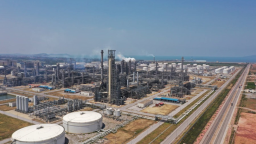
PVOIL approves $600 mln crude supply plan for Nghi Son refinery
PVOIL, a subsidiary of state-owned Petrovietnam, has approved transactions worth an estimated $600 million to supply crude oil to the Nghi Son Refinery and Petrochemical complex during the second half of 2026, as the country’s largest refinery broadens its feedstock sources beyond its traditional Kuwaiti supply.
Companies - Tue, July 7, 2026 | 1:33 pm GMT+7

F88 wins two international awards for customer-centric growth strategy
F88, a major Vietnamese financial services company, has received two international awards from the Asian Banking & Finance (ABF), a Singapore-based publication, recognizing its initiatives in customer experience and service innovation.
Companies - Tue, July 7, 2026 | 12:42 pm GMT+7
- Travel
-

Sun Group spends $3.5 bln to build 17,400-room accommodation ecosystem in Phu Quoc ahead of APEC 2027
-
CapitaLand launches 4th edition of campaign with $98,000 commitment to support vulnerable children
-
How Phu Quoc attracts travelers seeking to escape summer heat
-
Sun PhuQuoc Airways launches Singapore route, connecting two of Asia's 'paradise' islands
-
Seta - A “silken thread” weaving contemporary Cantonese cuisine into the soul of Phu Quoc
-
Danang airport starts $57 mln terminal expansion