


Oil price shock may weigh on Vietnam’s growth, inflation: expert
Geopolitical tensions in the Middle East are fueling volatility in global energy markets, raising the risk that higher oil prices could pressure Vietnam’s growth and inflation through exchange rates, commodity costs, and imported inflation, according to Assoc. Prof. Dr. Tran Viet Dung, director of the Banking Research Institute at the Banking Academy of Vietnam.

Assoc. Prof. Dr. Tran Viet Dung, director of the Banking Research Institute at the Banking Academy of Vietnam. Photo by The Investor/Trong Hieu.
How will rising oil prices and potential supply chain disruptions affect Vietnam’s economy and the 10% GDP growth target for 2026?
To assess the impact, we should first consider three main scenarios regarding oil prices and geopolitical conflict. In the positive scenario, when tensions ease relatively quickly and oil prices fluctuate around $75-85 per barrel, the impact on Vietnam’s economy would mainly be short-term, inflation would increase only slightly, and growth could remain relatively stable.
In the baseline scenario, oil prices stay around $85-95 per barrel for several months, with higher transportation and maritime insurance costs. Under this scenario, Vietnam’s inflation could rise by about 0.3-0.6 percentage points, and economic growth would face moderate downward pressure.
In the negative scenario, if the conflict persists and oil prices exceed $100 per barrel, the impact would be much stronger. Rising energy and logistics costs would simultaneously push inflation higher and weaken growth. Estimates suggest that every additional $10 increase in oil prices could reduce GDP growth by about 20-30 basis points.
Vietnam is currently quite sensitive to fluctuations in global energy prices due to its significant dependence on imported energy inputs. In 2025, total imports of energy products reached about $18.8 billion, while exports were only about $2.3 billion, meaning the country recorded an energy trade deficit of more than $16 billion.
When oil prices rise, higher energy import costs worsen the terms of trade and erode profit margins in the manufacturing sector.
Therefore, if oil prices remain high for a prolonged period and are accompanied by supply chain disruptions, Vietnam’s high growth target for 2026 could face considerable pressure, particularly in manufacturing, transportation, and export industries that rely heavily on logistics and imported inputs.
Concerns that rising energy prices may force the U.S. Federal Reserve to adjust its interest rate roadmap, putting pressure on the State Bank of Vietnam (SBV). Could the SBV consider raising interest rates slightly?
Tensions in the Middle East could lead global markets to reassess inflation expectations and the Fed’s interest rate trajectory, especially if energy prices remain elevated long enough to influence inflation expectations.
In that case, the interest rate differential between the USD and the VND could come under pressure, affecting exchange rates and capital flows in emerging markets. Under such circumstances, SBV would face the challenge of balancing exchange rate stability, inflation control, and economic growth support.
In the baseline scenario, I believe the likelihood of SBV raising policy rates immediately is relatively low. The regulator will likely prioritize short-term tools such as liquidity management, central bank bills, and foreign exchange interventions to stabilize the exchange rate and market sentiment.
In this scenario, the typical policy strategy is “wait and see,” keeping interest rates stable to avoid placing additional pressure on the economy.
Only if pressures from exchange rates, imported inflation, and market expectations increase clearly and persist for a sufficient period should a rate hike be seriously considered.

Workers at an oil refinery. Photo courtesy of Vietnam News Agency.
Higher oil prices could indirectly affect Vietnam through exchange rates, commodity markets, and imported inflation risks. How significant could these impacts be under different scenarios?
An energy shock from the Middle East could be transmitted to Vietnam through three main channels.
The first is the exchange rate channel. When geopolitical risks increase, international capital tends to move toward safe-haven assets such as the U.S. dollar. This strengthens the USD and puts depreciation pressure on emerging market currencies, including the Vietnamese dong.
The second is the commodity price channel. Higher oil and LNG prices increase transportation, logistics, and input costs for materials such as chemicals, plastics, and fertilizers. These costs raise production expenses for businesses and eventually pass through to consumer prices.
The third is the risk of imported inflation. According to macroeconomic estimates, every $10 increase in oil prices could raise Vietnam’s CPI by around 0.25-0.35 percentage points. In a negative scenario where oil prices exceed $100 per barrel, inflation could increase by around 1 percentage point compared with initial forecasts.
Beyond these three channels, several other factors are also worth noting, such as sharply rising maritime insurance costs, potential disruptions in LNG supply, higher fertilizer prices, and volatility in international capital flows. These factors could amplify the impact of an energy shock on the economy.
What policy measures would you suggest for monetary policy management in the coming period?
Monetary policy management should follow three layers of solutions. The first is short-term stabilization via liquidity management, exchange rate stability, and market expectations. The second is policy coordination, particularly with fiscal policy and the management of state-regulated prices. The third is improving forecasting capacity and building policy response scenarios based on external risk thresholds.
In the short term, the top priority is stabilizing the foreign exchange market and inflation expectations. The SBV can flexibly use tools such as open market operations to manage liquidity, issuing treasury bills to absorb excess VND liquidity, and foreign exchange interventions when necessary to limit exchange rate volatility.
At the same time, monetary policy should be closely coordinated with fiscal policy. If energy prices rise sharply, flexible adjustments to fuel taxes and fees or delaying price adjustments for state-regulated goods could help ease cost-push inflation pressures, thereby reducing the burden on monetary policy.
In the medium and long term, regulators could establish policy response frameworks linked to oil price and inflation thresholds, helping markets better understand policy direction and reducing volatility driven by sentiment. Clear and consistent policy communication is also essential to prevent excessive market reactions.
Amid rising external risks, what factors could help Vietnam’s economy maintain resilience?
Despite exposure to external shocks, Vietnam still has several important resilience factors. First, the trade balance and FDI inflows remain relatively positive, supporting foreign currency supply in the medium term. Second, the banking system generally maintains stable liquidity and interest rate levels.
Third, regulators have accumulated more experience in responding to major shocks in recent years, from the pandemic and supply chain disruptions to exchange rate volatility and global inflation. In addition, Vietnam’s deeper integration into regional supply chains helps maintain its attractiveness to foreign investors over the medium and long term.
Which indicators should be closely monitored in the coming period?
There are four groups of indicators that should be closely tracked. The first are Brent oil prices, LNG prices, shipping freight rates, and maritime insurance costs, as these are early signals of cost shocks. The second are the U.S. Dollar Index, U.S. Treasury yields, and expectations for Fed interest rates, as these directly affect exchange rates and capital flows.
The third are CPI developments, particularly in transportation and energy, and core inflation, to assess how they impact domestic prices. The fourth are exchange rate movements, foreign exchange reserves, and the VND-USD interest rate differential in the money market, as these indicators reflect actual pressures on monetary policy management.
- Related News


- Read More
Masan High-Tech Materials partners with S Korea’s GBI on tungsten processing
Masan High-Tech Materials (UPCoM: MSR), the mining unit of Vietnamese conglomerate Masan Group (HoSE: MSN), has entered into a strategic partnership with South Korea’s GB Innovation (GBI) to process Korean tungsten concentrate into higher-value products in Vietnam, strengthening a non-Chinese tungsten supply chain.
Companies - Thu, July 9, 2026 | 3:51 pm GMT+7

Idemitsu Kosan expands energy ecosystem in Vietnam
After more than three decades of operations in Vietnam, Japan’s Idemitsu Kosan is further expanding its energy ecosystem with a biomass pellet plant project in the central province of Gia Lai.
Industries - Thu, July 9, 2026 | 1:43 pm GMT+7
Two banks to list on Ho Chi Minh City bourse, expand charter capital
Vietnam's private banks Vietbank and BVBank are finalizing the last steps to transfer their trading from the unlisted public company market UPCoM to the Ho Chi Minh Stock Exchange (HoSE), while simultaneously implementing plans to increase their charter capital.
Banking - Thu, July 9, 2026 | 11:51 am GMT+7

Strong Q2 earnings, lower interest rates to bolster Vietnam stocks
Strong second-quarter corporate earnings and declining interest rates are expected to support Vietnam's stock market in the coming months, brokerage firms said, as the market moves beyond a period of limited news flow and enters a more favorable phase driven by improving fundamentals.
Finance - Thu, July 9, 2026 | 8:00 am GMT+7

Wistron raises construction, equipment investment in northern Vietnam province to $178 mln
Taiwanese technology firm Wistron has increased its investment in factory construction and equipment in Ninh Binh province to $178.27 million, adding $24.5 million to expand its facilities at Kim Bang Industrial Park.
Industries - Wed, July 8, 2026 | 7:56 pm GMT+7

Sun Group targets groundbreaking for $624 mln urban projects in central Vietnam this year
Vietnam's leading developer Sun Group aims to begin construction of two urban projects worth a combined VND16.4 trillion ($623.78 million) in the central province of Quang Ngai by the end of 2026, while also advancing plans for a new expressway linking the province with the Central Highlands.
Real Estate - Wed, July 8, 2026 | 4:54 pm GMT+7

Vietnam raises airport number target to 36 by 2030 as aviation demand surges
Vietnam plans to expand its airport network to 36 airports by 2030, up from the previous target of 30, under a revised national aviation infrastructure plan aimed at catering for rising passenger demand and boosting regional connectivity.
Infrastructure - Wed, July 8, 2026 | 4:45 pm GMT+7
Germany's VFT Bio Fuels UG eyes $3.1 bln green steel complex in southern Vietnam
Vietnamese industrial park developer IMG Phuoc Dong and Germany’s VFT Bio Fuels UG have signed a memorandum of understanding to study the development of a $3.1 billion green steel complex in the southern province of Tay Ninh.
Industries - Wed, July 8, 2026 | 4:25 pm GMT+7

Vietnam police minister urges Yamato Holdings to study investment in Gia Binh airport
Vietnam’s Minister of Public Security Luong Tam Quang has called on Japan’s Yamato Holdings to assess investment opportunities in warehousing and cargo transport systems at Gia Binh International Airport, while exploring potential cooperation and operational models with Vietnamese partners once the facility becomes operational.
Infrastructure - Wed, July 8, 2026 | 3:09 pm GMT+7

Vietnam real estate M&A favors quality, clear legal status assets as FDI priorities evolve
Vietnam's real estate M&A market continued to attract foreign capital in the first half of 2026 despite persistent global economic uncertainties, but foreign investors are increasingly targeting assets with clear legal status, stable cash flow, and strong operational performance, with data centers emerging as a key growth segment.
Real Estate - Wed, July 8, 2026 | 1:38 pm GMT+7
Central Vietnam hub Danang plans to tokenize nearly $4 bln in infrastructure projects to attract global capital
The Vietnam International Financial Center, located in the central city of Danang (VIFC Danang), plans to tokenize nearly $4 billion worth of infrastructure projects as part of a strategy to attract more global capital.
Economy - Wed, July 8, 2026 | 12:17 pm GMT+7
Computers, smartphones edge higher in price as AI memory boom tests Vietnam's ICT firms
Rising memory chip prices driven by artificial intelligence are spreading from semiconductor manufacturers to consumer electronics brands such as Apple, Dell and ASUS, pushing up the prices of computers and smartphones.
Companies - Wed, July 8, 2026 | 8:00 am GMT+7
LG Innotek to build $1 bln semiconductor substrate plant in northern Vietnam
South Korea's LG Innotek will spend $1 billion to build a semiconductor package substrate manufacturing plant in Hai Phong city, with mass production scheduled to begin in the third quarter of 2028, according to local authorities.
Industries - Tue, July 7, 2026 | 11:13 pm GMT+7

Malaysia’s JLand eyes up to $6 bln high-tech hub in Hanoi
Malaysia’s JLand Group has proposed developing a high-tech, innovation and data center complex in Hanoi with an estimated investment of $4-6 billion, as Vietnam’s capital seeks to attract technology projects and strengthen its digital infrastructure.
Infrastructure - Tue, July 7, 2026 | 4:26 pm GMT+7
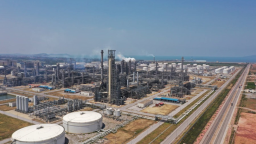
PVOIL approves $600 mln crude supply plan for Nghi Son refinery
PVOIL, a subsidiary of state-owned Petrovietnam, has approved transactions worth an estimated $600 million to supply crude oil to the Nghi Son Refinery and Petrochemical complex during the second half of 2026, as the country’s largest refinery broadens its feedstock sources beyond its traditional Kuwaiti supply.
Companies - Tue, July 7, 2026 | 1:33 pm GMT+7

F88 wins two international awards for customer-centric growth strategy
F88, a major Vietnamese financial services company, has received two international awards from the Asian Banking & Finance (ABF), a Singapore-based publication, recognizing its initiatives in customer experience and service innovation.
Companies - Tue, July 7, 2026 | 12:42 pm GMT+7