


Vietnam Party chief highlights development of private economic sector as lever for building prosperous Vietnam
Vietnam's Party General Secretary To Lam has written an article about the development of the private economic sector, considering it as a lever for building a prosperous Vietnam.
The Investor introduces the article, translated by Vietnam News Agency.
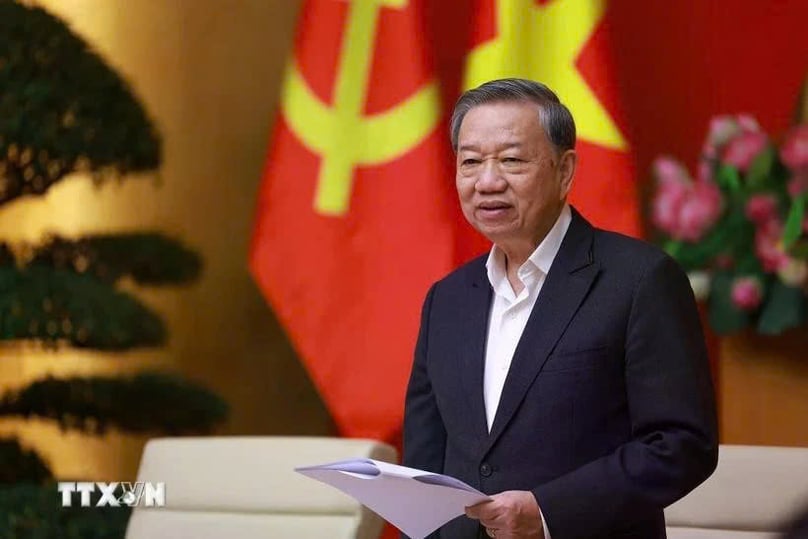
Vietnam Party General Secretary To Lam. Photo courtesy of Vietnam News Agency.
Developing private economic sector - a lever for a prosperous Vietnam
The nearly 40-year journey of Doi moi (Reform) has been marked with a resilient and breakthrough-making Vietnam aspiring to develop.
From an inefficient and centrally-planned economy with per capita income of only $96 in 1989, Vietnam has risen strongly and is expected to advance to the group of countries with upper-middle income, equivalent to over $5,000 per person each year, by the end of 2025.
This miracle comes as a result of not only the correct development path under the Party’s leadership with bold and decisive institutional, policy and integration reforms, but also the hard work, creativity, determination, and unceasing efforts by our entire nation.
What is even more proud is that Vietnam's economic growth rate is always twice as high as the average of developing countries despite global economic fluctuations. From a poor economy relying on international aid, Vietnam has continuously made strong breakthroughs to become the 24th largest economy in the world in terms of purchasing power parity (PPP).
Achievements are not only recorded in the economic field but also include great social progress, contributing to an increasingly prosperous and happy life for the people.
This success is considerably attributable to the private economic sector's contributions. In the early stage of Doi moi, the private economic sector only played a minor role, and the economy mainly relied on the state sector and the foreign direct investment (FDI) sector.
Over the past two decades, especially since the Politburo issued Resolution 09 in 2011 and the Party Central Committee issued Resolution 10 in 2017 on the development of the private economic sector, this sector has risen strongly, becoming one of the most critical pillars of the economy and increasingly establishing itself as the most important driving force of the national economic growth.
With nearly 1 million enterprises and about 5 million individual business households, the private economic sector currently contributes to about 51% of GDP and more than 30% of the state budget, creates more than 40 million jobs, accounts for over 82% of the total workforce in the economy, and makes up nearly 60% of total investment across the entire society.
The private sector has not only helped expand production, trade, and services but also made an important contribution to improving labor productivity, promoting innovation, and increasing national competitiveness.
The strong rise of many Vietnamese private enterprises has not only enabled them to dominate the domestic market but also gained a foothold in international markets. This proves that if there is a favourable environment for development, Vietnamese enterprises are completely able to stretch their far and compete fairly with global companies.
However, despite its increasing contributions, the private economic sector has still faced many barriers that hinder its development, making them unable to make breakthroughs in terms of scale and competitiveness.
Many individual business households have still followed old business practices, lacked the motivation to develop into enterprises, and even "have not want to grow". The majority of private businesses in Vietnam are small- and micro-sized enterprises which have limited financial potential and management skills, lack connectivity with one another as well as with the FDI sector, have yet to make full use of opportunities generated by the Fourth Industrial Revolution, and remained slow in digital transformation.
Very few enterprises have invested in research and development (R&D) while they also pay little attention to business model reform, technological innovation or new product creation. Therefore, it is very difficult for them to increase added value, promote competitiveness, enhance corporate value, and reach international levels.
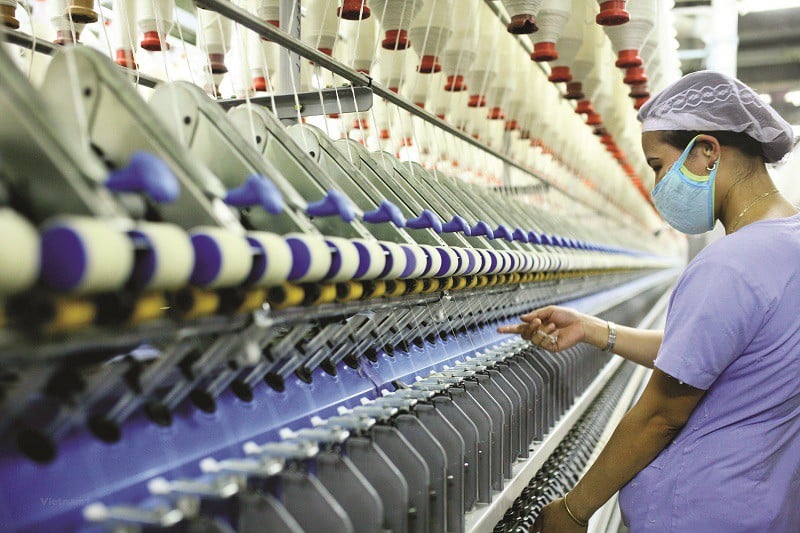
Textile production in Vietnam. Photo courtesy of thevesta.vn.
In addition to their own limitations, private enterprises have also faced many barriers in accessing resources, especially credit, land, natural resources and high-quality human resources, especially in the fields of technology, engineering and finance.
Meanwhile, some state-owned enterprises hold many resources, land, capital and high-quality human resources but have not leveraged them effectively, or even wasted them. Besides, there remain many shortcomings and overlaps in the legal system, the business environment still has many obstacles, while administrative procedures are complicated, time-consuming, costly and pose latent risks. In many cases, the right to freedom of business and property rights are still violated due to the weakness or abuse of power by some civil servants while performing their duties.
On the other hand, the Government's preferential and support policies have not proved really effective or fair among economic sectors, or accessible for the private economic sector. In many cases, state-owned and foreign enterprises have still received more incentives than the private sector. State-owned enterprises often gain more favourable access to land, capital, and credit; while foreign firms often receive better support in terms of taxes, customs procedures, and access to land. In addition, corruption and informal costs still exist, causing an invisible burden on private enterprises, reducing production and business efficiency, and causing hesitation when they consider investment expansion.
Obviously, the development limitations of private enterprises stem partly from the shortcomings of the institutional system, economic policies, and the business environment. These bottlenecks not only restrain the growth rate of the private economic sector, making its contribution to GDP almost unchanged for more than a decade, but also preventing the economy from increasing added value and escaping from the middle-income trap, and slowing down the process of turning Vietnam into a developed and high-income country by 2045 as targeted in the Party’s resolution and aspired by the people.
Looking towards the common vision of the country, the private economic sector also needs to define more clearly its mission and vision. It must be a pioneering force in the new era, thus successfully implementing the industrialization and modernization of the economy, enhancing national competitiveness, exercising social responsibility, helping to improve people's life quality, participating in the building of a civilized and modern society, and contributing to a dynamic and internationally integrated Vietnam.
The private sector should to strive to become the main and leading force in technology application and innovation so as to achieve the goal of contributing to about 70% of GDP by 2030; more and more private enterprises having the capacity to compete globally, mastering technology and deeply integrating into international value chains and supply chains; joining the whole country in building a dynamic, independent, self-reliant, resilient, and prosperous Vietnam.
In order for the private economic sector to fulfil its mission and realize that aspirational vision, the most important factor is to continue to make breakthrough reforms in the institution framework, policies, and the business environment so that the sector can maximize its potential and become the driving force leading the economy to reach the international market.
A prosperous economy cannot rely solely on the state sector or foreign investment, but must rely on its internal strength, which is a strong private sector playing a pioneering role in national renewal and development. The national economy can be truly prosperous only when all people engage in working to create material wealth, a society where everyone, every household, and every person is enthusiastic about working.
Facing that requirement, we need to thoroughly re-orient the viewpoints and perceptions throughout the entire political system about the role of the private economic sector as the country's leading growth engine. This requires a fundamental change in policy making, the settlement of limitations, and the promotion of the market mechanism’s superiority to support the private sector in improving labour productivity and innovation.
The State must adopt a management method appropriate to the market mechanism, ensure the right to freedom of business, the right to property ownership, and the right to fair competition for the private sector; remove all barriers, make policies transparent, eliminate group interests in policy making and resource allocation, and not discriminate among the private economic sector, state-owned enterprises, and foreign-invested enterprises in all policies.
At the same time, the State must stay consistent with the viewpoint that "everyone has the right to freely do business in the industries that are not prohibited by law", build policies that reassure investors, businesses, and entrepreneurs, and create stronger trust between the State and the private economic sector, thereby encouraging businesses to boldly invest, innovate, and participate in strategic economic sectors.
The Politburo’s upcoming resolution on the private economic sector needs to encourage, support, and orient the development of the private sector, create a breakthrough impulse, open up an era of growth for Vietnamese private enterprises. It is necessary to identify the development of the private economic sector as a long-term strategy and policy of the country. The private sector, the state sector, and the collective sector form the core for building an independent, self-reliant, and resilient economy. In particular, focus must be placed on implementing the following key solutions:
First, it is essential to continue accelerating the completion of fully-fledged market economy institutions in the direction of socialism, modernity, dynamism and integration. This is a prerequisite for the private sector to grow rapidly and sustainably. To achieve this, the State must focus on macro-economic stability and institutional improvement, ensuring that the economy operates according to market principles, minimising intervention, eliminating administrative barriers and the asking-giving mechanism, truly managing the economy based on market principles and using market tools to regulate it.
In particular, strict control must be exercised over monopolistic enterprises and policy manipulation to protect healthy competition and ensure equal opportunities for private businesses to thrive. The core of perfecting the market economy institutions lies in clearly defining the role of the State in the economy, with the State focusing on macro-economic regulation, creating a favourable business environment, ensuring the effective functioning of market mechanisms, and upholding social equity. Promoting the development of the private sector must be regarded as a central task at present.
Second, it is crucial to effectively protect property rights, ownership rights, business freedom, and the enforcement of contracts for private enterprises. As one of the key functions of the State in a modern market economy is to safeguard investors' property rights, it must establish and enforce a robust legal framework for the rights to ownership of intellectual property and intangible assets, while minimizing legal risks and avoiding abrupt policy changes that could harm businesses.
A support and protection mechanism should be in place for private investors, particularly startups and innovative enterprises, to help them operate with confidence and grow smoothly. Moreover, a modern socialist-oriented market economy requires a transparent, efficient, and effective contract enforcement system, giving businesses confidence in their commercial transactions and investments.
To achieve this, the State should reform the commercial judicial system, shorten the time needed to settle contract disputes, reduce business costs and risks, address cases of contract violations without effective sanctions, enhancing the transparency and efficiency of economic courts and commercial arbitration to ensure fair and impartial rulings, helping businesses protect their legitimate interests.
Enhancing the monitoring of law enforcement is also crucial to address inconsistencies between central and local authorities, strictly penalize misuse of inspections and audits that harass businesses, and increase investment and support for the development of the private economy. At the same time, violations of the law by enterprises must be firmly addressed, requiring them to uphold legal compliance and ethical business values, thereby promoting the healthy development of the private sector.
Third, along with the strong consolidation of state-owned enterprises, particularly major state economic groups, priority should be given to building large-scale private economic conglomerates with global and regional scales, extending active support to small and medium-sized enterprises (SMEs) while also fostering economic development of households and cooperatives, and encouraging private firms’ involvement in the country’s strategic areas by recognising their crucial role in the structure of a socialist-oriented market economy.
The outdated mindset of prioritizing state-owned enterprises over private businesses and the monopoly of state enterprises in certain sectors must be eliminated. The development of large, strong private economic groups with global competitiveness should be promoted, enabling them to lead and support domestic counterparts in deeper integration into global value chains.
At the same time, dedicated policies are needed to support SMEs, family businesses and cooperatives, encouraging business households to transition into formal enterprises and promoting a modern, efficient cooperative model. To ensure that the private economy not only grows in scale but also contributes considerably to the country’s long-term development, private enterprises should be encouraged to engage in strategic sectors such as critical infrastructure, high technology, key industries, and energy security.
Opportunities for private enterprises should be expanded in major national projects, allowing them to collaborate with the State in strategic industries and special sectors, thereby enhancing research capabilities and technological innovation. The State should establish mechanisms and policies allowing the private sector to take on key national projects and urgent tasks, such as high-speed rail, urban rail, energy infrastructure, digital infrastructure, defence industry and security projects.
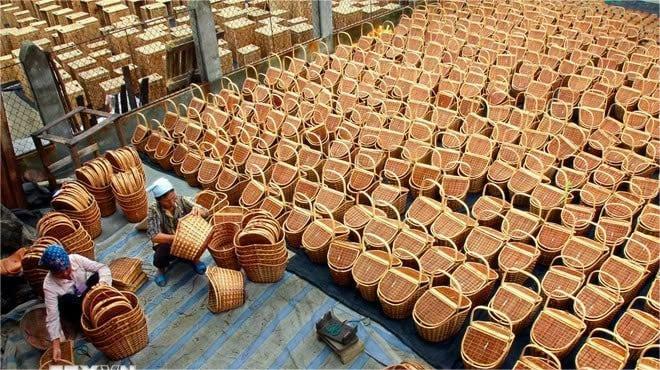
Bamboo and rattan products for export in Phu Xuyen district, Hanoi. Photo courtesy of Vietnam News Agency.
Fourth, it is necessary to drive a wave of entrepreneurship, innovation, digital transformation, and the adoption of new technologies. This is a key factor enabling the private sector to achieve breakthroughs and reach international standards. Strong and effective policies are needed to help private enterprises apply technologies, innovate products, and increase add value.
The State should establish regulatory sandboxes for emerging technologies and encourage the private sector's investment in pioneering fields such as artificial intelligence (AI), blockchain, big data, e-commerce, financial technology (fintech), and smart healthcare. Financial support policies and tax incentives should be introduced for enterprises investing in research and development (R&D). Additionally, a robust startup ecosystem should be cultivated, creating a fertile ground for Vietnamese startups and "tech unicorns" to expand globally.
Fifth, institutional reform is needed to build a business-friendly and service-oriented administration that truly serves enterprises and the nation. A drastic institutional reform must be carried out, based on a renewed mindset that prioritises a streamlined and business-supportive administration. Bold steps must be taken to reduce administrative procedures and business conditions, accelerate digital transformation, and apply technology in state management to cut compliance costs, informal expenses, and processing times.
An effective mechanism for policy dialogue and feedback should be established, making it easier for the private sector to join economic policymaking, ensuring practicality and high feasibility. The goal is for Vietnam’s business environment to rank among the top three in ASEAN within the next three years.
Sixth, it is a must to fully unlock development resources for the private economic sector, ensuring its effective access to critical resources such as capital, land, human resources, and technologies. The private sector must be further integrated into the global economy, enhancing Vietnam’s economic standing on the global stage while protecting businesses from economic risks. More effective policies are needed to ensure private enterprises can access resources in a fair, transparent and efficient manner, thus optimizing their use.
Capital mobilisation channels for private businesses should be expanded, including the securities market, corporate bonds, venture capital funds, credit guarantee funds, and modern financial instruments such as fintech and capital mobilised from the community. A stable and transparent land policy must be developed to facilitate private enterprises' access to land at reasonable costs.
The State should provide strategic guidance and effective support for Vietnamese private enterprises to join the global supply chain, attract investment and advanced technologies, and shape a globally-minded entrepreneurial community. Special incentives should be introduced to encourage private investment in manufacturing and supporting industries, agricultural industrialisation, and hi-tech rather than an overconcentration on real estate and short-term speculative sectors. Mechanisms and policies should be established to protect private enterprises from economic shocks, especially amid global uncertainties, economic downturns, and market fluctuations.
Seventh, the private economic sector must be developed on a sustainable foundation, with ethical business practices and social responsibility. The State should promote the private sector's growth based on macro-economic stability, closely aligned with green development strategies, circular economy, resource efficiency, emission reduction, and environmental protection.
Private enterprises must take the initiative in fulfilling their social responsibilities, not just through financial donations or charity but also by adopting responsible business practices, improving workers' welfare, supporting community development, and practising transparent and efficient corporate governance.
A strong business culture rooted in ethics, fairness, and integrity should be cultivated, preventing fraud and ensuring equitable treatment of customers, partners, and employees. Additionally, private enterprises should actively join social welfare programs along with the State, contributing to social equity, poverty reduction, and the creation of a civilised, humane and prosperous society where businesses' success is closely tied to the nation's shared prosperity.
The private economic sector plays a vital role in shaping the future of Vietnam’s economy. We all believe that if the State establishes appropriate institutions, sound policies, and a favourable business environment, the private economic sector will thrive and grow robustly, not only driving high economic growth but also helping our country achieve high-income status within the next two decades. Now is the time to act, to build a prosperous, dynamic Vietnam that increasingly advances on the global stage.
We are living in a historic moment, witnessing unprecedented technological advancements and a rapidly changing international landscape filled with both cooperation and competition where opportunities and challenges go hand in hand. Yet, with unwavering resilience, determination, and a burning ambition, Vietnam is fully capable of achieving new miracles in socio-economic development!
A strong economy is taking shape, led by a generation of bold, innovative, and passionate Vietnamese entrepreneurs filled with the business acumen and patriotism, writing new chapters of success. A bright future - a socialist Vietnam standing shoulder to shoulder with global powers, as envisioned by President Ho Chi Minh - is gradually becoming a reality in the near future.
- Read More

US court dismisses Gilimex’s lawsuit against Amazon, rules Vietnamese firm commits fraud
A U.S. federal court has dismissed with prejudice a lawsuit filed by Vietnamese textile manufacturer Gilimex (HoSE: GIL) against Amazon, ruling that the company submitted forged documents and committed “fraud on the court” during the litigation process.
Companies - Sun, July 12, 2026 | 11:10 am GMT+7

Stocks poised to benefit from Vietnam's carbon market
Vietnam's pilot carbon exchange is expected to create opportunities not only for companies with forest assets, renewable energy projects and environmental technologies, but also for firms that have invested early in emissions management, circular production models and environmental, social and governance (ESG) practices.
Companies - Sun, July 12, 2026 | 8:00 am GMT+7

15 Indian tourists dead after speedboat capsizes off Vietnam's Phu Quoc Island
A tourist speedboat carrying 32 Indian visitors capsized off Phu Quoc Island, a top tourism destination in southern Vietnam, on Saturday, killing 15 people.
Society - Sat, July 11, 2026 | 4:29 pm GMT+7

Thai giant CP's Q1 Vietnam revenue drops 11% on weaker farm business
Vietnam remained the second-largest market for Thailand’s Charoen Pokphand Foods (CPF) in the first quarter of 2026, contributing 18% of the group’s global revenue despite a double-digit plunge in sales.
Companies - Sat, July 11, 2026 | 2:55 pm GMT+7

F88 targets HCMC bourse listing after raising $60 mln through IPO
F88 Business Joint Stock Company, a consumer finance major in Vietnam, is conducting an initial public offering of more than 22 million shares ahead of its planned listing on the Ho Chi Minh City Stock Exchange (HoSE), aiming to raise over VND1.56 trillion ($60 million) to expand operations.
Companies - Sat, July 11, 2026 | 12:35 pm GMT+7
PNJ shares hit one-year low, VinaCapital exits major shareholder status
PNJ shares of Phu Nhuan Jewelry JSC fell to their lowest level in more than a year on Friday as selling pressure intensified and the group of VinaCapital funds cut its stake to below 5%, relinquishing its status as a major shareholder.
Companies - Sat, July 11, 2026 | 10:37 am GMT+7

Matsuya R&D and the quiet revolution in garment manufacturing
The global garment industry, worth hundreds of billions of dollars, has long remained one of the world's most labor-intensive manufacturing sectors. While industries such as automotive and electronics have undergone sweeping transformations driven by automation and robotics, most modern apparel factories still rely heavily on manual labor.
Companies - Sat, July 11, 2026 | 9:23 am GMT+7

PVOIL posts 74% jump in H1 revenue, targets aviation fuel market
PVOIL, a subsidiary of state-owned Petrovietnam, reported a sharp rise in revenue in the first half of 2026, driven by higher fuel sales volumes and an expanding retail network.
Companies - Sat, July 11, 2026 | 8:00 am GMT+7

Suntory PepsiCo opens $300 mln plant in Tay Ninh province, its largest investment in Vietnam
Suntory Pepsico Vietnam Beverage (SPVB) inaugurated a new beverage plant in southern Vietnam on Friday, marking its largest-ever investment in the country and underscoring the company’s long-term confidence in the Vietnamese consumer market.
Industries - Fri, July 10, 2026 | 9:03 pm GMT+7

Samsung pledges support to help Vietnamese firms join its supply chain
Samsung Electronics Vietnam is willing to support more Vietnamese companies in joining its supply chain, as local businesses and authorities seek to deepen integration with foreign-invested manufacturers.
Companies - Fri, July 10, 2026 | 5:02 pm GMT+7

Vietnam bank deposit rates hit 9%: Is the race to mobilize capital heating up again?
Vietnamese banks have largely kept publicly listed deposit rates unchanged, but many are quietly offering significantly higher returns to priority customers and large depositors as competition for funding intensifies amid robust credit growth.
Banking - Fri, July 10, 2026 | 4:42 pm GMT+7
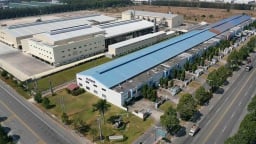
Becamex sets up subsidiary to advance $176 mln industrial park project in central Vietnam
The VND4.63 trillion ($176.13 million) Ninh Xuan 1 Industrial Park, located in the south-central province of Khanh Hoa, has reached a new milestone as Becamex IDC, one of Vietnam’s largest industrial real estate developers, decided to establish a wholly owned subsidiary to push the project.
Companies - Fri, July 10, 2026 | 2:31 pm GMT+7

Trungnam Group triples investment for urban area project in central Vietnam
The Golden Hills City project, developed by Vietnam’s multi-sector Trungnam Group, has been approved by authorities in the central city of Danang to increase its total investment from VND4.4 trillion to nearly VND15.5 trillion ($589.6 million).
Real Estate - Fri, July 10, 2026 | 11:14 am GMT+7

Vietnam's leading developer Sun Group, Accor elevate strategic partnership
Sun Group and Accor have signed an agreement to elevate their decade-long strategic partnership, adding nearly 6,000 premium hotel rooms and serviced apartments across Phu Quoc island and Danang city to their cooperation portfolio.
Companies - Fri, July 10, 2026 | 10:39 am GMT+7

Samsung Display ultra-thin glass supplier breaks ground on second plant in northern Vietnam
South Korea's Dowooinsys Vina, a subsidiary of NP Group, has begun construction of its second manufacturing plant in Thai Nguyen province, expanding production capacity for ultra-thin glass (UTG) used in Samsung Display's foldable smartphone panels.
Investing - Fri, July 10, 2026 | 8:17 am GMT+7

From Phu Quoc to Sa Pa: Why Vietnam’s tourism accelerating in Southeast Asia
Leading U.S. business magazine Fortune has described Vietnam as an emerging tourism “hot spot” in Southeast Asia, driven by the strong rise of destinations such as Phu Quoc and Sa Pa.
Travel - Thu, July 9, 2026 | 11:09 pm GMT+7