


Vietnam targets 1-3 state-owned firms in global top 500 by 2030
Vietnam aims to have 50 state-owned enterprises (SOEs) ranked among Southeast Asia’s 500 largest companies, with 1-3 of entering the world’s top 500 by 2030, according to a new resolution issued by the Politburo, the country's highest decision-making body.
Resolution 79 on state economic sector development, signed by Party General Secretary To Lam on Tuesday, states that Vietnam will develop a number of strong, large-scale state economic groups and state-owned enterprises with modern technology and international/regional competitiveness.
They will play a pioneering and leading role in enabling domestic enterprises to integrate more deeply into global production and supply chains, particularly in the key and strategic sectors of the economy.
At least three state-owned commercial banks are projected to enter Asia’s top 100 by total assets. The banking sector will focus on developing four state-owned commercial banks to take the lead in technology and governance, serving as core and dominant players in terms of market share and market-regulating capacity.

The headquarters of Vietcombank, a big 4 bank in Vietnam. Photo courtesy of VnEconomy.
Looking ahead to 2045, the number of Vietnamese enterprises ranked among the world’s top 500 is expected to rise to five, alongside around 60 enterprises in the top 500 within the region.
The state economy is expected to become a solid foundation ensuring economic autonomy and resilience, working alongside other sectors to realize Vietnam’s goal of becoming a high-income developed nation.
To achieve these goals, the Politburo requests renewed leadership thinking, a comprehensive and transparent legal framework, and the removal of institutional bottlenecks.
Authorities must enforce laws strictly, strengthen discipline, and ensure consistency with international commitments. A clear distinction must be made between non-profit political tasks and business activities within the state sector.
The resolution emphasizes that the state will ensure a fair competitive environment among all economic sectors in utilizing national resources, while encouraging public-private partnerships.
Administrative reforms will continue, with reduced administrative intervention, a shift from pre-approval to post-inspection, and improvements in human resource quality, ensuring market-based income levels.
The Politburo requests completion of national databases, enhanced oversight, and improved evaluation of state capital and asset utilization.
Overlapping inspections and audits must be eliminated, violations handled strictly, lost assets recovered to the maximum possible, and stalled projects resolved promptly to unlock resources.
Regarding land policy, the Politburo reaffirmed that land is a special means of production owned by the entire people and managed uniformly by the state. By the end of 2026, authorities are expected to complete nationwide land measurement, inventory, digitization, and data cleansing, integrating land data with other national databases.
Equal access to land will be ensured across economic sectors, with priority given to land allocation for infrastructure, industry, services, urban development, and social housing.
Infrastructure assets will be developed in a synchronized and modern manner. Vietnam will encourage expanded application of public–private partnership models such as “public investment-private management” and “private investment-public use” to build, manage, and operate infrastructure projects more efficiently.
SOEs will be selectively invested in and developed into large, strong conglomerates capable of leading key industries and sectors. The state will encourage consolidation, mergers, and transfers to maximize sector-wide advantages.
Policies will ensure sufficient capital, interest rate support, and adequate credit for national priority projects or overseas investments assigned by competent authorities beyond corporate plans.
As of the end of 2024, total assets of 671 SOEs, comprising 473 fully state-owned and 198 with more than 50% state ownership, had exceeded VND5,600 trillion ($213.18 billion), up 45% year-on-year. SOEs held dominant market shares in sectors such as energy, telecommunications, and banking, contributing approximately 29% of GDP.
These enterprises generated total revenue of nearly VND3,300 trillion ($125.62 billion), up 24%, with pre-tax profits of nearly VND227.5 trillion ($8.66 billion), a year-on-year increase of 8%. Contributions to the state budget reached nearly VND400 trillion ($15.23 billion), up 9%.
The Politburo stresses the need to promptly review and address inefficient investment projects and loss-making enterprises, clearly identifying and handling the responsibilities of related organizations and individuals. This aims to facilitate bankruptcy or continued restructuring, restoring healthy operations, and preventing prolonged waste and losses.
The State Capital Investment Corporation (SCIC) will be restructured toward professional capital investment, moving toward the establishment of a national investment fund.
Meanwhile, the Vietnam Asset Management Company (VAMC) and the Vietnam Debt and Asset Trading Corporation (DATC) will be strengthened to support the market-based restructuring of SOEs and commercial banks.
State economy plays a leading role
Resolution 79 highlights that the state economy is a particularly important sector and plays a leading role in the national economy.
The state economy serves as an important resource for the state to stabilize the macro economy, guide development, and intervene when necessary. It is equal before the law with other economic sectors, engaging in cooperation and fair competition.
State economic resources must be managed and utilized in accordance with market principles, fully accounted for, and safeguarded against waste and losses. The sector is expected to pioneer innovation, digital transformation, and green transition, while leading key industries and sectors.
The state economy comprises resources owned, managed, and controlled by the state, including land, natural resources, infrastructure, the state budget, national reserves, off-budget financial funds, state-owned enterprises and credit institutions, state capital in enterprises, and public service units.
After nearly 40 years of Doi moi (reform), the state sector continues to play a guiding, leading, and regulatory role. However, the Politburo noted that policies related to the state economy have been slow to adapt, while the management, exploitation, and use of many state-owned resources and assets remain inefficient.
Many SOEs have not performed commensurately with their roles and resources, and their international competitiveness remains limited. Long-standing shortcomings have yet to be addressed, resulting in waste and losses.
The main causes include an incomplete understanding of the role of the state economy in a market economy, an inconsistent legal framework, weak enforcement discipline, limited governance capacity, and insufficient accountability of leadership.
Vietnam aims to become a developing country with modern industry and upper-middle income by 2030, and a developed, high-income country by 2045. Accordingly, the state economy must improve efficiency and fully its leading and pioneering role.
- Related News


- Read More
Masan High-Tech Materials partners with S Korea’s GBI on tungsten processing
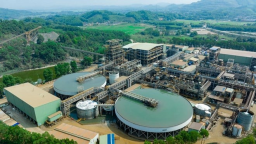
Masan High-Tech Materials (UPCoM: MSR), the mining unit of Vietnamese conglomerate Masan Group (HoSE: MSN), has entered into a strategic partnership with South Korea’s GB Innovation (GBI) to process Korean tungsten concentrate into higher-value products in Vietnam, strengthening a non-Chinese tungsten supply chain.
Companies - Thu, July 9, 2026 | 3:51 pm GMT+7

Idemitsu Kosan expands energy ecosystem in Vietnam
After more than three decades of operations in Vietnam, Japan’s Idemitsu Kosan is further expanding its energy ecosystem with a biomass pellet plant project in the central province of Gia Lai.
Industries - Thu, July 9, 2026 | 1:43 pm GMT+7
Two banks to list on Ho Chi Minh City bourse, expand charter capital
Vietnam's private banks Vietbank and BVBank are finalizing the last steps to transfer their trading from the unlisted public company market UPCoM to the Ho Chi Minh Stock Exchange (HoSE), while simultaneously implementing plans to increase their charter capital.
Banking - Thu, July 9, 2026 | 11:51 am GMT+7

Strong Q2 earnings, lower interest rates to bolster Vietnam stocks
Strong second-quarter corporate earnings and declining interest rates are expected to support Vietnam's stock market in the coming months, brokerage firms said, as the market moves beyond a period of limited news flow and enters a more favorable phase driven by improving fundamentals.
Finance - Thu, July 9, 2026 | 8:00 am GMT+7
Wistron raises construction, equipment investment in northern Vietnam province to $178 mln
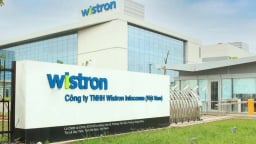
Taiwanese technology firm Wistron has increased its investment in factory construction and equipment in Ninh Binh province to $178.27 million, adding $24.5 million to expand its facilities at Kim Bang Industrial Park.
Industries - Wed, July 8, 2026 | 7:56 pm GMT+7

Sun Group targets groundbreaking for $624 mln urban projects in central Vietnam this year
Vietnam's leading developer Sun Group aims to begin construction of two urban projects worth a combined VND16.4 trillion ($623.78 million) in the central province of Quang Ngai by the end of 2026, while also advancing plans for a new expressway linking the province with the Central Highlands.
Real Estate - Wed, July 8, 2026 | 4:54 pm GMT+7

Vietnam raises airport number target to 36 by 2030 as aviation demand surges
Vietnam plans to expand its airport network to 36 airports by 2030, up from the previous target of 30, under a revised national aviation infrastructure plan aimed at catering for rising passenger demand and boosting regional connectivity.
Infrastructure - Wed, July 8, 2026 | 4:45 pm GMT+7
Germany's VFT Bio Fuels UG eyes $3.1 bln green steel complex in southern Vietnam
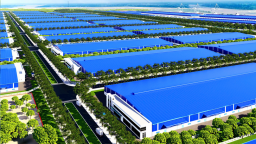
Vietnamese industrial park developer IMG Phuoc Dong and Germany’s VFT Bio Fuels UG have signed a memorandum of understanding to study the development of a $3.1 billion green steel complex in the southern province of Tay Ninh.
Industries - Wed, July 8, 2026 | 4:25 pm GMT+7
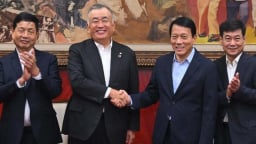
Vietnam police minister urges Yamato Holdings to study investment in Gia Binh airport
Vietnam’s Minister of Public Security Luong Tam Quang has called on Japan’s Yamato Holdings to assess investment opportunities in warehousing and cargo transport systems at Gia Binh International Airport, while exploring potential cooperation and operational models with Vietnamese partners once the facility becomes operational.
Infrastructure - Wed, July 8, 2026 | 3:09 pm GMT+7

Vietnam real estate M&A favors quality, clear legal status assets as FDI priorities evolve
Vietnam's real estate M&A market continued to attract foreign capital in the first half of 2026 despite persistent global economic uncertainties, but foreign investors are increasingly targeting assets with clear legal status, stable cash flow, and strong operational performance, with data centers emerging as a key growth segment.
Real Estate - Wed, July 8, 2026 | 1:38 pm GMT+7
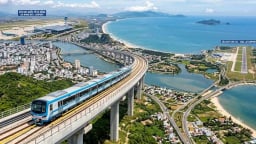
Central Vietnam hub Danang plans to tokenize nearly $4 bln in infrastructure projects to attract global capital
The Vietnam International Financial Center, located in the central city of Danang (VIFC Danang), plans to tokenize nearly $4 billion worth of infrastructure projects as part of a strategy to attract more global capital.
Economy - Wed, July 8, 2026 | 12:17 pm GMT+7
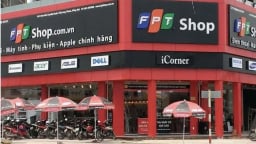
Computers, smartphones edge higher in price as AI memory boom tests Vietnam's ICT firms
Rising memory chip prices driven by artificial intelligence are spreading from semiconductor manufacturers to consumer electronics brands such as Apple, Dell and ASUS, pushing up the prices of computers and smartphones.
Companies - Wed, July 8, 2026 | 8:00 am GMT+7
LG Innotek to build $1 bln semiconductor substrate plant in northern Vietnam
South Korea's LG Innotek will spend $1 billion to build a semiconductor package substrate manufacturing plant in Hai Phong city, with mass production scheduled to begin in the third quarter of 2028, according to local authorities.
Industries - Tue, July 7, 2026 | 11:13 pm GMT+7

Malaysia’s JLand eyes up to $6 bln high-tech hub in Hanoi
Malaysia’s JLand Group has proposed developing a high-tech, innovation and data center complex in Hanoi with an estimated investment of $4-6 billion, as Vietnam’s capital seeks to attract technology projects and strengthen its digital infrastructure.
Infrastructure - Tue, July 7, 2026 | 4:26 pm GMT+7
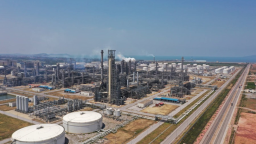
PVOIL approves $600 mln crude supply plan for Nghi Son refinery
PVOIL, a subsidiary of state-owned Petrovietnam, has approved transactions worth an estimated $600 million to supply crude oil to the Nghi Son Refinery and Petrochemical complex during the second half of 2026, as the country’s largest refinery broadens its feedstock sources beyond its traditional Kuwaiti supply.
Companies - Tue, July 7, 2026 | 1:33 pm GMT+7

F88 wins two international awards for customer-centric growth strategy
F88, a major Vietnamese financial services company, has received two international awards from the Asian Banking & Finance (ABF), a Singapore-based publication, recognizing its initiatives in customer experience and service innovation.
Companies - Tue, July 7, 2026 | 12:42 pm GMT+7