


As gold peaks and stocks tread water, institutional investors double down on Vietnam real estate
As gold prices surge to record highs and the stock market remains stuck in a consolidation phase, institutional investors are increasingly channeling capital into Vietnam’s real estate, betting on assets that can deliver stable long-term income and resilience amid growing market uncertainty.

The Vinhomes Grand Park mega-urban development in Ho Chi Minh City, southern Vietnam. Photo courtesy of Vinhomes.
Just a few years ago, real estate was the investment of choice for most Vietnamese investors. Today, the landscape looks markedly different.
Vietnam’s property market is still recovering from the prolonged correction that began in 2022. Although project activity has resumed, new supply is gradually improving, and interest rates have stabilized, liquidity across many segments remains subdued. Land plots and formerly overheated areas, in particular, continue to struggle with weak transaction volumes.
Gold, meanwhile, remains a favored safe-haven asset. Global prices have climbed to around $4,175 per ounce, while domestic SJC gold bars have neared VND150 million ($5,699) per tael.
Geopolitical tensions, inflation concerns, and uncertainty surrounding global monetary policy continue to drive defensive capital toward precious metals. Yet elevated prices have also increased risks for short-term investors, with buy-sell spreads widening to several millions of VND (VND1 million = $38) per tael.
The stock market has yet to establish a convincing growth trajectory. Following a sharp correction, the VN-Index on the Ho Chi Minh Stock Exchange (HoSE) has been trading within a narrow range as investors remain cautious amid modest liquidity and persistent foreign net selling.
More importantly, capital flows in equities have become increasingly selective. Rather than chasing broad market momentum, investors are focusing on companies with strong fundamentals, clear earnings prospects, and compelling growth narratives.
Across gold, stocks, and real estate, a common theme has emerged: capital is no longer moving on speculation or herd behavior. Investors are becoming more discerning, prioritizing capital preservation and long-term value over short-term gains.
This shift in investment behavior is quietly reshaping Vietnam’s real estate market.
Capital still betting on real estate
While many retail investors remain on the sidelines, institutional investors are taking a much longer-term view.
According to industry research, the world is entering an era of heightened volatility, where inflation, interest rates, geopolitical tensions, and global trade fragmentation are reshaping traditional investment strategies. In this environment, portfolios heavily weighted toward stocks and bonds are no longer delivering the diversification benefits they once did.
As a result, real estate has once again become a core component of global capital allocation strategies. International institutional investors have maintained target allocations to real estate of around 10.8% in recent years.
Neil Brookes, executive managing director for Asia Pacific capital markets at Savills, said the trend reflects more than a recovery in the property market. Rather, it signals a fundamental shift in how investors view real estate as an asset class.
As equities and bonds become increasingly influenced by the same macroeconomic drivers, real estate’s diversification benefits, tangible value, and ability to generate stable income become even more important, he said.
Across Asia-Pacific, total real estate investment volume rose 19.2% year-on-year in the first quarter of 2026 despite ongoing geopolitical, trade, and interest-rate uncertainties. Capital has flowed across a wide range of sectors, including offices, industrial and logistics properties, hotels, and other income-generating assets.
The trend suggests investors are placing greater emphasis on asset quality, cash-flow generation, and operational performance rather than relying solely on capital appreciation.
Vietnam is increasingly benefiting from this shift. Newly registered foreign direct investment in the first quarter highlighted strong confidence among international investors, particularly those from Asia. Singapore accounted for 52% of newly registered capital, followed by South Korea at 36%, while Japan, mainland China, Hong Kong, and the United States maintained a significant presence.
The market has also recorded several notable real estate mergers and acquisitions. TNT Phu Hoa JSC spent approximately VND2.5 trillion ($94.98 million) to acquire subdivisions within the Dai Phuoc Ecotourism Urban Area project in the southern province of Dong Nai. Everland An Giang JSC invested nearly VND490 billion ($18.62 million) in another subdivision of the same development.
Meanwhile, Japanese conglomerate Mitsubishi Corporation participated in the transfer of the Thuan An 1 high-rise residential project in Ho Chi Minh City, alongside a number of transactions involving hotels and commercial real estate assets.
These deals underscore that capital has not abandoned real estate. Instead, institutional investors are becoming more selective, targeting assets with strategic locations, strong operating fundamentals, and sustainable cash-flow potential.
Neil MacGregor, CEO of Savills Vietnam, said the country continues to benefit from powerful structural drivers, including economic growth, urbanization, and regional capital reallocation trends.
Investors are increasingly focusing on assets with strong operational fundamentals, strategic locations, and the ability to generate stable long-term cash flows, he said.
For years, real estate was largely viewed as a vehicle for capturing economic growth and capital appreciation. Today, however, its role is expanding.
Beyond the prospect of rising asset values, investors are increasingly seeking stable income streams, wealth preservation, and portfolio diversification.
A market defined by selectivity
It is becoming increasingly clear that none of the three major investment channels - gold, equities, and real estate - offers the easy gains seen in previous cycles.
Gold is trading near historic highs and faces growing profit-taking pressure. Stocks continue to search for new growth catalysts. Real estate, meanwhile, still requires time for liquidity to recover more broadly.
The key difference lies in how capital is being allocated.
If gold serves primarily as a store of value and stocks offer higher-return opportunities accompanied by greater volatility, real estate is increasingly viewed as a long-term wealth-building asset capable of generating recurring income while benefiting from urbanization and economic expansion.
Economist Dinh The Hien said real estate remains an effective vehicle for long-term wealth accumulation, but investors need to adapt their approach.
“The era of simply buying land and waiting for prices to rise is gradually giving way to a focus on assets with genuine operational value and cash-flow potential,” he said.
Sharing a similar view, Nguyen Van Dinh, chairman of the Vietnam Association of Real Estate Brokers (VARS), noted that the property market is undergoing a period of significant consolidation, where projects supported solely by expectations of future price increases are becoming less attractive to investors.
“Projects with transparent legal status, strong locations, and genuine utilization potential will continue to attract capital,” he said.
Amid persistent global uncertainty, professional investors are increasingly recognizing that the key question is no longer what to invest in, but how to allocate capital across different asset classes in a way that balances growth opportunities with effective risk management.
In that equation, real estate appears to be reclaiming a strategic role - not as a speculative bet, but as a long-term income-generating asset within a more diversified investment portfolio.
- Related News


- Read More
Masan High-Tech Materials partners with S Korea’s GBI on tungsten processing
Masan High-Tech Materials (UPCoM: MSR), the mining unit of Vietnamese conglomerate Masan Group (HoSE: MSN), has entered into a strategic partnership with South Korea’s GB Innovation (GBI) to process Korean tungsten concentrate into higher-value products in Vietnam, strengthening a non-Chinese tungsten supply chain.
Companies - Thu, July 9, 2026 | 3:51 pm GMT+7

Idemitsu Kosan expands energy ecosystem in Vietnam
After more than three decades of operations in Vietnam, Japan’s Idemitsu Kosan is further expanding its energy ecosystem with a biomass pellet plant project in the central province of Gia Lai.
Industries - Thu, July 9, 2026 | 1:43 pm GMT+7

Two banks to list on Ho Chi Minh City bourse, expand charter capital
Vietnam's private banks Vietbank and BVBank are finalizing the last steps to transfer their trading from the unlisted public company market UPCoM to the Ho Chi Minh Stock Exchange (HoSE), while simultaneously implementing plans to increase their charter capital.
Banking - Thu, July 9, 2026 | 11:51 am GMT+7

Strong Q2 earnings, lower interest rates to bolster Vietnam stocks
Strong second-quarter corporate earnings and declining interest rates are expected to support Vietnam's stock market in the coming months, brokerage firms said, as the market moves beyond a period of limited news flow and enters a more favorable phase driven by improving fundamentals.
Finance - Thu, July 9, 2026 | 8:00 am GMT+7
Wistron raises construction, equipment investment in northern Vietnam province to $178 mln
Taiwanese technology firm Wistron has increased its investment in factory construction and equipment in Ninh Binh province to $178.27 million, adding $24.5 million to expand its facilities at Kim Bang Industrial Park.
Industries - Wed, July 8, 2026 | 7:56 pm GMT+7

Sun Group targets groundbreaking for $624 mln urban projects in central Vietnam this year
Vietnam's leading developer Sun Group aims to begin construction of two urban projects worth a combined VND16.4 trillion ($623.78 million) in the central province of Quang Ngai by the end of 2026, while also advancing plans for a new expressway linking the province with the Central Highlands.
Real Estate - Wed, July 8, 2026 | 4:54 pm GMT+7

Vietnam raises airport number target to 36 by 2030 as aviation demand surges
Vietnam plans to expand its airport network to 36 airports by 2030, up from the previous target of 30, under a revised national aviation infrastructure plan aimed at catering for rising passenger demand and boosting regional connectivity.
Infrastructure - Wed, July 8, 2026 | 4:45 pm GMT+7
Germany's VFT Bio Fuels UG eyes $3.1 bln green steel complex in southern Vietnam
Vietnamese industrial park developer IMG Phuoc Dong and Germany’s VFT Bio Fuels UG have signed a memorandum of understanding to study the development of a $3.1 billion green steel complex in the southern province of Tay Ninh.
Industries - Wed, July 8, 2026 | 4:25 pm GMT+7

Vietnam police minister urges Yamato Holdings to study investment in Gia Binh airport
Vietnam’s Minister of Public Security Luong Tam Quang has called on Japan’s Yamato Holdings to assess investment opportunities in warehousing and cargo transport systems at Gia Binh International Airport, while exploring potential cooperation and operational models with Vietnamese partners once the facility becomes operational.
Infrastructure - Wed, July 8, 2026 | 3:09 pm GMT+7
Vietnam real estate M&A favors quality, clear legal status assets as FDI priorities evolve
Vietnam's real estate M&A market continued to attract foreign capital in the first half of 2026 despite persistent global economic uncertainties, but foreign investors are increasingly targeting assets with clear legal status, stable cash flow, and strong operational performance, with data centers emerging as a key growth segment.
Real Estate - Wed, July 8, 2026 | 1:38 pm GMT+7

Central Vietnam hub Danang plans to tokenize nearly $4 bln in infrastructure projects to attract global capital
The Vietnam International Financial Center, located in the central city of Danang (VIFC Danang), plans to tokenize nearly $4 billion worth of infrastructure projects as part of a strategy to attract more global capital.
Economy - Wed, July 8, 2026 | 12:17 pm GMT+7

Computers, smartphones edge higher in price as AI memory boom tests Vietnam's ICT firms
Rising memory chip prices driven by artificial intelligence are spreading from semiconductor manufacturers to consumer electronics brands such as Apple, Dell and ASUS, pushing up the prices of computers and smartphones.
Companies - Wed, July 8, 2026 | 8:00 am GMT+7

LG Innotek to build $1 bln semiconductor substrate plant in northern Vietnam
South Korea's LG Innotek will spend $1 billion to build a semiconductor package substrate manufacturing plant in Hai Phong city, with mass production scheduled to begin in the third quarter of 2028, according to local authorities.
Industries - Tue, July 7, 2026 | 11:13 pm GMT+7

Malaysia’s JLand eyes up to $6 bln high-tech hub in Hanoi
Malaysia’s JLand Group has proposed developing a high-tech, innovation and data center complex in Hanoi with an estimated investment of $4-6 billion, as Vietnam’s capital seeks to attract technology projects and strengthen its digital infrastructure.
Infrastructure - Tue, July 7, 2026 | 4:26 pm GMT+7
PVOIL approves $600 mln crude supply plan for Nghi Son refinery
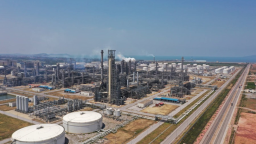
PVOIL, a subsidiary of state-owned Petrovietnam, has approved transactions worth an estimated $600 million to supply crude oil to the Nghi Son Refinery and Petrochemical complex during the second half of 2026, as the country’s largest refinery broadens its feedstock sources beyond its traditional Kuwaiti supply.
Companies - Tue, July 7, 2026 | 1:33 pm GMT+7

F88 wins two international awards for customer-centric growth strategy
F88, a major Vietnamese financial services company, has received two international awards from the Asian Banking & Finance (ABF), a Singapore-based publication, recognizing its initiatives in customer experience and service innovation.
Companies - Tue, July 7, 2026 | 12:42 pm GMT+7