


Double-digit interest rates push Vietnam's real estate market to restructuring cycle
When mortgage lending rates rise into double digits, Vietnam’s real estate market immediately reacts with caution. However, history shows that each high-interest-rate cycle is not a “full stop,” but rather a stress test that forces the market to restructure, filter out weaknesses, and operate with greater discipline.
Cautious sentiment and an inevitable filtering process
According to Mai Thanh Thao, associate director of valuation - banking & corporate services at Savills Vietnam, the market’s first reaction when rates enter this zone is always to delay decisions and reassess debt-servicing capacity.
Behind this slowdown, she noted, lies a necessary cleansing process.
She cited that a similar situation occurred in 2011-2012, when interest rates climbed to 18-22%. The real estate market entered a severe downturn but did not completely freeze. After that restructuring cycle, from 2014 onward, the market recovered in a healthier manner and entered a multi-year growth phase.

A real estate project in Vietnam. Photo by The Investor/Vu Pham.
Notably, genuine housing demand has never disappeared. Housing remains an essential need. What changes is not the nature of demand, but the selection criteria, which become more practical and disciplined, she argued.
Speculative products that do not generate cash flow face the greatest pressure in a high-interest-rate environment, Thao noted.
Pressure on speculation, clearer segmentation across property types
According to Thao, end-users will scrutinize repayment capacity more carefully, prioritizing products aligned with their income rather than chasing “hot” locations or premium amenities. As a result, the market shifts from a “buy first, calculate later” mindset to a “calculate thoroughly before buying” approach.
From a financial perspective, expert Dr. Nguyen Tri Hieu noted that high interest rates not only affect borrowing decisions but also directly impact expectations of asset price appreciation.
“When the cost of capital approaches or exceeds expected returns, investors are forced to change their strategies. High financial leverage is no longer an advantage - it becomes a risk,” he emphasized.
Transaction data over many years show that liquidity does not decline uniformly but instead becomes clearly segmented. Segments heavily dependent on price appreciation expectations such as land plots in remote areas, projects with incomplete legal status, high-end products far exceeding real demand, or purely speculative assets that generate no cash flow face the greatest pressure.
In contrast, segments tied to genuine usage demand or capable of generating stable cash flow tend to maintain better liquidity.
A representative of the Ho Chi Minh City Real Estate Association (HoREA) said the market is entering a “repricing” phase. The era of price expectations driven by rumors or future infrastructure promises will gradually narrow. Investors will pay closer attention to legal transparency, income-generating potential, and intrinsic asset value.
The director of a housing developer in HCMC also shared that buyers are now particularly concerned about floating interest rates, preferential periods, and scenarios of rate hikes after two to three years. Purchase decisions are no longer driven by herd mentality but by financial risk tolerance.
Segments likely to withstand pressure
In a high-rate environment, Thao suggested investors prioritize three criteria: real demand, clear legal status, and cash flow generation. At the same time, profit expectations must become more realistic, requiring higher equity capital and a longer-term vision.
Apartments serving genuine housing needs typically recover first after each correction cycle. Amid ongoing urbanization in major cities such as Ho Chi Minh City and Hanoi, housing demand remains present and relatively stable.
Some developers reported that reasonably priced apartments with practical layouts, on-time delivery, and immediate occupancy continue to record positive absorption rates, albeit at a slower pace than during low-interest-rate periods.
Next are properties that can generate immediate income. Completed assets in established residential areas that can be rented out right away help reduce legal and construction risks. When cash flow is secured, loan pressure is partially offset.
In addition, industrial real estate and income-generating assets deserve attention. Industrial parks and logistics properties linked to FDI inflows are considered relatively defensive. Stable income-producing assets such as mid-sized offices, boarding houses, and serviced apartments in areas with strong rental demand remain attractive to long-term investors.
Developers forced to pivot
Rising interest rates not only pressure buyers but also directly impact project developers. Higher capital costs make cash flow management more sensitive than ever.
An executive from a southern real estate company said businesses are restructuring their product portfolios, prioritizing affordable apartment lines instead of focusing on high-end segments as before.
Many developers are partnering with banks to offer longer interest support packages, extended grace periods for principal repayment, or staggered payment schedules to ease buyer pressure. However, analysts warn that financial incentives are only short-term solutions. In the long run, selling prices must reflect the market’s actual purchasing power.
More broadly, rising interest rates can be seen as a natural “filter.” The era of cheap money fueled rapid growth but also encouraged speculation, price inflation, and excessive leverage. When capital becomes more expensive, the market is forced to reduce short-term speculation, enhance legal transparency, focus on products serving genuine demand, and strengthen financial risk management.
The market will therefore no longer favor those who simply “hold assets and wait for prices to rise,” but will require analysis of cash flow and real utility efficiency. Investors lacking substantial equity tend to exit, making way for those with longer-term visions and more sustainable financial structures.
From a macro perspective, interest rate management must balance inflation control with growth support. Credit policies may prioritize funding for social housing and reasonably priced commercial housing.
Accelerating legal reforms and shortening project approval timelines are also indirect solutions to reduce costs and, consequently, ease price pressures for both developers and buyers.
Rising interest rates undoubtedly create short-term pressure on the real estate market. Liquidity slows, sentiment turns cautious, and financial leverage no longer drives growth as it once did.
However, viewed through a cyclical lens, this phase also marks a return to core values with financial discipline, legal transparency, and genuine demand becoming the foundation for a more sustainable development cycle.
- Related News




- Read More
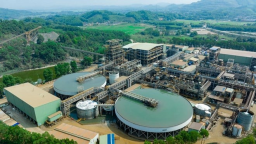
Masan High-Tech Materials partners with S Korea’s GBI on tungsten processing
Masan High-Tech Materials (UPCoM: MSR), the mining unit of Vietnamese conglomerate Masan Group (HoSE: MSN), has entered into a strategic partnership with South Korea’s GB Innovation (GBI) to process Korean tungsten concentrate into higher-value products in Vietnam, strengthening a non-Chinese tungsten supply chain.
Companies - Thu, July 9, 2026 | 3:51 pm GMT+7

Idemitsu Kosan expands energy ecosystem in Vietnam
After more than three decades of operations in Vietnam, Japan’s Idemitsu Kosan is further expanding its energy ecosystem with a biomass pellet plant project in the central province of Gia Lai.
Industries - Thu, July 9, 2026 | 1:43 pm GMT+7

Two banks to list on Ho Chi Minh City bourse, expand charter capital
Vietnam's private banks Vietbank and BVBank are finalizing the last steps to transfer their trading from the unlisted public company market UPCoM to the Ho Chi Minh Stock Exchange (HoSE), while simultaneously implementing plans to increase their charter capital.
Banking - Thu, July 9, 2026 | 11:51 am GMT+7

Strong Q2 earnings, lower interest rates to bolster Vietnam stocks
Strong second-quarter corporate earnings and declining interest rates are expected to support Vietnam's stock market in the coming months, brokerage firms said, as the market moves beyond a period of limited news flow and enters a more favorable phase driven by improving fundamentals.
Finance - Thu, July 9, 2026 | 8:00 am GMT+7

Wistron raises construction, equipment investment in northern Vietnam province to $178 mln
Taiwanese technology firm Wistron has increased its investment in factory construction and equipment in Ninh Binh province to $178.27 million, adding $24.5 million to expand its facilities at Kim Bang Industrial Park.
Industries - Wed, July 8, 2026 | 7:56 pm GMT+7

Sun Group targets groundbreaking for $624 mln urban projects in central Vietnam this year
Vietnam's leading developer Sun Group aims to begin construction of two urban projects worth a combined VND16.4 trillion ($623.78 million) in the central province of Quang Ngai by the end of 2026, while also advancing plans for a new expressway linking the province with the Central Highlands.
Real Estate - Wed, July 8, 2026 | 4:54 pm GMT+7

Vietnam raises airport number target to 36 by 2030 as aviation demand surges
Vietnam plans to expand its airport network to 36 airports by 2030, up from the previous target of 30, under a revised national aviation infrastructure plan aimed at catering for rising passenger demand and boosting regional connectivity.
Infrastructure - Wed, July 8, 2026 | 4:45 pm GMT+7
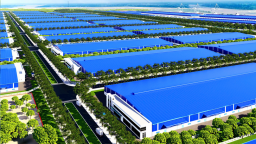
Germany's VFT Bio Fuels UG eyes $3.1 bln green steel complex in southern Vietnam
Vietnamese industrial park developer IMG Phuoc Dong and Germany’s VFT Bio Fuels UG have signed a memorandum of understanding to study the development of a $3.1 billion green steel complex in the southern province of Tay Ninh.
Industries - Wed, July 8, 2026 | 4:25 pm GMT+7

Vietnam police minister urges Yamato Holdings to study investment in Gia Binh airport
Vietnam’s Minister of Public Security Luong Tam Quang has called on Japan’s Yamato Holdings to assess investment opportunities in warehousing and cargo transport systems at Gia Binh International Airport, while exploring potential cooperation and operational models with Vietnamese partners once the facility becomes operational.
Infrastructure - Wed, July 8, 2026 | 3:09 pm GMT+7
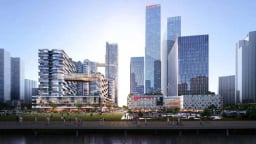
Vietnam real estate M&A favors quality, clear legal status assets as FDI priorities evolve
Vietnam's real estate M&A market continued to attract foreign capital in the first half of 2026 despite persistent global economic uncertainties, but foreign investors are increasingly targeting assets with clear legal status, stable cash flow, and strong operational performance, with data centers emerging as a key growth segment.
Real Estate - Wed, July 8, 2026 | 1:38 pm GMT+7
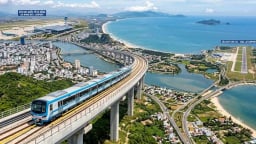
Central Vietnam hub Danang plans to tokenize nearly $4 bln in infrastructure projects to attract global capital
The Vietnam International Financial Center, located in the central city of Danang (VIFC Danang), plans to tokenize nearly $4 billion worth of infrastructure projects as part of a strategy to attract more global capital.
Economy - Wed, July 8, 2026 | 12:17 pm GMT+7

Computers, smartphones edge higher in price as AI memory boom tests Vietnam's ICT firms
Rising memory chip prices driven by artificial intelligence are spreading from semiconductor manufacturers to consumer electronics brands such as Apple, Dell and ASUS, pushing up the prices of computers and smartphones.
Companies - Wed, July 8, 2026 | 8:00 am GMT+7

LG Innotek to build $1 bln semiconductor substrate plant in northern Vietnam
South Korea's LG Innotek will spend $1 billion to build a semiconductor package substrate manufacturing plant in Hai Phong city, with mass production scheduled to begin in the third quarter of 2028, according to local authorities.
Industries - Tue, July 7, 2026 | 11:13 pm GMT+7

Malaysia’s JLand eyes up to $6 bln high-tech hub in Hanoi
Malaysia’s JLand Group has proposed developing a high-tech, innovation and data center complex in Hanoi with an estimated investment of $4-6 billion, as Vietnam’s capital seeks to attract technology projects and strengthen its digital infrastructure.
Infrastructure - Tue, July 7, 2026 | 4:26 pm GMT+7
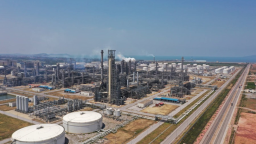
PVOIL approves $600 mln crude supply plan for Nghi Son refinery
PVOIL, a subsidiary of state-owned Petrovietnam, has approved transactions worth an estimated $600 million to supply crude oil to the Nghi Son Refinery and Petrochemical complex during the second half of 2026, as the country’s largest refinery broadens its feedstock sources beyond its traditional Kuwaiti supply.
Companies - Tue, July 7, 2026 | 1:33 pm GMT+7

F88 wins two international awards for customer-centric growth strategy
F88, a major Vietnamese financial services company, has received two international awards from the Asian Banking & Finance (ABF), a Singapore-based publication, recognizing its initiatives in customer experience and service innovation.
Companies - Tue, July 7, 2026 | 12:42 pm GMT+7