


Global corporations no longer coming to Vietnam because of incentives
As global capital increasingly prioritizes countries with transparent and stable investment environments and ability to protect intellectual property rights, the Politburo's Resolution 10 is viewed as a strong statement of Vietnam’s ambition to upgrade its position in the global value chain. The Investor talks with Dr. Su Ngoc Khuong, senior director of investment at Savills Vietnam, to get an insight into the new orientations.
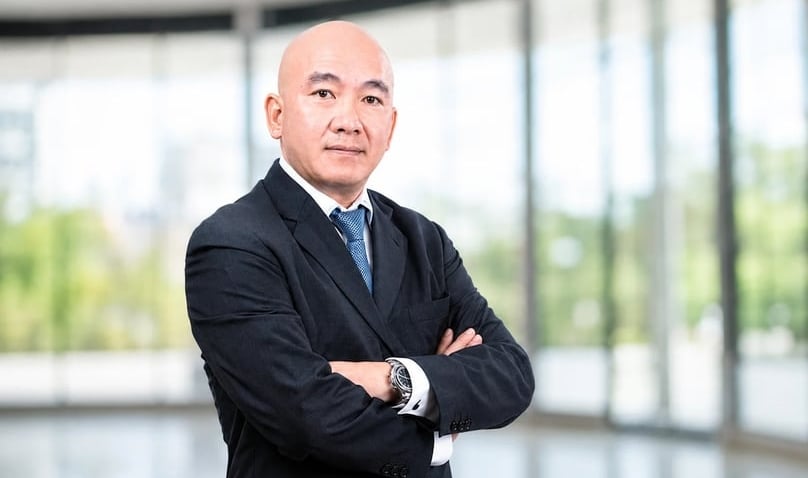
Dr. Su Ngoc Khuong, senior director of investment advisory at Savills Vietnam. Photo courtesy of the company.
After more than 30 years of attracting FDI based on advantages such as labor costs, geographical location, and investment incentives, what do you consider to be the most notable change in Vietnam’s approach to attracting foreign investment capital reflected in the Politburo's Resolution No. 10-NQ/TW issued on June 8, 2026?
I believe this is the most important breakthrough point of Resolution 10.
For more than 30 years of attracting FDI, Vietnam has achieved success thanks to advantages such as competitive labor costs, favorable geographical location, and investment incentive policies. However, in the current context, these factors are no longer sufficient to create sustainable competitive advantages. Countries in the region can all offer similar incentive packages, and some may even provide more attractive ones.
What multinational corporations are concerned about today is not only tax incentives, but also the stability of the investment environment, policy predictability, the level of asset protection, intellectual property rights protection, and the effectiveness of legal enforcement.
Resolution No 10 demonstrates that Vietnam is shifting from a mindset of “attracting capital” to a mindset of “attracting trust.” This is a fundamental change. In the long term, institutional quality and the reliability of the investment environment will be the decisive factors determining whether corporations choose to locate their R&D centers, operational headquarters, or regional headquarters in a country.
In other words, Vietnam is moving from competing based on costs to competing based on institutional quality and the safety level of its business environment.
Resolution 10 emphasizes the protection of property rights, intellectual property rights, and the principle of not applying unfavorable policies retroactively. How significant are these commitments to the long-term investment decisions of multinational corporations?
For global corporations, these are highly meaningful signals.
In today’s knowledge-based economy, the most valuable assets of a business are no longer factories or machinery, but technology, data, production know-how, brands, and intellectual property.
When a corporation decides to transfer core technologies or establish a research center in a country, the first thing it evaluates is whether these intangible assets will be protected.
In addition, the principle of not applying unfavorable policies retroactively is one of the most important standards of a modern investment environment. FDI projects typically have a lifespan of 10 to 30 years. If businesses cannot predict future policies or are concerned that previous commitments may be changed unfavorably, they will be very cautious in implementing large-scale projects.
Therefore, the commitments stated in the resolution are not merely principle-based declarations. In reality, they serve as a foundation for reducing “country risk” in the eyes of international investors. When risk levels decline, investors’ cost of capital also decreases, and the ability to attract high-tech projects will increase significantly.
What do you consider to be the most notable message that Resolution 10 sends to the international investment community?
In my view, the strongest message is that Vietnam is not only seeking more capital, but also aiming to become a long-term strategic partner of global corporations.
The resolution clearly demonstrates that Vietnam is no longer pursuing the goal of attracting FDI at all costs. Instead, the country is prioritizing projects that generate high added value, promote innovation, facilitate technology transfer, and create linkages with domestic enterprises.
This shows that Vietnam is moving toward a new stage of development, in which FDI is not merely a source of supplementary capital, but becomes a driving force to enhance the competitiveness of the entire economy.
For international investors, this is a signal that Vietnam aims to build a sustainable development ecosystem, where the interests of investors and national interests are aligned over the long term.
Vietnam’s goal of attracting R&D centers, data centers, operational centers, and regional headquarters of multinational corporations reflects what shift in the country’s development strategy?
This reflects a very important shift in Vietnam’s development strategy.
For many years, Vietnam has mainly participated in manufacturing and assembly stages within the global value chain. This was a necessary phase to accumulate production capabilities and integrate into the international economy.
However, the greatest added value does not lie in assembly, but in activities such as research and development, product design, supply chain management, data management, and regional operations.
The goal of attracting R&D centers and regional headquarters confirms one thing: Vietnam no longer wants to be merely a “manufacturing hub,” but is striving to become a regional center for innovation, governance, and decision-making.
If successful, this will represent an upgrade in Vietnam’s position - moving from a production link to a higher-value-added link in the global value chain. This is also the path that many successful Asian economies, such as Singapore, South Korea, and Taiwan, have taken.
From the perspective of international investors, after Resolution 10, what factors will the foreign business community expect most from the Vietnamese Government?
International investors usually evaluate a country not only based on its vision, but more importantly on its implementation capacity. Therefore, after Resolution 10, what they will be looking forward to most is the speed at which these orientations are transformed into concrete actions.
There are three particularly important areas.
First, reforming administrative procedures and investment licensing processes. Investors expect project implementation timelines to be significantly shortened and procedures to become more transparent and consistent across localities.
Second, improving the quality of human resources. If Vietnam wants to attract R&D centers and high-tech projects, technical talent, data specialists, AI engineers, and scientists will be decisive factors.
Third, ensuring consistency in policy implementation. For global corporations, consistency between central government policies and their execution at the local level is extremely important.
I believe that the 2026-2030 period will no longer be a competition to attract FDI based on capital scale, but rather a competition based on the quality of the investment environment. Resolution 10 has established a very clear vision.
The next challenge is to turn those commitments into the actual experiences of investors. If Vietnam can achieve this, the country has every opportunity to become one of the leading strategic destinations for technology and innovation-driven capital flows in Asia over the coming decade.
- Related News


- Read More

PV Gas signs Vietnam’s first term LNG supply agreement for 2027-2031
PV Gas, a subsidiary of state-owned Petrovietnam, has signed a term LNG purchase agreement with Shell Eastern Trading (Pte) Ltd (Shell Eastern LNG), a wholly owned subsidiary of Shell plc, for the 2027-2031 period.
Companies - Tue, July 7, 2026 | 11:26 am GMT+7

Global corporations no longer coming to Vietnam because of incentives
As global capital increasingly prioritizes countries with transparent and stable investment environments and ability to protect intellectual property rights, the Politburo's Resolution 10 is viewed as a strong statement of Vietnam’s ambition to upgrade its position in the global value chain. The Investor talks with Dr. Su Ngoc Khuong, senior director of investment at Savills Vietnam, to get an insight into the new orientations.
Executive Talk - Tue, July 7, 2026 | 10:47 am GMT+7
MB signs cooperation deal with Khanh Hoa province to support digital transformation, infrastructure investment
Military Commercial Joint Stock Bank (MB) has signed a memorandum of understanding with Khanh Hoa to cooperate on financing infrastructure projects, supporting digital transformation, and promoting investment as the central Vietnam province seeks to accelerate economic development through 2030.
Companies - Tue, July 7, 2026 | 9:08 am GMT+7
Ha Do Group shares tumble to two-year low amid solar tariff uncertainty
Shares of Vietnam's Ha Do Group (HoSE: HDG) fell to their lowest level in more than two years on Monday, extending a three-month selloff driven by weaker earnings, regulatory uncertainty surrounding preferential solar power tariffs, and reduced foreign investor holdings.
Companies - Mon, July 6, 2026 | 9:26 pm GMT+7
Vietnam advances plans for 349-km Ring Road 5 around Hanoi
Vietnam is accelerating preparations for the construction of Ring Road 5 around Hanoi, a 349-km route expected to ease congestion, improve regional connectivity, and support economic growth across the capital region.
Investing - Mon, July 6, 2026 | 5:27 pm GMT+7
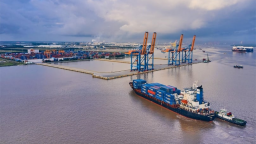
Gemadept completes shipping, logistics restructuring with CJ Logistics
Gemadept (HoSE: GMD) has completed a series of transactions with South Korea’s CJ Logistics, taking full ownership of its shipping business while exiting their logistics joint venture, as both companies sharpen their strategic focus.
Companies - Mon, July 6, 2026 | 4:08 pm GMT+7
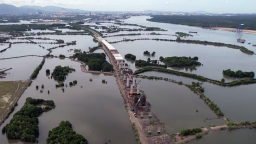
Work starts on $262 mln port project in HCMC's Cai Mep-Thi Vai port cluster
Ground has been broken on a VND6.9 trillion ($262.36 million) deep-water port project at the Cai Mep-Thi Vai port cluster in Ho Chi Minh City, as Vietnam steps up efforts to strengthen maritime infrastructure and cut logistics costs.
Infrastructure - Mon, July 6, 2026 | 3:53 pm GMT+7

Vietnam public investment drive sparks new capital spending cycle among construction firms
Vietnam's accelerated public investment program, marked by the simultaneous rollout of large-scale infrastructure projects, is driving rising demand for construction machinery, heavy equipment and specialized vehicles, prompting contractors to expand or restructure their equipment fleets in anticipation of sustained project pipelines.
Companies - Mon, July 6, 2026 | 2:02 pm GMT+7
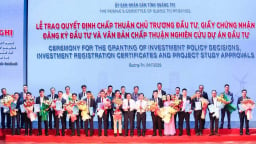
Central Vietnam province Quang Tri revises development plan, secures $7.72 bln in investment commitments
Quang Tri province unveiled a revised provincial development plan for 2021-2030 with a vision to 2050 on Saturday, while granting approvals for 33 projects worth about $7.72 billion, in a move aimed at accelerating growth in energy, logistics, tourism and urban development.
Industries - Mon, July 6, 2026 | 9:30 am GMT+7

Sun Group spends $3.5 bln to build 17,400-room accommodation ecosystem in Phu Quoc ahead of APEC 2027
With total investment of nearly VND91.6 trillion ($3.48 billion), Sun Group is gradually shaping a large-scale “accommodation ecosystem” spanning high-end hotels to serviced apartments, aiming to develop tourism infrastructure in Phu Quoc Island, southern Vietnam.
Travel - Mon, July 6, 2026 | 8:45 am GMT+7
Techcombank to co-host Vietnam Financial Forum 2026 on channeling capital, driving growth
Vietnam's leading private lender Techcombank will co-host the Vietnam Financial Forum 2026 (VFF 2026), a national-level finance conference to be held in Danang on July 9-10, as the country seeks to strengthen capital markets and develop its International Financial Center.
Companies - Sun, July 5, 2026 | 7:56 pm GMT+7

Vietnam ministers outline measures to unlock growth drivers
Vietnamese ministers have proposed accelerating infrastructure projects, strengthening energy security, boosting domestic consumption, developing higher-value tourism, and completing the national land database to support economic growth in the second half of 2026.
Economy - Sun, July 5, 2026 | 3:43 pm GMT+7
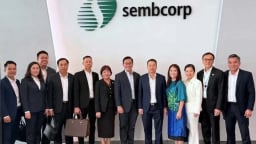
Sembcorp, YCH explore expanded investment opportunities in central Vietnam hub Danang
Danang city authorities met with Singapore's Sembcorp Industries and YCH Group during their recent working visit to the island country, seeking to expand investment cooperation in industrial infrastructure, digital infrastructure and logistics.
Industries - Sun, July 5, 2026 | 11:59 am GMT+7

Aeon targets tripling Vietnam operations by 2030
Japan's retail giant Aeon aims to triple the scale of its Vietnam operations by 2030, identifying the country as one of its key growth markets for 2025-2030, company executives said.
Industries - Sun, July 5, 2026 | 8:00 am GMT+7

Cleaning technology leader Karcher expands investment in central Vietnam with second factory phase
Karcher has inaugurated the second phase of its cleaning equipment manufacturing plant in Danang city, nearly two years after the first phase began operations, as the German company expands production capacity to meet growing global demand.
Industries - Sat, July 4, 2026 | 3:36 pm GMT+7

Fruit processor Antesco to build $16 mln plant in southern Vietnam
An Giang Fruit-Vegetables & Foodstuff JSC (Antesco) has approved the establishment of a wholly owned subsidiary to develop a fruit and vegetable preservation and processing plant in Tay Ninh province.
Industries - Sat, July 4, 2026 | 12:29 pm GMT+7