


Priced for crisis, primed for growth: Vietnam’s bifurcated stock market
The VN-Index is trading at a 13x forward P/E valuation versus 15% expected earnings growth in 2026, but over 70% of the market is trading at below a 10x P/E, a valuation which is consistent with past crisis conditions, writes Michael Kokalari, chief economist at VinaCapital.

VinaCapital's chief economist Michael Kokalari. Photo courtesy of the company.
The stellar stock price performance of the Vingroup family of companies, which now account for nearly 30% of the VNI’s market cap (see below), has left over 70% of Vietnam’s stock market trading as if the country were experiencing an economic crisis - which is a sharp disconnect from Vietnam’s resilient economy and booming high-tech exports.
We acknowledge that the market is currently facing multiple headwinds, including: 1) the prolonged disruption in the Strait of Hormuz, 2) Vietnam’s trade deficit more than doubled from 3% of GDP pre‑war to over 6%/GDP as of mid‑May, 3) inflation in Vietnam is now well above 5%, which is pushing interest rates higher, and 4) persistent foreign outflows, with investors selling roughly $2 billion of Vietnamese equities year‑to‑date (following $5 billion of outflows last year). We believe Vietnam’s Government has the capacity to counter these issues and we still expect 7% GDP growth this year.

The Strait of Hormuz disruption is a major challenge for Asia, and our 7% GDP growth forecast is based on the assumption that a U.S.-Iran deal is imminent.
Critically, the Vietnamese Government’s “Bamboo Diplomacy” strategy helped it secure enough oil to largely insulate Vietnam from the worst economic consequences of the war, which has not had a major impact on day-to-day life in Vietnam, in contrast to highly publicized issues in India, Indonesia, and the Philippines.
One reason Vietnam has been able to secure sufficient energy supplies is that China and Japan both have strong economic incentives to keep Vietnamese factories running; both countries have significant manufacturing investments in Vietnam.
Many of those factories produce high-tech products, and a key pillar of Vietnam’s relative economic resilience this year is the widening gap between economies with booming high-tech exports (e.g., Vietnam, South Korea and Taiwan), and those that are more exposed to energy-import pressure (e.g., India and the Philippines).
Vietnam’s computers and electronics exports are up nearly 50% this year after having surged nearly 50% last year. Vietnam’s trade deficit is primarily being driven by an increase in AI-related exports for reasons discussed below, which helps explain why the VND exchange rate has not depreciated this year despite the apparently alarming trade deficit (trade deficits over 3% of GDP are considered large).
Finally, VN-Index earnings grew 51% year-on-year in Q1, dwarfing the 15% consensus expectation. That surge was partly driven by Vinhomes (VHM), which is discussed below, but even when stripping out VHM, earnings grew by around 30% - or double consensus expectations.
We understand the headwinds listed above and acknowledge the tail risk to the global economy that the U.S.-Iran war presents, but the majority of the market is trading at around crisis-level valuations despite the sound fundamentals of those stocks.
Vingroup companies now ~30% of VN-Index
The Vingroup family of companies, which includes Vingroup (VIC), Vinhomes (VHM), Vincom Retail (VRE), and Vinpearl (VPL), saw their aggregate weighting in the VN-Index balloon from about 8% two years ago to nearly 30% of the index now.
Last year, the VN-Index rose by around 41%, but stripping out Vingroup-related stocks, the index was only up around 10%. This year, the VN-Index outpaced the ex-VIC index by about 4-5%pts (i.e., the VNI excluding VIC/VHM/VRE/VPL lagged by 4-5%pts), further widening the gap between the valuation of the VNI (trading at a 13x P/E versus 15% EPS growth), versus the VN-Index, ex-VIC (trading at 10x versus 16% EPS growth).

The continued increase in VIC family stocks this year has been driven by several catalysts, including: 1) the announcement that Vingroup will restructure its VinFast (VFS) EV subsidiary and spin it out from the VIC parent company, which currently owns more than 50% of VFS’s outstanding shares, 2) the announcement that Vingroup’s Green Smart Mobility Taxi subsidiary (GSM) will IPO (VinFast sells about a third of the cars it produces to the taxi subsidiary it launched in 2023), and 3) stellar Vinhomes (VHM) earnings.
The timing of these positive catalysts for VIC’s stock price appears to be correlated to the timing of the company’s debt refinancing requirements. Note that in the case of VHM’s stellar earnings, real estate companies have a good deal of latitude in the timing of when they book revenues and earnings. For example, a developer can realize outsized revenues if it sells a large block of apartments or a major project to an intermediary.
Q1 earnings far exceeded estimates
The earnings of the VN-Index jumped 51% year-on-year in Q1, dwarfing the 15% consensus expectation. The increase in VHM explains some of the surge, but even stripping that out, earnings grew by around 30% - double consensus expectations - driven by broad-based strength in real estate, materials, retail, energy, and consumer staples, as can be seen in the table below.
In short, materials benefited from stronger steel demand, oil refiners benefited from wider crack spreads/refining margins, and consumer companies showed signs of a tangible recovery from last year’s low base. Consequently, in addition to the attractive valuation of banks mentioned above (1.3x P/B versus high-teens ROE), consumer, IT, and energy stocks are also trading at relatively low multiples - in many cases below their five-year averages.

It’s likely that the VNI’s earnings momentum will slow as the economic impact of the war unfolds and higher interest rates look set to squeeze banks’ profit margins as the year progresses.
Furthermore, Vietnam is advancing a wide-ranging series of reforms that are aimed at improving the efficiency of SOEs, that are tied to FTSE EM inclusion, that target restarting stalled real estate projects, etc. We do not think the full impact of these reforms has been priced into the stock market yet since the benefits will accrue gradually through better liquidity, more listings, SOE restructuring, and the reactivation of delayed projects.
Finally, note that while we’ve discussed sector-wide earnings above, one or two key stocks can often significantly move an entire sector’s earnings in Vietnam. Consequently, active stock management in Vietnam is critical, as picking the leaders can significantly impact investment returns.
Benign trade deficit
Vietnam’s high-tech exports jumped 49% year-on-year in the first four monhs of 2026, following a 48% increase last year, driven by strong demand for AI-related products. Nevertheless, Vietnam’s trade deficit more than doubled from 3%/GDP pre-war to well above 6%/GDP as of mid-May (or circa $13 billion as of mid-May).
The war contributed more than 2 percentage points towards the widening of Vietnam’s trade deficit because oil prices and the value of China’s currency have both soared (Vietnam sources over one-third of the production materials it uses to produce exports from China), but rising imports of production materials and capital goods required to produce high-tech products account for most of Vietnam’s current trade deficit.
Further to that last point, FDI high-tech companies are increasingly importing capital goods used in the production of precision components. This important but nuanced point helps explain why the currency and stock markets are brushing off the recent jump in the trade deficit.
In detail, imports of components like chips and specialty glass typically used in the production of smartphones are consumed within 3-4 months of being imported. However, FDI companies (especially Chinese high-tech companies) are increasingly importing the capital goods used to make components like the aforementioned specialty glass.
The “turnaround time” to produce final exported products with such capital goods and to recoup the cost of that equipment in Vietnam’s trade balance takes much longer than the 3-4 month turnaround time of components used to produce high-tech products, inducing a “J-Curve” effect in which the trade balance first declines and then improves as imported capital goods and components get used to make exports.
- Related News


- Read More
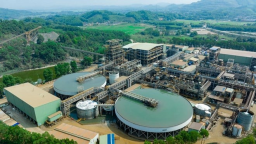
Masan High-Tech Materials partners with S Korea’s GBI on tungsten processing
Masan High-Tech Materials (UPCoM: MSR), the mining unit of Vietnamese conglomerate Masan Group (HoSE: MSN), has entered into a strategic partnership with South Korea’s GB Innovation (GBI) to process Korean tungsten concentrate into higher-value products in Vietnam, strengthening a non-Chinese tungsten supply chain.
Companies - Thu, July 9, 2026 | 3:51 pm GMT+7

Idemitsu Kosan expands energy ecosystem in Vietnam
After more than three decades of operations in Vietnam, Japan’s Idemitsu Kosan is further expanding its energy ecosystem with a biomass pellet plant project in the central province of Gia Lai.
Industries - Thu, July 9, 2026 | 1:43 pm GMT+7

Two banks to list on Ho Chi Minh City bourse, expand charter capital
Vietnam's private banks Vietbank and BVBank are finalizing the last steps to transfer their trading from the unlisted public company market UPCoM to the Ho Chi Minh Stock Exchange (HoSE), while simultaneously implementing plans to increase their charter capital.
Banking - Thu, July 9, 2026 | 11:51 am GMT+7

Strong Q2 earnings, lower interest rates to bolster Vietnam stocks
Strong second-quarter corporate earnings and declining interest rates are expected to support Vietnam's stock market in the coming months, brokerage firms said, as the market moves beyond a period of limited news flow and enters a more favorable phase driven by improving fundamentals.
Finance - Thu, July 9, 2026 | 8:00 am GMT+7

Wistron raises construction, equipment investment in northern Vietnam province to $178 mln
Taiwanese technology firm Wistron has increased its investment in factory construction and equipment in Ninh Binh province to $178.27 million, adding $24.5 million to expand its facilities at Kim Bang Industrial Park.
Industries - Wed, July 8, 2026 | 7:56 pm GMT+7

Sun Group targets groundbreaking for $624 mln urban projects in central Vietnam this year
Vietnam's leading developer Sun Group aims to begin construction of two urban projects worth a combined VND16.4 trillion ($623.78 million) in the central province of Quang Ngai by the end of 2026, while also advancing plans for a new expressway linking the province with the Central Highlands.
Real Estate - Wed, July 8, 2026 | 4:54 pm GMT+7

Vietnam raises airport number target to 36 by 2030 as aviation demand surges
Vietnam plans to expand its airport network to 36 airports by 2030, up from the previous target of 30, under a revised national aviation infrastructure plan aimed at catering for rising passenger demand and boosting regional connectivity.
Infrastructure - Wed, July 8, 2026 | 4:45 pm GMT+7

Germany's VFT Bio Fuels UG eyes $3.1 bln green steel complex in southern Vietnam
Vietnamese industrial park developer IMG Phuoc Dong and Germany’s VFT Bio Fuels UG have signed a memorandum of understanding to study the development of a $3.1 billion green steel complex in the southern province of Tay Ninh.
Industries - Wed, July 8, 2026 | 4:25 pm GMT+7

Vietnam police minister urges Yamato Holdings to study investment in Gia Binh airport
Vietnam’s Minister of Public Security Luong Tam Quang has called on Japan’s Yamato Holdings to assess investment opportunities in warehousing and cargo transport systems at Gia Binh International Airport, while exploring potential cooperation and operational models with Vietnamese partners once the facility becomes operational.
Infrastructure - Wed, July 8, 2026 | 3:09 pm GMT+7

Vietnam real estate M&A favors quality, clear legal status assets as FDI priorities evolve
Vietnam's real estate M&A market continued to attract foreign capital in the first half of 2026 despite persistent global economic uncertainties, but foreign investors are increasingly targeting assets with clear legal status, stable cash flow, and strong operational performance, with data centers emerging as a key growth segment.
Real Estate - Wed, July 8, 2026 | 1:38 pm GMT+7

Central Vietnam hub Danang plans to tokenize nearly $4 bln in infrastructure projects to attract global capital
The Vietnam International Financial Center, located in the central city of Danang (VIFC Danang), plans to tokenize nearly $4 billion worth of infrastructure projects as part of a strategy to attract more global capital.
Economy - Wed, July 8, 2026 | 12:17 pm GMT+7

Computers, smartphones edge higher in price as AI memory boom tests Vietnam's ICT firms
Rising memory chip prices driven by artificial intelligence are spreading from semiconductor manufacturers to consumer electronics brands such as Apple, Dell and ASUS, pushing up the prices of computers and smartphones.
Companies - Wed, July 8, 2026 | 8:00 am GMT+7

LG Innotek to build $1 bln semiconductor substrate plant in northern Vietnam
South Korea's LG Innotek will spend $1 billion to build a semiconductor package substrate manufacturing plant in Hai Phong city, with mass production scheduled to begin in the third quarter of 2028, according to local authorities.
Industries - Tue, July 7, 2026 | 11:13 pm GMT+7

Malaysia’s JLand eyes up to $6 bln high-tech hub in Hanoi
Malaysia’s JLand Group has proposed developing a high-tech, innovation and data center complex in Hanoi with an estimated investment of $4-6 billion, as Vietnam’s capital seeks to attract technology projects and strengthen its digital infrastructure.
Infrastructure - Tue, July 7, 2026 | 4:26 pm GMT+7
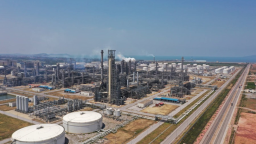
PVOIL approves $600 mln crude supply plan for Nghi Son refinery
PVOIL, a subsidiary of state-owned Petrovietnam, has approved transactions worth an estimated $600 million to supply crude oil to the Nghi Son Refinery and Petrochemical complex during the second half of 2026, as the country’s largest refinery broadens its feedstock sources beyond its traditional Kuwaiti supply.
Companies - Tue, July 7, 2026 | 1:33 pm GMT+7

F88 wins two international awards for customer-centric growth strategy
F88, a major Vietnamese financial services company, has received two international awards from the Asian Banking & Finance (ABF), a Singapore-based publication, recognizing its initiatives in customer experience and service innovation.
Companies - Tue, July 7, 2026 | 12:42 pm GMT+7
- Travel
-

Sun Group spends $3.5 bln to build 17,400-room accommodation ecosystem in Phu Quoc ahead of APEC 2027
-
CapitaLand launches 4th edition of campaign with $98,000 commitment to support vulnerable children
-
How Phu Quoc attracts travelers seeking to escape summer heat
-
Sun PhuQuoc Airways launches Singapore route, connecting two of Asia's 'paradise' islands
-
Seta - A “silken thread” weaving contemporary Cantonese cuisine into the soul of Phu Quoc
-
Danang airport starts $57 mln terminal expansion