


Vietnam’s path to an investment-grade rating
An upgrade to investment-grade would mark a pivotal milestone in Vietnam’s economic trajectory, removing one of the final structural barriers that limits the country’s access to a wider group of institutional global investors capable of funding large-scale infrastructure projects, as well as larger cross-asset pools, write VinaCapital's chief economist Michael Kokalari and senior economist Thai Viet Trinh.

A corner of Hanoi. Photo courtesy of Voice of Vietnam (VOV).
Vietnam sits on the precipice of becoming an investment-grade rated country, currently essentially one notch below investment grade.
Achieving investment grade status would lower Vietnam’s cost of funding, facilitate large-scale infrastructure development, and support the country’s stock market by unlocking access to a wider group of global institutional investors.
Consequently, achieving an upgrade is becoming increasingly urgent for Vietnam to fund its ambitious infrastructure development plans, particularly as large-scale projects that rely on imported technologies (e.g., high-speed rail and power-generation) require substantial foreign currency financing.
Vietnam’s Government has set a target to achieve investment grade status by 2030, although recent developments and our own discussions with the major credit rating agencies reinforce our view that an upgrade is achievable on a quicker timeline.
Last week, Fitch upgraded Vietnam’s long-term senior secured debt to BBB-, marking the first time any Vietnam sovereign-linked instrument has been rated investment grade. This week, the Government outlined details on how it plans to achieve an investment-grade credit rating (see below).
In short, Vietnam already meets most of the quantitative criteria (e.g., debt-to-GDP ratios) required for an upgrade and only needs to address a limited set of qualitative issues (e.g., policy predictability), which we believe will receive heightened attention as recognition of the importance of achieving an upgrade grows. Vietnam is rated one notch below investment grade by S&P and Fitch and two notches below by Moody’s.

An upgrade could be even more meaningful for Vietnam’s stock market than the recent FTSE Russell Emerging Market equity reclassification. Past first-time upgrades to an investment grade rating have coincided with outsized equity gains during the upgrade window: India’s index went up ~308% and Thailand’s index increased ~150% when measuring from the two years prior to two years after the upgrade.
Beyond these equity gains, the upgrades also triggered a surge in foreign currency capital inflows into these economies (not only in equities, but also bonds and FDI), which in turn supported a ~150% rise in FX reserves in India and a ~250% rise in Thailand within two years of their upgrades (see table above).
Given all the above, Vietnam’s policymakers are aiming to clear the remaining bottlenecks that stand in the way of an upgrade to investment grade status by the three main credit agencies S&P Global, Moody’s, and Fitch. The ratings agencies consider a wide range of quantitative and qualitative data to assess whether countries have stable finances, strong banks, reliable institutions, and predictable policies, conditions that support timely repayment of debt to prospective foreign investors.
Three of the most important metrics credit ratings agencies focus on are a country’s Government Debt-to-GDP ratio, External Debt-to-GDP ratio (i.e., US Dollar denominated), and FX reserves (to ensure that the country has the capacity to make debt payments to foreign creditors).
Three of the core pillars in the Government’s plan to achieve and investment grade sovereign credit rating include prudent public debt management, Government policies that promote growth but preserve macroeconomic stability, and enhanced engagement with international rating agencies. The Government is signaling that it is working to address the remaining constraints to a full investment-grade rating and is placing more priority on addressing the issues that stand in the way of an upgrade.
As can be seen in the table below, Vietnam’s total government debt (~35%/GDP) and external debt (~33%/GDP) are both reasonable compared to regional peer countries – all of which have investment grade credit ratings (note that Vietnam’s external debt is apportioned roughly equally between the private and public sectors).

That said, Vietnam’s FX reserves have dropped over the last two years to below three months’ worth of imports, albeit for reasons that are relatively easy for the Government to remedy. The Government recently took steps to make it easier for citizens to trade gold onshore, which would indirectly increase US Dollars inside the country.
The level of a country’s FX reserves is a key consideration for ratings agencies; Pakistan suffered multiple ratings downgrades from 2018 to 2023 because its FX reserves fell below 1-2 months of imports, with agencies citing “weak external liquidity” as a key concern.
In addition to quantitative criteria, the ratings agencies also emphasized that a few qualitative factors still need improvement, with Fitch highlighting a “relatively underdeveloped economic policy framework.” While Vietnam has made progress over the years in climbing two notches in its credit rating (from BB- in 2014 to BB+ in 2022), the Government will need to move more quickly to meet its upgrade target.
Fortuitously, we believe that the same sense of urgency that has motivated the Government to quickly roll out a series of important and sweeping reforms (broadly known as the Doi moi 2.0 reforms which we have discussed here will address the outstanding issues regarding a credit rating upgrade as more policymakers recognize the importance of this matter.
Such measures should be enough to get Vietnam across the finish line and achieve investment grade status. S&P Global said that it “may raise ratings if Vietnam's institutional settings improve considerably and augment policy predictability and transparency, including in external data provision and reliability”.
To achieve an upgrade to an investment grade rating, Vietnam needs to address three key issues:
Adequate financial sector protections:
Larger FX reserves, a healthier banking system (better asset quality, capitalization, regulations, etc.), limits on excessive leverage, stricter lending rules, among others.
Policy/legal predictability:
Clearer Government decision-making with predictable policy cycles; closure of regulatory gaps in financial supervision and corporate oversight; and legal protections for foreign investors.
Data transparency:
Publication of more detailed external accounts data (e.g., short-term private debt, FX forward positions), full SOE/PPP liabilities, and standardized bank asset-quality metrics (NPLs, restructured loans).
Many banks in Vietnam are thinly capitalized. The sector-wide capital-adequacy ratio (CAR) was 12.5% in late-2024, with key banks close to regulatory minimums, leaving limited buffers against credit shocks. Furthermore, several institutions are still in the process of aligning fully with Basel II/III standards, particularly around risk-weighted asset calculations, loss provisioning, and liquidity coverage; all these issues could be further aggravated by the rapid loan growth occurring at these banks.
Late last year, Fitch warned that pressure by Vietnamese policymakers to “accelerate credit growth, which is already very high”, could further amplify vulnerabilities in an already thinly capitalized banking system. Potential issues in the bank sector could spill over to the broader economy, since bank-held assets in Vietnam are nearly twice the size of GDP.
All the above reinforces the urgency of proactive Government reforms, much like South Korea did when it enacted the Corporate Restructuring Promotion Act (2001), which helped capitalize several banks, sped up NPL resolutions, and added stricter lending rules. In Vietnam’s case, different credit rating agencies have expressed concerns about several issues, including the completeness of data related to external positions (such as external accounts data, international investments positions, and other forms of short-term external debt).
This is a key point that Vietnam is working to address because incomplete data makes it harder for rating agencies to judge the country’s capacity to meet external obligations under stress, resulting in agencies applying more conservative assumptions that weigh on the final rating.
What’s next?
Vietnam is already making significant strides in strengthening its institutional foundations, addressing opacity in its external data disclosure, and implementing stronger financial and legal oversight, and progress on these areas is expected to continue. However, a greater sense of urgency is needed to clear the specific bottlenecks credit agencies consider in assigning ratings if an investment grade status upgrade is to be achieved by 2030.
More broadly, Vietnam’s progress in strengthening its institutions is organized around Resolution 66 (effective April 2025), a blueprint that demands a modern, rules-based law-making framework, fixes overlaps and inconsistencies and strengthens enforcement and compliance.
Following the passage of Resolution 66, more new laws were passed during the 9th National Assembly session in June 2025 than in all of the 2021-2023 period combined, addressing a wide range of issues that can impact Vietnam’s credit score (such as the ones mentioned above).
Moreover, Vietnam’s 10th National Assembly session, which started in October 2025 and wrapped up in January 2026, is expected to pass a record of 53 draft laws and resolutions, marking a major legislative push expected to continue until all remaining institutional gaps are addressed.
In tandem with these legal reforms, complementary reforms are digitizing the state’s information architecture following the new Law on Data, such as the launch of the National Data Center and national databases that standardize and open more state datasets including machine-readable, up-to-date legal texts.
The same sense of urgency brought by these different reforms needs to be applied to other pressing issues related to strengthening Vietnam’s banking sector, external liquidity buffers, and improving transparency of financial and external accounts data. With the Government aiming for investment- grade status by 2030, reforms should focus on the specific rating criteria monitored by S&P Global, Moody’s, and Fitch, as previously discussed.
In addition, once achieved, maintaining investment grade status will require sustained discipline. After gaining BBB- status in 2012, Turkey was downgraded back to “junk” partially because its external liquidity buffers weakened. Vietnam faces similar downside risks if pro-growth reforms - such as rapidly expanding credit through state-owned banks or channeling large volumes of capital toward major conglomerates - outpace supervisory and capital-adequacy safeguards.
Vietnam’s capital market reforms
Achieving investment-grade sovereign status is one of the most important catalysts for the development of Vietnam’s capital markets, because doing so would widen the pool of qualified investors capable of funding large-scale infrastructure projects (such as pension funds, insurers, and sovereign wealth funds), and because many of these investors can finance projects at lower costs of capital; Vietnam has one of the highest costs of debt and equity in the region, as shown below.
Analysts estimate that an upgrade could reduce borrowing costs by as much as 150 basis points as sovereign yields decline and credit spreads tighten, significantly lowering the cost of capital across Vietnam’s economy.

Alongside the push for investment-grade status, Vietnam is also advancing several major capital market reforms, including:
- Establishing an International Financial Center in Ho Chi Minh City and Danang to attract global financial institutions and deepen long-term financing capacity.
- Implementing key corporate bond market reforms (e.g., Decree 65/2022, Decree 08/2023), with early progress seen through new partnerships between major domestic issuers and international investors.
- Advancing on the remaining requirements for an MSCI Emerging Market upgrade, which could draw billions of dollars in passive and active foreign inflows.
Together, these reforms can help Vietnam build deeper capital markets, with a wider pool of investors and investment products available, and with potentially lower costs of capital. However, realizing the full benefits of these initiatives will depend on continued improvements in investor protections, transparency, and banking sector resilience, and there is an expectation that the Government will move swiftly to successfully roll-out these additional capital market reforms with a similar sense of speed as with the Doi moi 2.0 reforms.
By launching capital market reforms in conjunction with the Doi moi 2.0 reforms, Vietnam can likely secure better financing for its ambitious infrastructure development goals, which in turn will provide a range of important benefits to the economy and society for years to come.
Conclusions
An upgrade to investment-grade would mark a pivotal milestone in Vietnam’s economic trajectory, removing one of the final structural barriers that limits the country’s access to a wider group of institutional global investors capable of funding large-scale infrastructure projects, as well as larger cross-asset pools (including investment-grade bond indices and long-tenor infrastructure capital).
Reaching this threshold would open the door to a much broader universe of institutional investors - pension funds, insurers, sovereign wealth funds, and investment-grade bond mandates - while lowering funding costs across both sovereign and corporate balance sheets.
These effects are mutually reinforcing. Stronger inflows help rebuild FX buffers, lower risk premiums, support currency stability, and improve the economics of large-scale infrastructure projects, allowing Vietnam to accelerate the buildout of ports, expressways, power generation plants, and other investments essential for sustaining long-term growth.
As Vietnam advances toward this critical milestone, VinaCapital continues to play an active role in supporting the country’s long-term development by advising global investors, deepening market understanding, and helping channel capital into high-impact sectors of the economy.
Drawing on more than two decades of on-the-ground experience and a broad platform spanning public markets, private equity, real estate, and infrastructure, VinaCapital is well-positioned to connect international capital with Vietnam’s most promising opportunities.
- Read More
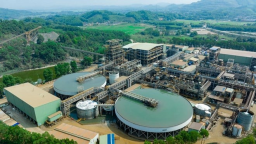
Masan High-Tech Materials partners with S Korea’s GBI on tungsten processing
Masan High-Tech Materials (UPCoM: MSR), the mining unit of Vietnamese conglomerate Masan Group (HoSE: MSN), has entered into a strategic partnership with South Korea’s GB Innovation (GBI) to process Korean tungsten concentrate into higher-value products in Vietnam, strengthening a non-Chinese tungsten supply chain.
Companies - Thu, July 9, 2026 | 3:51 pm GMT+7

Idemitsu Kosan expands energy ecosystem in Vietnam
After more than three decades of operations in Vietnam, Japan’s Idemitsu Kosan is further expanding its energy ecosystem with a biomass pellet plant project in the central province of Gia Lai.
Industries - Thu, July 9, 2026 | 1:43 pm GMT+7

Two banks to list on Ho Chi Minh City bourse, expand charter capital
Vietnam's private banks Vietbank and BVBank are finalizing the last steps to transfer their trading from the unlisted public company market UPCoM to the Ho Chi Minh Stock Exchange (HoSE), while simultaneously implementing plans to increase their charter capital.
Banking - Thu, July 9, 2026 | 11:51 am GMT+7

Strong Q2 earnings, lower interest rates to bolster Vietnam stocks
Strong second-quarter corporate earnings and declining interest rates are expected to support Vietnam's stock market in the coming months, brokerage firms said, as the market moves beyond a period of limited news flow and enters a more favorable phase driven by improving fundamentals.
Finance - Thu, July 9, 2026 | 8:00 am GMT+7

Wistron raises construction, equipment investment in northern Vietnam province to $178 mln
Taiwanese technology firm Wistron has increased its investment in factory construction and equipment in Ninh Binh province to $178.27 million, adding $24.5 million to expand its facilities at Kim Bang Industrial Park.
Industries - Wed, July 8, 2026 | 7:56 pm GMT+7

Sun Group targets groundbreaking for $624 mln urban projects in central Vietnam this year
Vietnam's leading developer Sun Group aims to begin construction of two urban projects worth a combined VND16.4 trillion ($623.78 million) in the central province of Quang Ngai by the end of 2026, while also advancing plans for a new expressway linking the province with the Central Highlands.
Real Estate - Wed, July 8, 2026 | 4:54 pm GMT+7

Vietnam raises airport number target to 36 by 2030 as aviation demand surges
Vietnam plans to expand its airport network to 36 airports by 2030, up from the previous target of 30, under a revised national aviation infrastructure plan aimed at catering for rising passenger demand and boosting regional connectivity.
Infrastructure - Wed, July 8, 2026 | 4:45 pm GMT+7
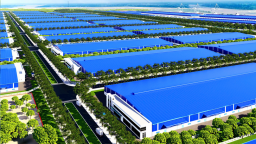
Germany's VFT Bio Fuels UG eyes $3.1 bln green steel complex in southern Vietnam
Vietnamese industrial park developer IMG Phuoc Dong and Germany’s VFT Bio Fuels UG have signed a memorandum of understanding to study the development of a $3.1 billion green steel complex in the southern province of Tay Ninh.
Industries - Wed, July 8, 2026 | 4:25 pm GMT+7

Vietnam police minister urges Yamato Holdings to study investment in Gia Binh airport
Vietnam’s Minister of Public Security Luong Tam Quang has called on Japan’s Yamato Holdings to assess investment opportunities in warehousing and cargo transport systems at Gia Binh International Airport, while exploring potential cooperation and operational models with Vietnamese partners once the facility becomes operational.
Infrastructure - Wed, July 8, 2026 | 3:09 pm GMT+7

Vietnam real estate M&A favors quality, clear legal status assets as FDI priorities evolve
Vietnam's real estate M&A market continued to attract foreign capital in the first half of 2026 despite persistent global economic uncertainties, but foreign investors are increasingly targeting assets with clear legal status, stable cash flow, and strong operational performance, with data centers emerging as a key growth segment.
Real Estate - Wed, July 8, 2026 | 1:38 pm GMT+7

Central Vietnam hub Danang plans to tokenize nearly $4 bln in infrastructure projects to attract global capital
The Vietnam International Financial Center, located in the central city of Danang (VIFC Danang), plans to tokenize nearly $4 billion worth of infrastructure projects as part of a strategy to attract more global capital.
Economy - Wed, July 8, 2026 | 12:17 pm GMT+7

Computers, smartphones edge higher in price as AI memory boom tests Vietnam's ICT firms
Rising memory chip prices driven by artificial intelligence are spreading from semiconductor manufacturers to consumer electronics brands such as Apple, Dell and ASUS, pushing up the prices of computers and smartphones.
Companies - Wed, July 8, 2026 | 8:00 am GMT+7

LG Innotek to build $1 bln semiconductor substrate plant in northern Vietnam
South Korea's LG Innotek will spend $1 billion to build a semiconductor package substrate manufacturing plant in Hai Phong city, with mass production scheduled to begin in the third quarter of 2028, according to local authorities.
Industries - Tue, July 7, 2026 | 11:13 pm GMT+7

Malaysia’s JLand eyes up to $6 bln high-tech hub in Hanoi
Malaysia’s JLand Group has proposed developing a high-tech, innovation and data center complex in Hanoi with an estimated investment of $4-6 billion, as Vietnam’s capital seeks to attract technology projects and strengthen its digital infrastructure.
Infrastructure - Tue, July 7, 2026 | 4:26 pm GMT+7
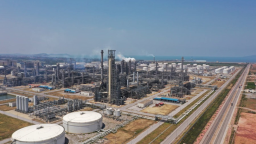
PVOIL approves $600 mln crude supply plan for Nghi Son refinery
PVOIL, a subsidiary of state-owned Petrovietnam, has approved transactions worth an estimated $600 million to supply crude oil to the Nghi Son Refinery and Petrochemical complex during the second half of 2026, as the country’s largest refinery broadens its feedstock sources beyond its traditional Kuwaiti supply.
Companies - Tue, July 7, 2026 | 1:33 pm GMT+7

F88 wins two international awards for customer-centric growth strategy
F88, a major Vietnamese financial services company, has received two international awards from the Asian Banking & Finance (ABF), a Singapore-based publication, recognizing its initiatives in customer experience and service innovation.
Companies - Tue, July 7, 2026 | 12:42 pm GMT+7
- Travel
-

Sun Group spends $3.5 bln to build 17,400-room accommodation ecosystem in Phu Quoc ahead of APEC 2027
-
CapitaLand launches 4th edition of campaign with $98,000 commitment to support vulnerable children
-
How Phu Quoc attracts travelers seeking to escape summer heat
-
Sun PhuQuoc Airways launches Singapore route, connecting two of Asia's 'paradise' islands
-
Seta - A “silken thread” weaving contemporary Cantonese cuisine into the soul of Phu Quoc
-
Danang airport starts $57 mln terminal expansion