


Mind the gap
Without stronger digital and physical networks, global productivity will falter at precisely the moment the world needs new engines of growth, writes Benjamin Hung, president, International, Standard Chartered.

Benjamin Hung, president, International, Standard Chartered. Photo courtesy of the bank.
Infrastructure has always been the backbone for global growth and humanity’s progress. Roads, ports, power grids, broadband networks and utilities are the arteries through which goods, services, investment and future prosperity must flow. Building new as well as modernizing existing infrastructure is the necessary foundation for both growth today and resilience tomorrow.
Yet despite this centrality, investment in infrastructure continues to lag far behind global needs. The financing gap continues to grow – standing at over $15 trillion between now and 2040. This gap is most acute in emerging markets, which accounts for more than 90% of world population growth – from 4 to 8 billion – in the last 50 years, yet this is also the region where world growth will be powered from in the next decade.
Part of the issue is that infrastructure in emerging markets has a branding problem. Investing in it is increasingly seen as the moral choice, the right thing to do, for sustainability or impact investors. Consequently, it can be positioned as at best, discretionary and sometimes philanthropic.
But the paradox is that there is plenty of capital. Finance exists and in larger volumes than ever, even accounting for the ongoing political pressures on public resources. But capital flows to where the signals point. And, if those signals are weak or mixed, it will continue to default to safer and shorter-term bets.
There is an urgent need for a brand reset on this narrative and ensure it is more broadly understood for what it is – a necessary and compelling commercial opportunity. Infrastructure financing has to be rooted in matching its reputation to the facts, such as its returns profile, growth potential and the ability to avoid economic losses when structured properly.
Whilst this will unlikely be a quick fix, every actor has a role to play – from governments and MDBs to financiers and regulators – to act collectively, which can help overcome some of the more specific challenges related to infrastructure finance.
The first obstacle is the lack of long-term planning and execution consistency by governments. Absence of a transparent roadmap with clear project prioritization deters private investors and slows down the most urgently needed initiatives. Countries should leverage on PPFs (project preparation facilities) to help structure, manage and mitigate risks. Critical projects cannot move forward without government approval, permits and clarity of ownership beyond the development phase. In many markets, these are slow, opaque or vulnerable to political interference. Without political leadership to streamline processes, billions of dollars will continue to sit idle.
Secondly, the sourcing of finance. Emerging markets, facing the steepest funding gaps, often struggle to access affordable capital. Mobilizing private capital at scale requires creative structuring — blended finance, guarantees, and long-term vehicles that can match the lifespan of the assets being built. Increasingly hailed as the solution to infrastructure finance, blended finance reduced last year. In the instances where it has been deployed, it has proven to be a catalyst, so its potential is undiminished. As for investors, emerging market assets can act as a source of risk diversification for private credit, SWFs and pension funds, which historically have a propensity to focus on developed market exposures.
Lastly, the third challenge lies in the regulatory treatment of infrastructure finance. Private sector banks and institutional investors must operate within prudential rules that shape where they put money. Current frameworks treat infrastructure as riskier than it truly is, penalizing long-term lending compared with short-term exposures. It is encouraging to see the B20 Finance & Infrastructure Task Force call out the mismatch between risk perception and risk performance. So long as this persists, infrastructure will remain underfunded.
Each of these are politically and technically complex – but imminently achievable. Each would benefit from a clear and collective expression that infrastructure is a “must have”, setting a powerful cross-sector signal that capital and enabling policy can follow.
The stakes are high. Without major infrastructure investment, emerging markets will struggle to sustain growth, leaving billions locked out of prosperity. Without resilient energy and transport systems, economies will remain vulnerable to climate shocks and supply chain disruptions. And without stronger digital and physical networks, global productivity will falter at precisely the moment the world needs new engines of growth.
The question is not whether the world can afford to finance its infrastructure needs, but whether it can afford not to.
- Related News


- Read More
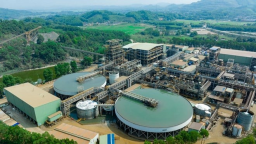
Masan High-Tech Materials partners with S Korea’s GBI on tungsten processing
Masan High-Tech Materials (UPCoM: MSR), the mining unit of Vietnamese conglomerate Masan Group (HoSE: MSN), has entered into a strategic partnership with South Korea’s GB Innovation (GBI) to process Korean tungsten concentrate into higher-value products in Vietnam, strengthening a non-Chinese tungsten supply chain.
Companies - Thu, July 9, 2026 | 3:51 pm GMT+7

Idemitsu Kosan expands energy ecosystem in Vietnam
After more than three decades of operations in Vietnam, Japan’s Idemitsu Kosan is further expanding its energy ecosystem with a biomass pellet plant project in the central province of Gia Lai.
Industries - Thu, July 9, 2026 | 1:43 pm GMT+7

Two banks to list on Ho Chi Minh City bourse, expand charter capital
Vietnam's private banks Vietbank and BVBank are finalizing the last steps to transfer their trading from the unlisted public company market UPCoM to the Ho Chi Minh Stock Exchange (HoSE), while simultaneously implementing plans to increase their charter capital.
Banking - Thu, July 9, 2026 | 11:51 am GMT+7

Strong Q2 earnings, lower interest rates to bolster Vietnam stocks
Strong second-quarter corporate earnings and declining interest rates are expected to support Vietnam's stock market in the coming months, brokerage firms said, as the market moves beyond a period of limited news flow and enters a more favorable phase driven by improving fundamentals.
Finance - Thu, July 9, 2026 | 8:00 am GMT+7

Wistron raises construction, equipment investment in northern Vietnam province to $178 mln
Taiwanese technology firm Wistron has increased its investment in factory construction and equipment in Ninh Binh province to $178.27 million, adding $24.5 million to expand its facilities at Kim Bang Industrial Park.
Industries - Wed, July 8, 2026 | 7:56 pm GMT+7

Sun Group targets groundbreaking for $624 mln urban projects in central Vietnam this year
Vietnam's leading developer Sun Group aims to begin construction of two urban projects worth a combined VND16.4 trillion ($623.78 million) in the central province of Quang Ngai by the end of 2026, while also advancing plans for a new expressway linking the province with the Central Highlands.
Real Estate - Wed, July 8, 2026 | 4:54 pm GMT+7

Vietnam raises airport number target to 36 by 2030 as aviation demand surges
Vietnam plans to expand its airport network to 36 airports by 2030, up from the previous target of 30, under a revised national aviation infrastructure plan aimed at catering for rising passenger demand and boosting regional connectivity.
Infrastructure - Wed, July 8, 2026 | 4:45 pm GMT+7
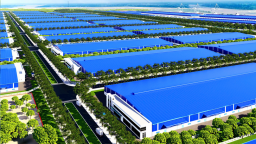
Germany's VFT Bio Fuels UG eyes $3.1 bln green steel complex in southern Vietnam
Vietnamese industrial park developer IMG Phuoc Dong and Germany’s VFT Bio Fuels UG have signed a memorandum of understanding to study the development of a $3.1 billion green steel complex in the southern province of Tay Ninh.
Industries - Wed, July 8, 2026 | 4:25 pm GMT+7

Vietnam police minister urges Yamato Holdings to study investment in Gia Binh airport
Vietnam’s Minister of Public Security Luong Tam Quang has called on Japan’s Yamato Holdings to assess investment opportunities in warehousing and cargo transport systems at Gia Binh International Airport, while exploring potential cooperation and operational models with Vietnamese partners once the facility becomes operational.
Infrastructure - Wed, July 8, 2026 | 3:09 pm GMT+7
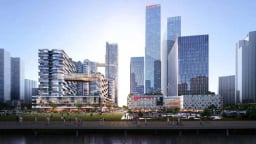
Vietnam real estate M&A favors quality, clear legal status assets as FDI priorities evolve
Vietnam's real estate M&A market continued to attract foreign capital in the first half of 2026 despite persistent global economic uncertainties, but foreign investors are increasingly targeting assets with clear legal status, stable cash flow, and strong operational performance, with data centers emerging as a key growth segment.
Real Estate - Wed, July 8, 2026 | 1:38 pm GMT+7
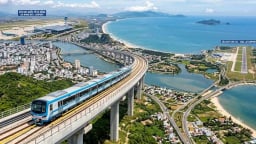
Central Vietnam hub Danang plans to tokenize nearly $4 bln in infrastructure projects to attract global capital
The Vietnam International Financial Center, located in the central city of Danang (VIFC Danang), plans to tokenize nearly $4 billion worth of infrastructure projects as part of a strategy to attract more global capital.
Economy - Wed, July 8, 2026 | 12:17 pm GMT+7
Computers, smartphones edge higher in price as AI memory boom tests Vietnam's ICT firms
Rising memory chip prices driven by artificial intelligence are spreading from semiconductor manufacturers to consumer electronics brands such as Apple, Dell and ASUS, pushing up the prices of computers and smartphones.
Companies - Wed, July 8, 2026 | 8:00 am GMT+7

LG Innotek to build $1 bln semiconductor substrate plant in northern Vietnam
South Korea's LG Innotek will spend $1 billion to build a semiconductor package substrate manufacturing plant in Hai Phong city, with mass production scheduled to begin in the third quarter of 2028, according to local authorities.
Industries - Tue, July 7, 2026 | 11:13 pm GMT+7
Malaysia’s JLand eyes up to $6 bln high-tech hub in Hanoi
Malaysia’s JLand Group has proposed developing a high-tech, innovation and data center complex in Hanoi with an estimated investment of $4-6 billion, as Vietnam’s capital seeks to attract technology projects and strengthen its digital infrastructure.
Infrastructure - Tue, July 7, 2026 | 4:26 pm GMT+7
PVOIL approves $600 mln crude supply plan for Nghi Son refinery
PVOIL, a subsidiary of state-owned Petrovietnam, has approved transactions worth an estimated $600 million to supply crude oil to the Nghi Son Refinery and Petrochemical complex during the second half of 2026, as the country’s largest refinery broadens its feedstock sources beyond its traditional Kuwaiti supply.
Companies - Tue, July 7, 2026 | 1:33 pm GMT+7

F88 wins two international awards for customer-centric growth strategy
F88, a major Vietnamese financial services company, has received two international awards from the Asian Banking & Finance (ABF), a Singapore-based publication, recognizing its initiatives in customer experience and service innovation.
Companies - Tue, July 7, 2026 | 12:42 pm GMT+7
- Travel
-

Sun Group spends $3.5 bln to build 17,400-room accommodation ecosystem in Phu Quoc ahead of APEC 2027
-
CapitaLand launches 4th edition of campaign with $98,000 commitment to support vulnerable children
-
How Phu Quoc attracts travelers seeking to escape summer heat
-
Sun PhuQuoc Airways launches Singapore route, connecting two of Asia's 'paradise' islands
-
Seta - A “silken thread” weaving contemporary Cantonese cuisine into the soul of Phu Quoc
-
Danang airport starts $57 mln terminal expansion