


The economy: Re-balancing in 2026
Vietnam’s infrastructure spending growth is expected to accelerate from circa 10% annually over the last decade to 20-30% per year going forward. This infrastructure push can boost Vietnam's GDP in the short run, much like how China supported its economy with infrastructure investment after the global financial crisis, wrote VinaCapital analysts.

Vietnam’s 2025 GDP growth was significantly boosted by an 80% jump in exports of laptops and other high-tech items to the U.S. and by a 42% increase in both Chinese and Indian tourist arrivals, which masked mediocre domestic consumer spending growth.
This year, we expect a normalization of both consumption and export growth. These two dynamics will largely offset each other, while the lagged impact of an infrastructure spending surge in 2025 will support Vietnam’s GDP growth in 2026.
The three key dynamics that we expect to drive 2026 GDP growth are discussed below: a modest consumption recovery, the infrastructure-real estate growth nexus, and resilient exports to the U.S.
We can also acknowledge that 10% GDP growth represents an upside scenario, with the Government having a range of tools at its disposal that could support this outcome, particularly if additional stimulus measures are implemented.
Consumption recovery
Spending by domestic consumers has been weak for the last two years because Vietnamese households depleted their savings during Covid and have been saving at an extraordinarily high rate since then.
Estimates vary as to how much higher Vietnam’s household savings rate currently is, but most analysts who follow this issue agree that this excess savings dynamic helps explain the current weak pace of Vietnamese retail sales growth.

We expect consumption to return to more normal levels of growth (although not to boom) by mid-2026, at which point the savings rate will have been elevated for nearly three years, giving households ample time to rebuild a considerable portion of their pre-Covid savings.
Furthermore, household incomes in Vietnam have been growing at a circa 6-7% pace over the last two years and the stock market and real estate prices were both up more than 30% in 2025, all of which supports spending.
The caveat to this forecast is that unlike our expectation for resilient exports for 2026 - which is built on solid leading indicators - our consumption recovery forecast is built on more subjective econometric analysis.
That said, the Government has a very ambitious GDP growth target for 2026 that can only be met with higher consumption growth. To date, the Government has taken some modest steps to support consumption, but it could easily do much more if needed.
Further to this last point, the Government recently extended and expanded a VAT cut, enacted a modest reduction in personal taxes, and partly eased new taxes on household businesses that are currently weighing on consumer sentiment.
These measures will help support consumption to some degree but are likely to have less than a 0.5 percentage point direct impact on GDP growth. The key point here is that the Government has laid the groundwork to directly stimulate consumption and can do much more, if necessary, to boost growth.
The infrastructure-real estate growth nexus
The Government’s ambitious reform agenda is aimed at boosting long-term GDP growth, but there is also pressure to deliver strong short-term GDP growth. Achieving both is difficult because of the dynamic of “short-term pain to achieve long-term gain.” For that reason, we expect the Government to rely heavily on the three major levers it can realistically use to boost GDP growth in 2026:
- Consumption, which accounts for over 60% of Vietnam’s GDP
- Infrastructure development, which the Government aims to raise from around 6% of GDP to 10%/GDP
- Real estate development, which contributes roughly 15% of GDP when factoring in indirect contributions, including increased household spending on household furnishings
We see a nexus connecting infrastructure, feeding into real estate, and ultimately boosting consumption. Infrastructure spending has already increased significantly, up around 40% in 2025 and we expect another 20-30% increase in 2026.
The consensus expects the trajectory of Vietnam’s infrastructure spending growth to accelerate from circa 10% annually over the last decade to 20-30% per year going forward, and that expectation helped push 10Y Vietnam Government Bond (VGB) yields up by circa 100 basis points in 2025 to around 4%.

This infrastructure push can boost GDP in the short run, much like how China supported its economy with infrastructure investment after the global financial crisis. Critically, Vietnam has ample fiscal room to boost infrastructure spending, with Government debt well below 40% of GDP.
In the past, bureaucratic hurdles such as land clearance delays and lengthy approval processes were the main impediments to faster infrastructure spending; those blocks are now melting away with the nascent “whatever it takes” attitude of civil servants.

Similarly, Government reforms look set to pave the way for a surge in real estate supply. Visitors to Vietnam will often comment on the many stalled real estate projects that dot the country’s urban and suburban landscapes, but these empty lots and partially constructed buildings are not due to weak demand but are instead attributable to zoning and regulatory issues.
Imminent regulatory changes related to land clearance and compensation for rezoning land for residential use could unlock as many as 80% of previously stalled projects, effectively making them “shovel ready” projects that could immediately boost GDP growth.
In short, the Government is essentially empowering a handful of developers and conglomerates to address land clearance and zoning issues by negotiating directly with them on land compensation costs. Those “primary developers” are expected to then parcel out the actual development activity to the developers and construction companies in the next layer of Vietnam’s real estate development value chain. A similar mechanism is being put in place in the energy sector to boost the country’s electricity generation capacity.
Finally, infrastructure investment in Vietnam drives real estate development and policy makers are increasingly promoting the well-known “Transit-Oriented Development (TOD)” strategy that Japan used to develop its suburbs in the 1960s-70s. We mentioned rising interest rates elsewhere in this report – which would ordinarily prompt some concern about the real estate market – but demand in Vietnam is increasingly driven by infrastructure connectivity rather than financing conditions alone.
Constrained supply pushed real estate prices higher
Real estate prices in Vietnam were up more than 30% in 2025 and up more than 50% since 2023, driven by a dearth of supply, which is attributable to the zoning and approvals issues mentioned above (the supply of new housing units has been less than half of demand for years).
In a typical real estate boom, prices and supply rise in tandem, generating a “wealth effect” that fuels euphoric consumer spending. In Vietnam’s current market dynamics, however, prices have already risen sharply following an extended period of supply scarcity, so we anticipate a surge in real estate supply rather than in prices over 2026-2027.
Further to that point, we believe primary real estate prices may actually soften slightly this year after overshooting to the upside last year. Our expectation for a price dip in 2026 is based on an increase in supply as new units come onto the market as well as a roughly 1% pt increase in interest rates last year.
Mortgage rates increased to circa 11% on average by the end of last year, a level which is sufficiently high to discourage speculators, although they remain manageable for end-users purchasing homes to live in (many speculative buyers use a “back of the envelope” metric of a 1%/month interest rate - or 12-13% annual rate - above which they hesitate to purchase properties to “flip”).

The modest uptick in interest rates has also contributed to a modest inventory overhang at some developers. In the middle of 2025, each new sales launch sold out almost immediately, often to speculators hoping to flip properties in a rapidly appreciating market.
By the end of last year, however, with mortgage rates at 11%, speculative demand cooled and higher interest rates led to more discerning purchasing behavior by end-users, so sales absorption rates slowed.
Developers with overpriced units (e.g., Over $5,000/SQM) or with lower-quality projects, and/or with units for sale without clear ownership provenance began facing outright frozen purchase conditions and rising inventory, prompting some dumping of unsold new unit inventory on to the market late last year, especially for projects in second-tier cities.
VinaCapital’s real estate team estimates that roughly 30% of recently launched units remain unsold, an inventory overhang that is not excessive but should be sufficient to bring prices down to levels end-users are willing to pay (i.e., what economists would call “market-clearing prices”).
Finally, in recent days, the Government has issued guidance for more muted credit growth to the banks, particularly for real estate lending. We do not expect this restrictive stance to persist in the second half of the year, given what we mentioned above – that real estate development is one of the three levers at the Government’s disposal to boost GDP growth this year (and given the link between the real estate “wealth effect” and consumer spending).
Assuming stable macro conditions in the first half of the year, we anticipate banks will resume aggressive lending to developers and extending mortgages by year-end, enabling the real estate market to pick up again, albeit without another surge in prices.
Resilient exports in 2026
Vietnam’s exports to the US rose 28% in 2025, driving a 4%/GDP trade surplus. This was the 10th consecutive year that Vietnam achieved a trade surplus, and the third year in-a-row that the trade surplus exceeded $20 billion. The surplus with the US alone was 26% of Vietnam’s GDP last year.
The U.S. buys nearly one-third of Vietnam’s total exports, and we had expected export growth to the U.S. to fall after Trump’s 20% “reciprocal tariffs” were imposed in August. But exports remained resilient throughout 2025, driven by an 80% surge in exports of laptop computers and other high-tech products to the US thanks to AI-driven demand.
In addition, the effective U.S. tariff rate on Vietnam’s exports was reduced by exemptions and carve-outs on various products including electronics, resulting in tariffs that are comparable to or below the tariff levels imposed on regional competitor countries.
As long as the differential between tariffs on Vietnam’s exports and those of its regional competitors does not significantly exceed 10% pts, exports to the US should remain competitive owing to Vietnam’s lower labor costs and other advantages. Consequently, the country has not suffered any disruption in its FDI inflows, which were up 9% in 2025 to 5%/GDP.

Demand from the US should remain resilient in 2026, thanks in part to strong consumption by upper-middle class consumers (especially “Baby Boomers”), which many economists call the “K-Shaped Economy.”
Furthermore, powerful monetary and fiscal stimulus measures are poised to prime the US economy in 2026 in the lead-up to the mid-term elections; the US Government will run another enormous 6%/GDP budget deficit and the Fed is essentially re-starting quantitative easing unexpectedly quickly after having finished quantitative tightening, so we see no realistic risk of a US recession that would derail Vietnam’s exports to the US this year.
Finally, the “New Exports Orders” sub-index of Vietnam’s Purchasing Manager Index (PMI) hit a 15-month high in November after having bottomed out in June (after the Trump’s “liberation day” tariff announcement). Furthermore, companies like Apple continue setting up new factories in Vietnam, and strong imports of production materials by FDI companies all of which are positive leading indicators for Vietnam’s export resilience in 2026 (Vietnam’s import growth outpaced export growth by 19% versus 17% in 2025).

One caveat to this otherwise positive picture is that the New Export Orders sub-index of the S&P Global PMI for Vietnam dipped in December (as can be seen in the chart above), but this was driven by idiosyncratic issues that have already abated.
Specifically, severe floods in November and December temporarily dampened factory output in Vietnam and led to some cancellations of orders by foreign customers in December, according to S&P Global. We expect the January figures to rebound now that this weather-related phenomenon has passed.
Transshipment tariff risk
We are not overly concerned about the much-discussed possibility that the Trump administration will impose 40% transshipment tariffs on Vietnam’s exports to the U.S. The administration has been deliberately vague about defining what “transshipments” are, which is discussed in a New York Times article titled “New Tariff on ‘Transshipped’ Goods Mystifies Importers.”
We believe this ambiguity is intentional as it appears that the administration is giving itself some strategic latitude on this topic and that its posturing is probably intended to prevent the most egregious cases of transshipment. Critically, we think it is unlikely more than a de minimis proportion of Vietnam’s exports to the US would ever actually incur transshipment tariffs.
- Related News


- Read More
VietinBank seeks to divest entire stake in Hai Phong Port via public auction
VietinBank (HoSE: CTG) plans to divest its entire stake in state-controlled Hai Phong Port (UPCoM: PHP) through a public auction on the Hanoi Stock Exchange (HNX), potentially raising nearly VND278 billion ($10.57 million).
Companies - Thu, July 9, 2026 | 5:10 pm GMT+7

Starlink begins taking orders in Vietnam, first-year service costs $1,190
Starlink, the satellite internet service operated by Elon Musk’s SpaceX, has released pricing and started accepting orders in Vietnam, with first-year costs estimated at about VND31.4 million ($1,190).
Companies - Thu, July 9, 2026 | 4:09 pm GMT+7
Masan High-Tech Materials partners with S Korea’s GBI on tungsten processing
Masan High-Tech Materials (UPCoM: MSR), the mining unit of Vietnamese conglomerate Masan Group (HoSE: MSN), has entered into a strategic partnership with South Korea’s GB Innovation (GBI) to process Korean tungsten concentrate into higher-value products in Vietnam, strengthening a non-Chinese tungsten supply chain.
Companies - Thu, July 9, 2026 | 3:51 pm GMT+7

Idemitsu Kosan expands energy ecosystem in Vietnam
After more than three decades of operations in Vietnam, Japan’s Idemitsu Kosan is further expanding its energy ecosystem with a biomass pellet plant project in the central province of Gia Lai.
Industries - Thu, July 9, 2026 | 1:43 pm GMT+7
Two banks to list on Ho Chi Minh City bourse, expand charter capital
Vietnam's private banks Vietbank and BVBank are finalizing the last steps to transfer their trading from the unlisted public company market UPCoM to the Ho Chi Minh Stock Exchange (HoSE), while simultaneously implementing plans to increase their charter capital.
Banking - Thu, July 9, 2026 | 11:51 am GMT+7

Strong Q2 earnings, lower interest rates to bolster Vietnam stocks
Strong second-quarter corporate earnings and declining interest rates are expected to support Vietnam's stock market in the coming months, brokerage firms said, as the market moves beyond a period of limited news flow and enters a more favorable phase driven by improving fundamentals.
Finance - Thu, July 9, 2026 | 8:00 am GMT+7

Wistron raises construction, equipment investment in northern Vietnam province to $178 mln
Taiwanese technology firm Wistron has increased its investment in factory construction and equipment in Ninh Binh province to $178.27 million, adding $24.5 million to expand its facilities at Kim Bang Industrial Park.
Industries - Wed, July 8, 2026 | 7:56 pm GMT+7

Sun Group targets groundbreaking for $624 mln urban projects in central Vietnam this year
Vietnam's leading developer Sun Group aims to begin construction of two urban projects worth a combined VND16.4 trillion ($623.78 million) in the central province of Quang Ngai by the end of 2026, while also advancing plans for a new expressway linking the province with the Central Highlands.
Real Estate - Wed, July 8, 2026 | 4:54 pm GMT+7

Vietnam raises airport number target to 36 by 2030 as aviation demand surges
Vietnam plans to expand its airport network to 36 airports by 2030, up from the previous target of 30, under a revised national aviation infrastructure plan aimed at catering for rising passenger demand and boosting regional connectivity.
Infrastructure - Wed, July 8, 2026 | 4:45 pm GMT+7
Germany's VFT Bio Fuels UG eyes $3.1 bln green steel complex in southern Vietnam
Vietnamese industrial park developer IMG Phuoc Dong and Germany’s VFT Bio Fuels UG have signed a memorandum of understanding to study the development of a $3.1 billion green steel complex in the southern province of Tay Ninh.
Industries - Wed, July 8, 2026 | 4:25 pm GMT+7

Vietnam police minister urges Yamato Holdings to study investment in Gia Binh airport
Vietnam’s Minister of Public Security Luong Tam Quang has called on Japan’s Yamato Holdings to assess investment opportunities in warehousing and cargo transport systems at Gia Binh International Airport, while exploring potential cooperation and operational models with Vietnamese partners once the facility becomes operational.
Infrastructure - Wed, July 8, 2026 | 3:09 pm GMT+7

Vietnam real estate M&A favors quality, clear legal status assets as FDI priorities evolve
Vietnam's real estate M&A market continued to attract foreign capital in the first half of 2026 despite persistent global economic uncertainties, but foreign investors are increasingly targeting assets with clear legal status, stable cash flow, and strong operational performance, with data centers emerging as a key growth segment.
Real Estate - Wed, July 8, 2026 | 1:38 pm GMT+7
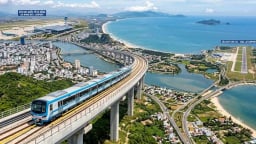
Central Vietnam hub Danang plans to tokenize nearly $4 bln in infrastructure projects to attract global capital
The Vietnam International Financial Center, located in the central city of Danang (VIFC Danang), plans to tokenize nearly $4 billion worth of infrastructure projects as part of a strategy to attract more global capital.
Economy - Wed, July 8, 2026 | 12:17 pm GMT+7

Computers, smartphones edge higher in price as AI memory boom tests Vietnam's ICT firms
Rising memory chip prices driven by artificial intelligence are spreading from semiconductor manufacturers to consumer electronics brands such as Apple, Dell and ASUS, pushing up the prices of computers and smartphones.
Companies - Wed, July 8, 2026 | 8:00 am GMT+7

LG Innotek to build $1 bln semiconductor substrate plant in northern Vietnam
South Korea's LG Innotek will spend $1 billion to build a semiconductor package substrate manufacturing plant in Hai Phong city, with mass production scheduled to begin in the third quarter of 2028, according to local authorities.
Industries - Tue, July 7, 2026 | 11:13 pm GMT+7

Malaysia’s JLand eyes up to $6 bln high-tech hub in Hanoi
Malaysia’s JLand Group has proposed developing a high-tech, innovation and data center complex in Hanoi with an estimated investment of $4-6 billion, as Vietnam’s capital seeks to attract technology projects and strengthen its digital infrastructure.
Infrastructure - Tue, July 7, 2026 | 4:26 pm GMT+7